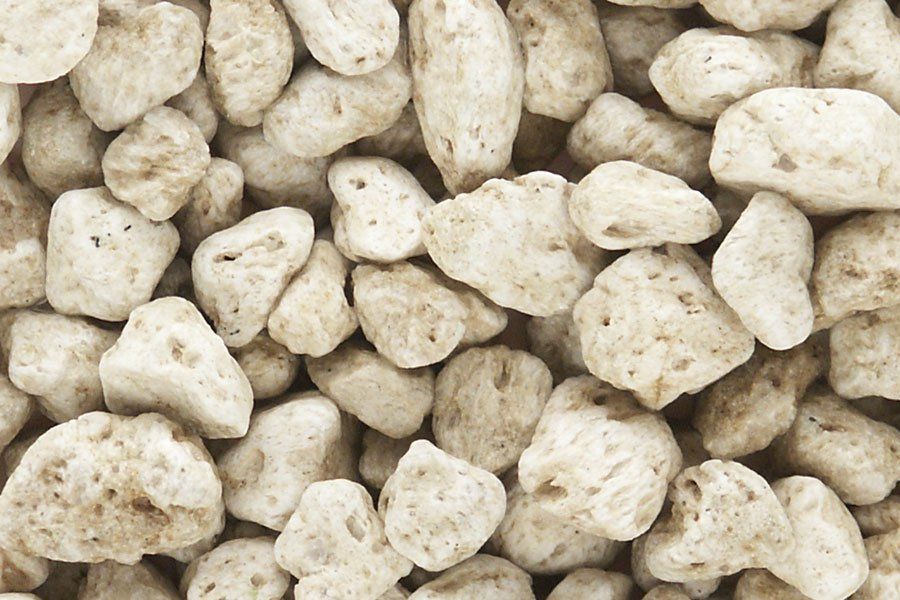
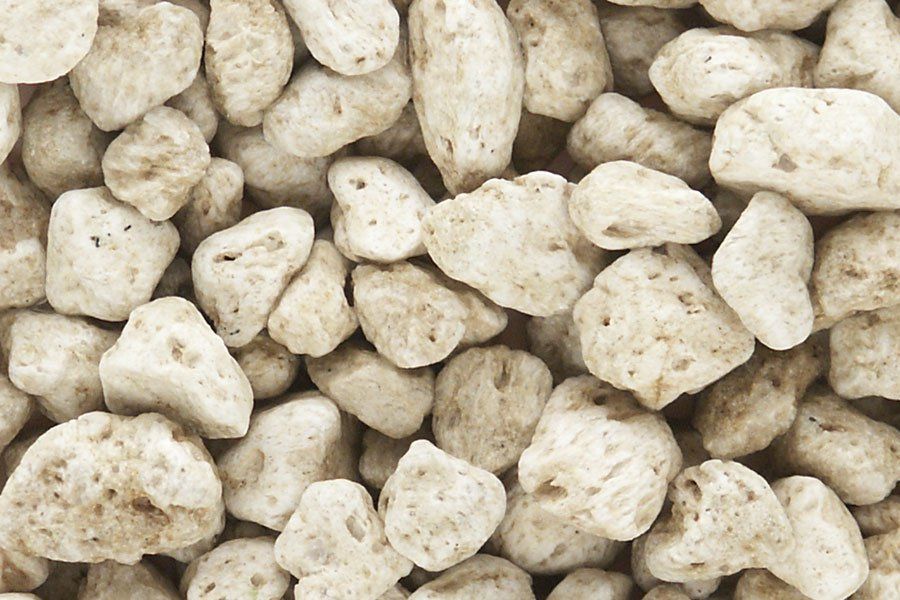
The largest grain of the four offered, in the tone of light limestone. Loose stone with a volume of 353 cubic centimeters.
Responsibility details are not available.
Below every weathering face lies a cone of scree, and it is not mixed at random. Small stone stays up at the foot of the rock, while the heavy pieces roll the farthest and gather at the edge of the slope. This coarsest grade models precisely those: the small boulders that in a railroad cutting lie right at the foot of the embankment or come to rest against the track ballast.
The shade corresponds to limestone and sandstone, that is to rocks that look warm and light in the sun. Beside gray granite or dark brown weathered rock it creates a contrast that can be used: light scree on a dark slope gives away at once a fresh spoil run where moss has not yet had time to grow. In photographs of real quarries, freshly broken rock tends to be noticeably lighter than a face that has lain in a slope for years and has had time to turn gray.
A proven procedure: first scatter the coarse pieces one by one with tweezers and only then fill the gaps with a finer grade. When it is done the other way round, the large fragments stay sitting on the surface and look glued on. Toning with a dry brush finally unifies the color with the rock around, so that the scree does not look like a foreign body brought in from somewhere else.
Naši poradci a znalci sortimentu jsou připraveni odpovídat na Vaše dotazy (Po–Pá, 8–18 hod).
Zeptejte se na co potřebujete, odpovíme co nejdříve.
Texts from customers in the advice section reflect solely the opinions and views of the customers. MNF trade s.r.o. does not approve or verify customer texts in advance.
There are no questions here yet. Be the first to ask!