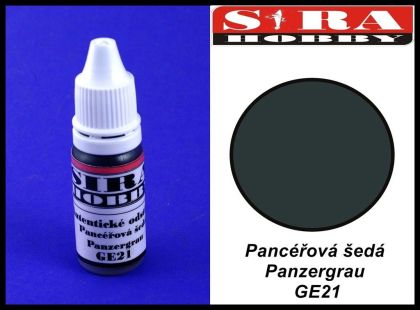
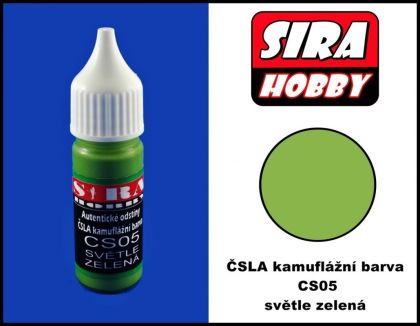
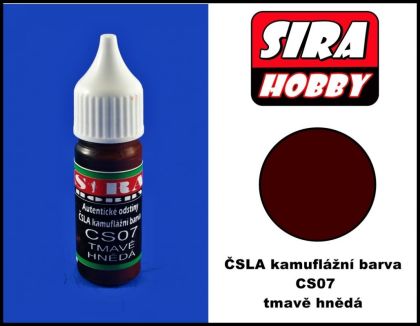
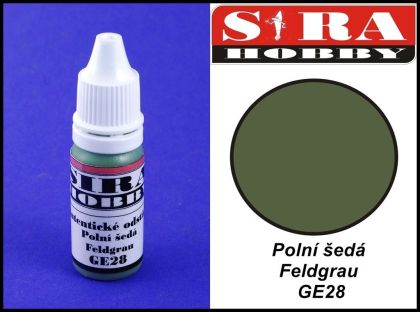
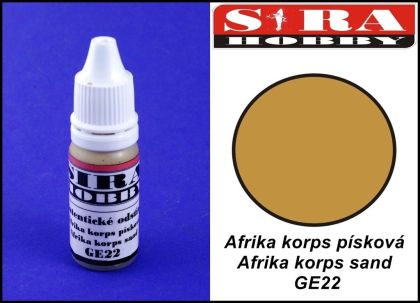
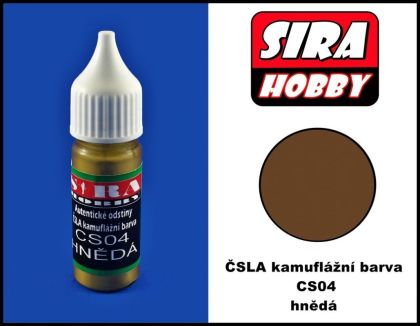
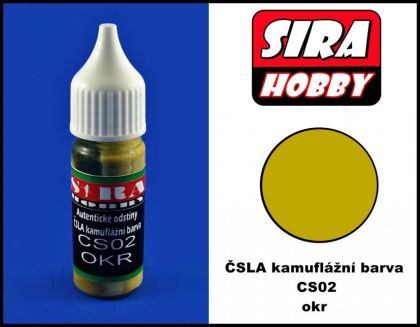
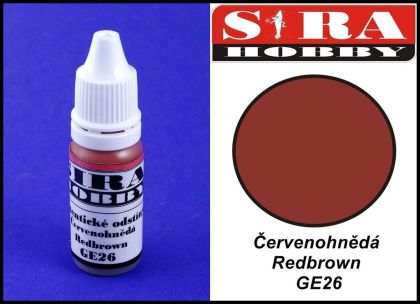
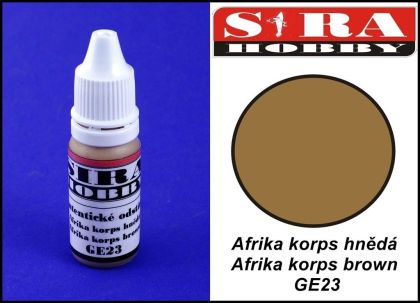
The Sira Hobby authentic shades are acrylic model paints mixed to specific historical specifications rather than to a general colour chart. Instead of an anonymous green or brown you get a shade named the way archive tables name it: field grey, armour grey, the ochre of a Czechoslovak scheme, the sand of a desert campaign.
They brush on and spray equally well, and they turn up on armour, figures and aircraft alike. The collection is deliberately short — it covers the colours modellers actually reach for repeatedly, grouped by army. How to choose between the groups, and what to put beside them, is below.
These are water-thinnable acrylics whose purpose is to shorten the route to a historically defensible finish. The names follow camouflage specifications, so you are not left working out which commercial green comes closest to a particular wartime standard. The range stays narrow on purpose and is split by army rather than by colour family.
The collection divides into Czechoslovak People's Army shades and German shades, the latter covering field grey, armour grey, red-brown and the two desert tones. Pick by the machine you are building and hold to one specification across the whole model; mixing schemes from two different periods is the error judges spot first.
On small scales a shade reads darker over a small area, so spray it a step lighter and bring the depth back with weathering. On large models the bottle shade lands much as it looks. Intermediate variants can be mixed from other acrylic model paints.
By brush, build two or three thin coats rather than one heavy one. For the gun, thin to the label instructions and spray onto a dry, degreased base. The full paint catalogue for either method sits in model paints.
Most of these shades end up on tracked and wheeled subjects, so military vehicle kits is the natural place to look for the next build.