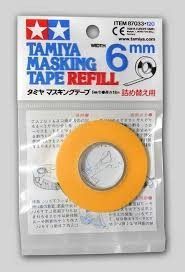
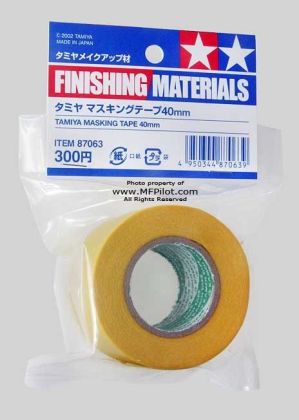
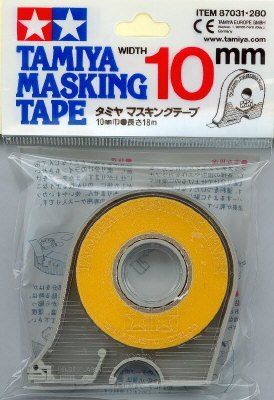
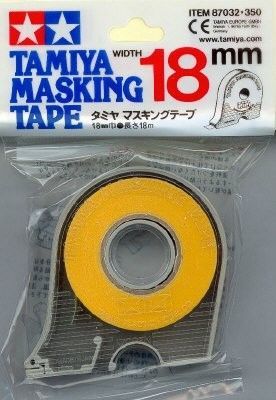
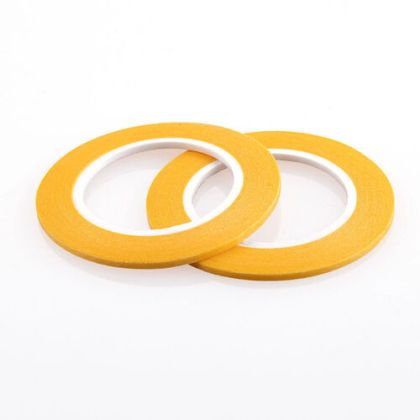
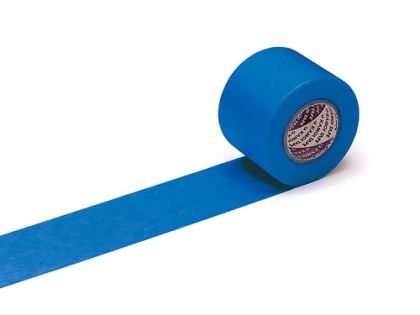
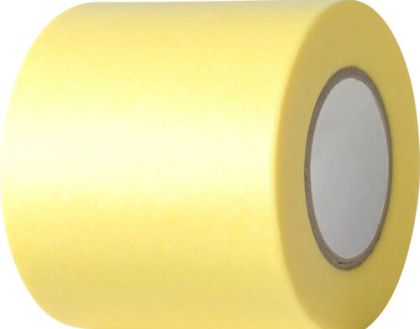
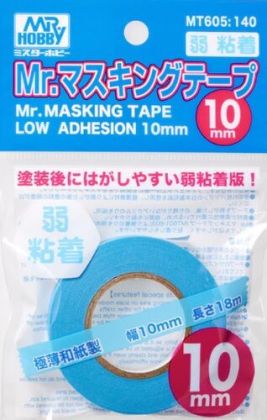
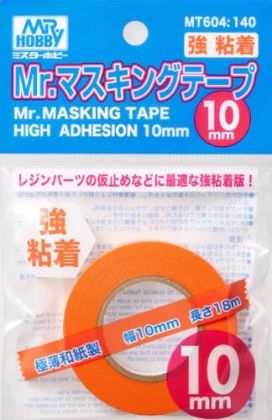
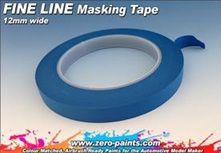
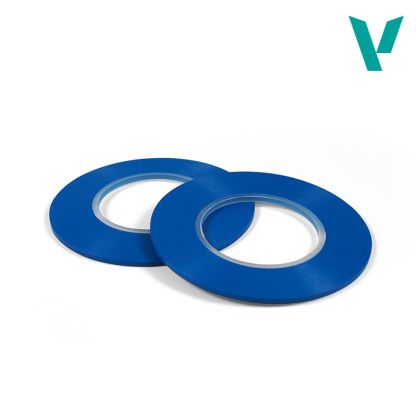
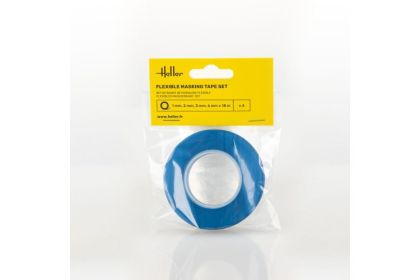
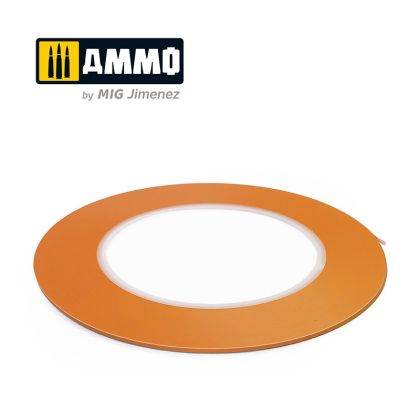
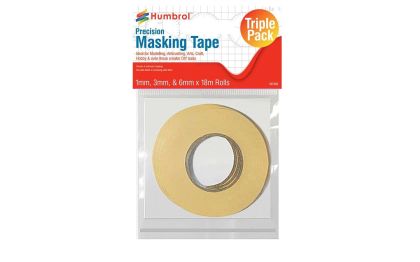
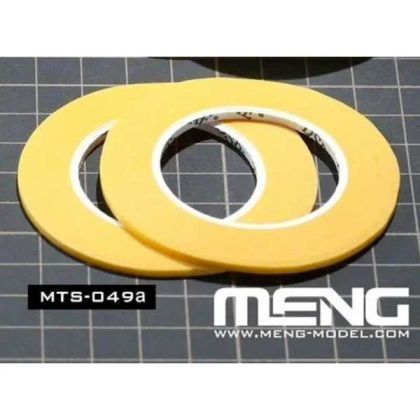
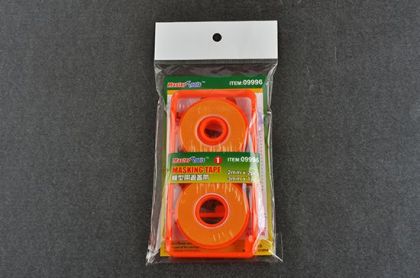
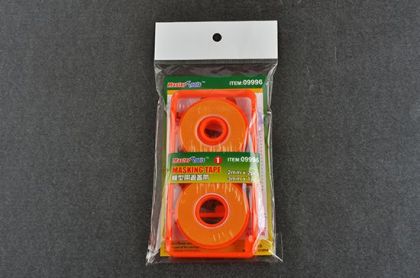
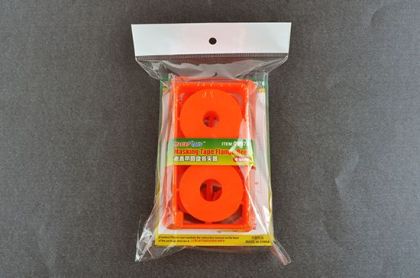
Masking tape is the most used aid in model painting, full stop. The listing runs from 0.75 mm widths for thin dividing lines through the everyday three to ten millimetre rolls to wide tape for covering a whole wing or hull side, and takes in flexible grades that bend into a curve without crinkling as well as sets holding several widths together.
What separates one modelling masking tape from another is not the width on the label but the tack and the compliance. Those two properties decide whether you lift a crisp edge or a ragged one, and whether the paint underneath comes away with the tape.
Width is only the first parameter. The second is tack: enough to seal the edge, not so much that peeling pulls cured paint off the plastic with it. The third is compliance. An ordinary straight tape led into an arc puckers and opens little channels for paint to creep through, whereas a flexible grade follows the same curve smoothly. A stiff tape makes more work in touching up than it ever saves.
Hull divisions, straight bands and plain covered areas need nothing more than standard tape in a sensible width. Press the working edge down along its whole length with a cocktail stick before you spray, not after.
On a ship's hull, a rounded wing root or a car wing, use the flexible grade. Mark the line itself with a narrow tape first and only then fill in behind it with wider tape or paper.
Tape is the wrong tool for free curves. Masking putty does that job, and repeating patterns are better served by universal masks and stencils.
Further masking materials sit in the parent heading masking supplies. The subjects that demand the most tape are car and racing model kits with two-tone bodies and ship model kits carrying a waterline the length of the hull.