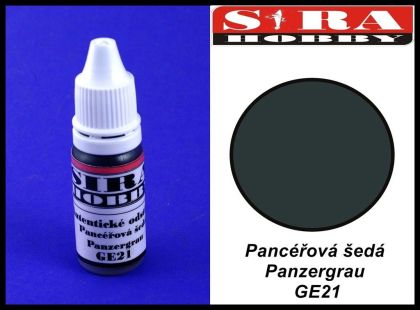
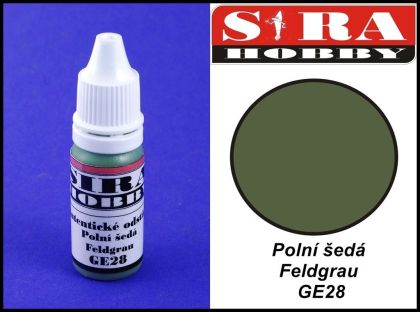
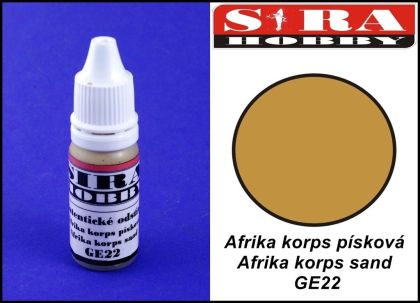
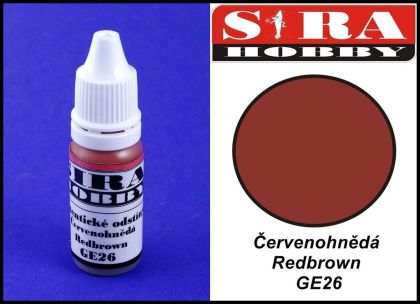
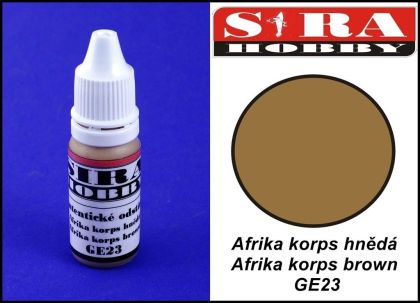
German camouflage shades are the single most asked-for group of colours in the hobby. This part of the authentic collection supplies five of them: field grey, armour grey, red-brown and the two desert campaign tones, brown and sand. They are acrylic model paints for German subjects, covering both the base coat and the camouflage bands laid over it.
Five bottles go further here than the number suggests, because the same shades recur across vehicles, equipment and weapons through most of the period. Below: how the shades succeeded one another over the course of the war, and how to finish the paintwork once the scheme is on.
Armour grey was the base colour of armoured vehicles in the early war years. Field grey appears on equipment, vehicles and weapons. Red-brown serves as one of the camouflage bands of the later period, and the two desert tones cover the North African theatre. Between them they handle a substantial share of German subjects on the shelf.
Fix the year and the front before anything else. The same vehicle type takes a different colour in 1940 and in 1944, which makes the date more decisive than the type. The remainder of the authentic collection, including the Czechoslovak scheme, sits in Sira Hobby authentic shades.
The paint behaves the same on plastic, resin and photo-etched brass; only the surface preparation changes. Tracked and wheeled subjects call for spraying large plates, while on aircraft you will be working on fine transitions between upper and lower wing surfaces.
Sprayed bands come straight from the gun; hard boundaries need a template. Masking tapes cover both, and the choice comes down to width and flexibility.
Try the finished scheme on anything from military vehicle kits, where tracked and wheeled subjects from this period are most numerous.