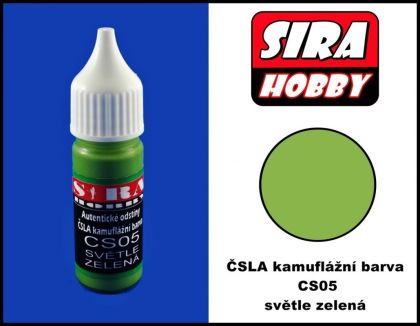
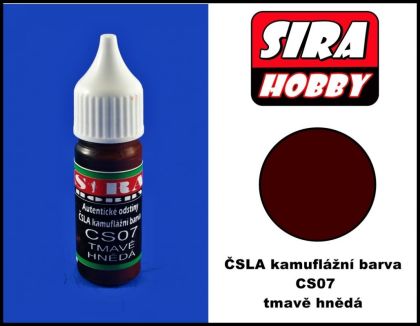
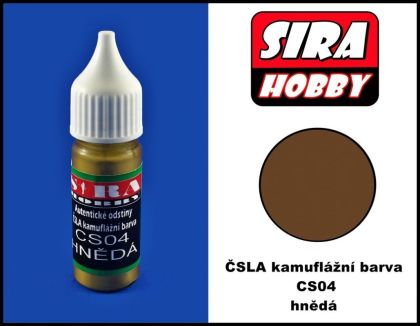
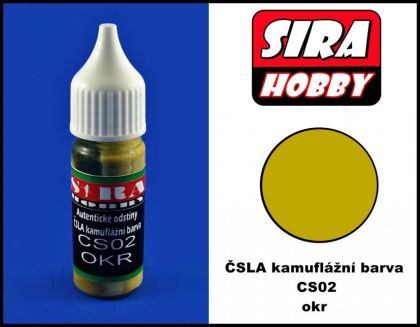
These acrylic model paints follow the camouflage specification of the Czechoslovak People's Army. Four shades — dark brown, brown, light green and ochre — make up a complete set for the three and four-colour schemes applied to Czechoslovak equipment for decades. Nothing has to be estimated from photographs or bodged together from commercial greens.
The group is sold as a set for a reason: no single one of these shades does anything on its own, because the effect comes from the contrast between them. Being acrylic, they thin with water, carry little smell and do not demand an open window. The method for laying the scheme down is below.
Czechoslovak camouflage rests on earthy browns set against green and ochre. That interdependence is why the group belongs together on the bench rather than as individual bottles: get one tone wrong and the whole scheme reads as mud. Work from reference where you have it, and keep the proportions of the patches consistent across the vehicle.
Start with the lightest tone over the whole surface, add the green once it is dry, and finish with the dark brown bands. That order needs the fewest coats, because a dark shade covers a light one reliably and the reverse does not. The rest of the collection sits in the parent category, Sira Hobby authentic shades.
Photographs show both. Sprayed transitions come from working close at low pressure; hard edges need a template. Masking supplies cover both, from tape to mouldable material you can bend into an irregular line.
At 1:72 the pattern on a tracked vehicle is often small enough that a brush is faster than masking. From 1:35 upwards an airbrush earns its keep, because large flat plates finish streaky under a brush.
This scheme is most often seen on tracked vehicles and military lorries, so military vehicle kits is where to pick the next subject.