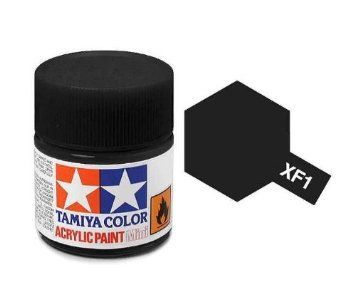
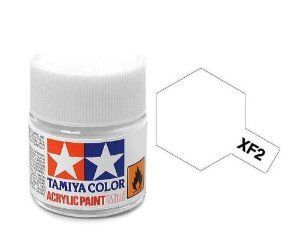
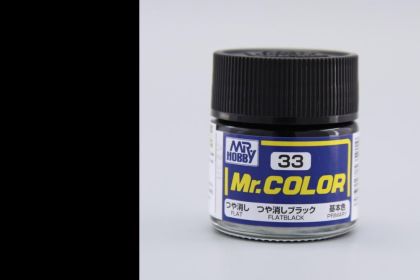
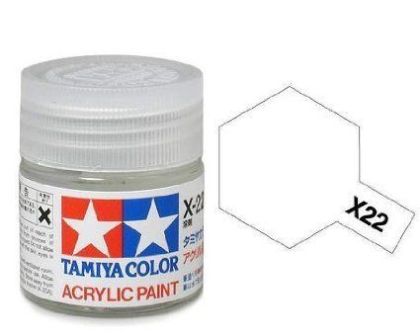
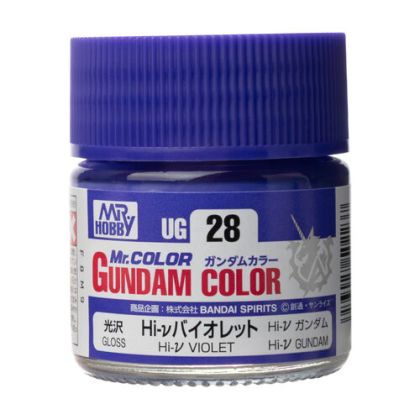
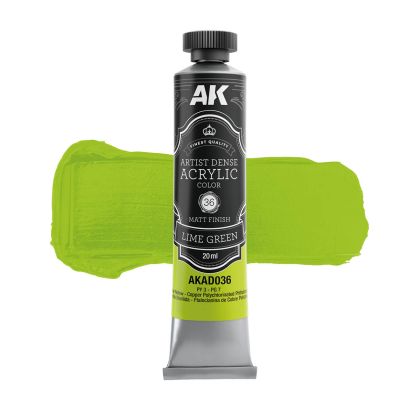
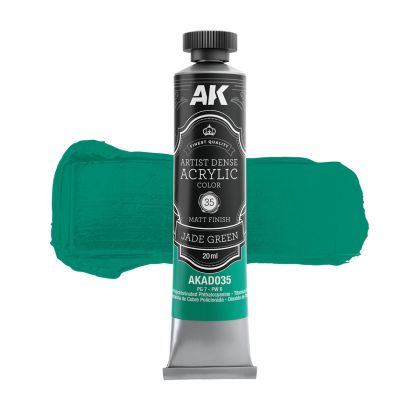
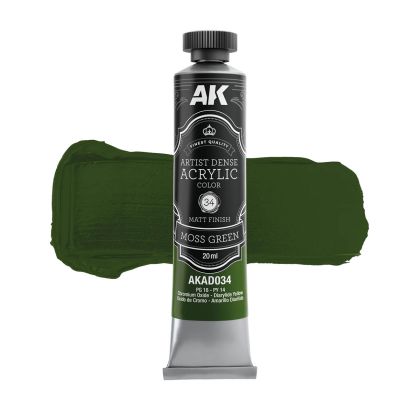
Acrylics are the most widely used group in plastic modelling today, and the reasons are practical: they dry quickly, they lack the fumes of solvent types and tools clean up without harsh chemicals.
The range here is split by line, so you can take a denser paint for handwork or shades already mixed to spraying consistency. Below is a summary of what to expect from acrylic on styrene and what to put either side of it in the sequence. One note before you start: acrylic needs a primed surface and a matching thinner far more than it needs a large palette.
The binder is an acrylic dispersion or resin that forms a flexible film once the carrier has flashed off. The surface is touch-dry in minutes, but a full cure can take a day, which is exactly why masking tape belongs on a properly matured coat. The film is thin enough to leave engraved panel lines readable and tough enough to survive handling.
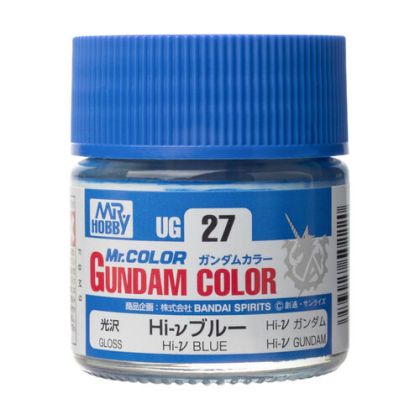
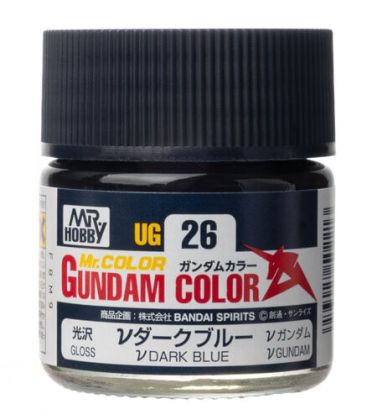
Denser lines are meant for the brush and cover in one or two strokes. Thinner, spray-ready shades save you the mixing step but are too fluid for handwork. If you do both, it is worth keeping some of each and fine-tuning on the palette.
Matt reads more truthfully at scale; gloss belongs on lacquered surfaces, under decals and on clear parts. Metal finishes follow their own rules, which is why they have a separate metallic paints category. Soft blends and subtle grime, meanwhile, are easier with oil paints.
Most acrylics tolerate water, but the matching thinner from the same line gives a better result. Slower drying on the brush is a job for a retarder, which extends the open time and reduces the risk of visible strokes.
The ranges differ mainly in what thins them and how ready they are for spraying: some are water-based and aimed at brushwork, some arrive already at airbrush consistency, and some are tied to their own dedicated thinner. Choose by the technique you work in and by the system you already own, so the shades can be mixed with each other.
When you need a longer open time, better flow into recesses or a genuinely hard film, look at enamels. The full map of binder types sits in the parent model paints category, and spraying equipment in the airbrush section.