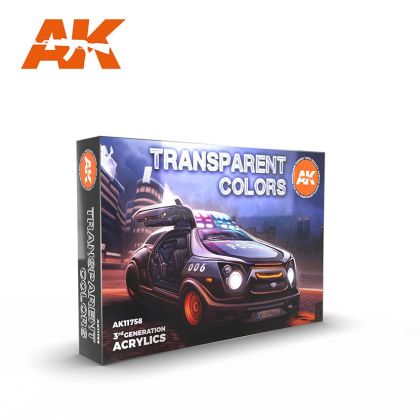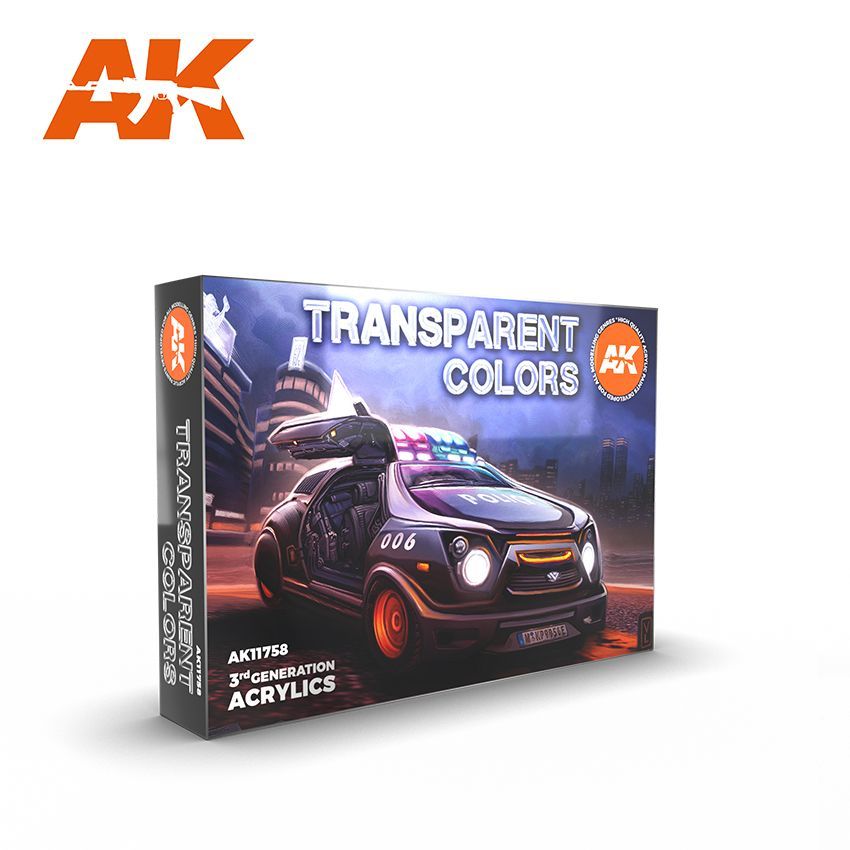


Six translucent shades for lights, beacons, tinted glass and heat-stained exhausts: red, blue, smoke, green, yellow and orange.
Responsibility details are not available.
A translucent paint differs from an opaque one in that it does not cover the base but tints it. That is why it cannot be replaced on tail and position lights, on headlights, on instrument covers or on tinted glazing. Laid over a silver or chrome layer, it gives a lamp a depth that full-bodied paint never creates, because the light passes through the layer of paint, reflects off the metal and comes back out tinted again.
The shades can be mixed together and layered over each other. Every further coat deepens the tone, so from one bottle you get a whole range from a barely noticeable hint to a deep, almost opaque tone.
The base has to be smooth and glossy, or the translucent layer will go flat and the effect will be lost. With smoke you can also suggest heat staining on an exhaust or a dirty cockpit window; a few light passes from the airbrush are enough. On headlights, lay the paint down on the inner side of the lens so that the outer surface stays clean and reflective. Drying takes longer than with opaque paints, so it is better to wait overnight before the next step. And above all spray in thin coats: excess gathers in the corner of a casting into a dark drop that can no longer be fixed except by removing the whole layer. Combining two tones over each other gives an interesting result as well, for instance yellow under orange gives the warm amber typical of older turn signals.
Naši poradci a znalci sortimentu jsou připraveni odpovídat na Vaše dotazy (Po–Pá, 8–18 hod).
Zeptejte se na co potřebujete, odpovíme co nejdříve.
Texts from customers in the advice section reflect solely the opinions and views of the customers. MNF trade s.r.o. does not approve or verify customer texts in advance.
There are no questions here yet. Be the first to ask!