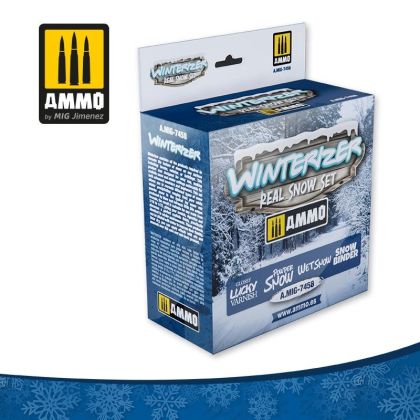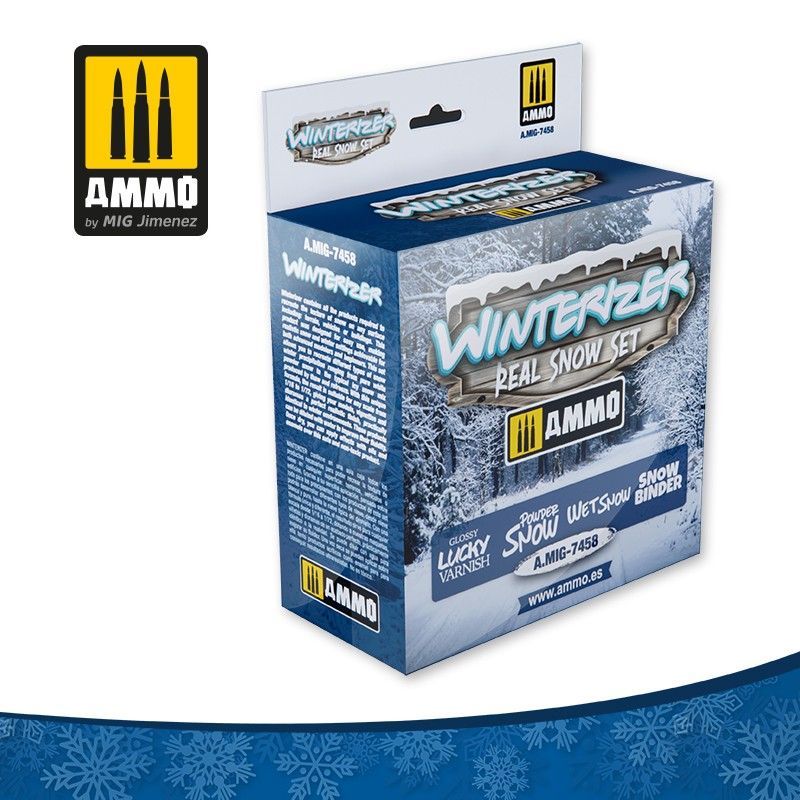
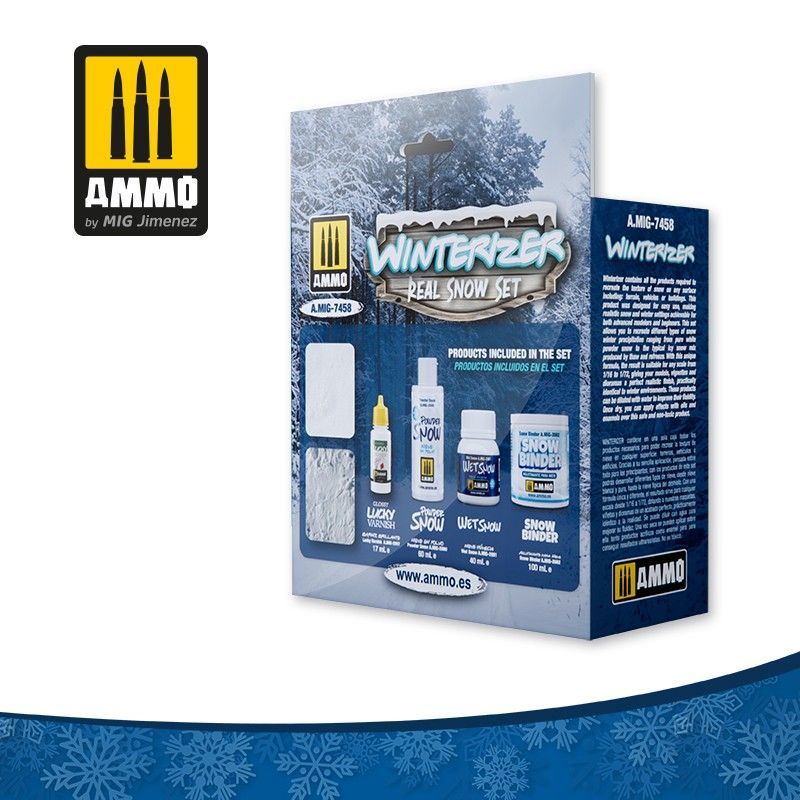
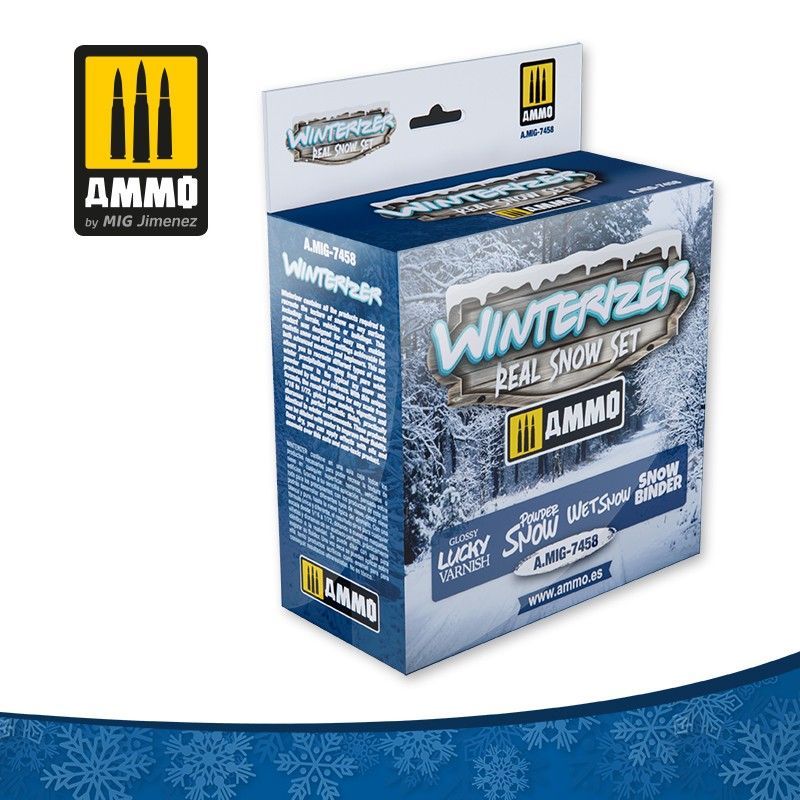
A set for creating snow on a model: 60 ml of loose powder, 40 ml of paste for wet snow, 100 ml of binder and 17 ml of gloss varnish.
Responsibility details are not available.
A winter scene stands or falls on whether the snow looks like snow and not like spilled sugar. A freshly fallen layer is loose and matte, a drift at the edge of a road is usually damp and lumpy, and where vehicles have driven it turns into wet slush with a sheen. It is exactly these three states that separate a convincing diorama from an effort that ends with white paint sprayed over a finished model.
The powder is sprinkled onto a moistened surface or mixed straight into the binder, the paste is spread with a spatula and the bristles of a stiff brush, and the gloss varnish gives melted places a wet reflection.
Always start with the dry layer and only then add the damp areas, as the opposite order is harder to correct. Apply the binder thinly, sprinkle the powder onto it from above and gently blow the excess away once it is dry. Put less snow on horizontal surfaces than seems natural: in scale every layer grows optically and an over-snowed model quickly loses its outlines. Keep the sheen only for tracks, gutters and the area around the engine, where the heat really did melt the snow. The rest of the surface has to stay completely matte. It is also worth thinking about which way the wind blew: drifts hold against vertical walls, on the windward side of the tracks and in the shelter behind crates on the fenders, while smooth sloped armor stays almost bare. This single detail tells a well made winter model from one merely dusted white.
Naši poradci a znalci sortimentu jsou připraveni odpovídat na Vaše dotazy (Po–Pá, 8–18 hod).
Zeptejte se na co potřebujete, odpovíme co nejdříve.
Texts from customers in the advice section reflect solely the opinions and views of the customers. MNF trade s.r.o. does not approve or verify customer texts in advance.
There are no questions here yet. Be the first to ask!