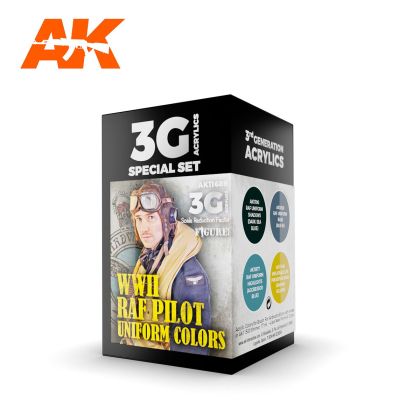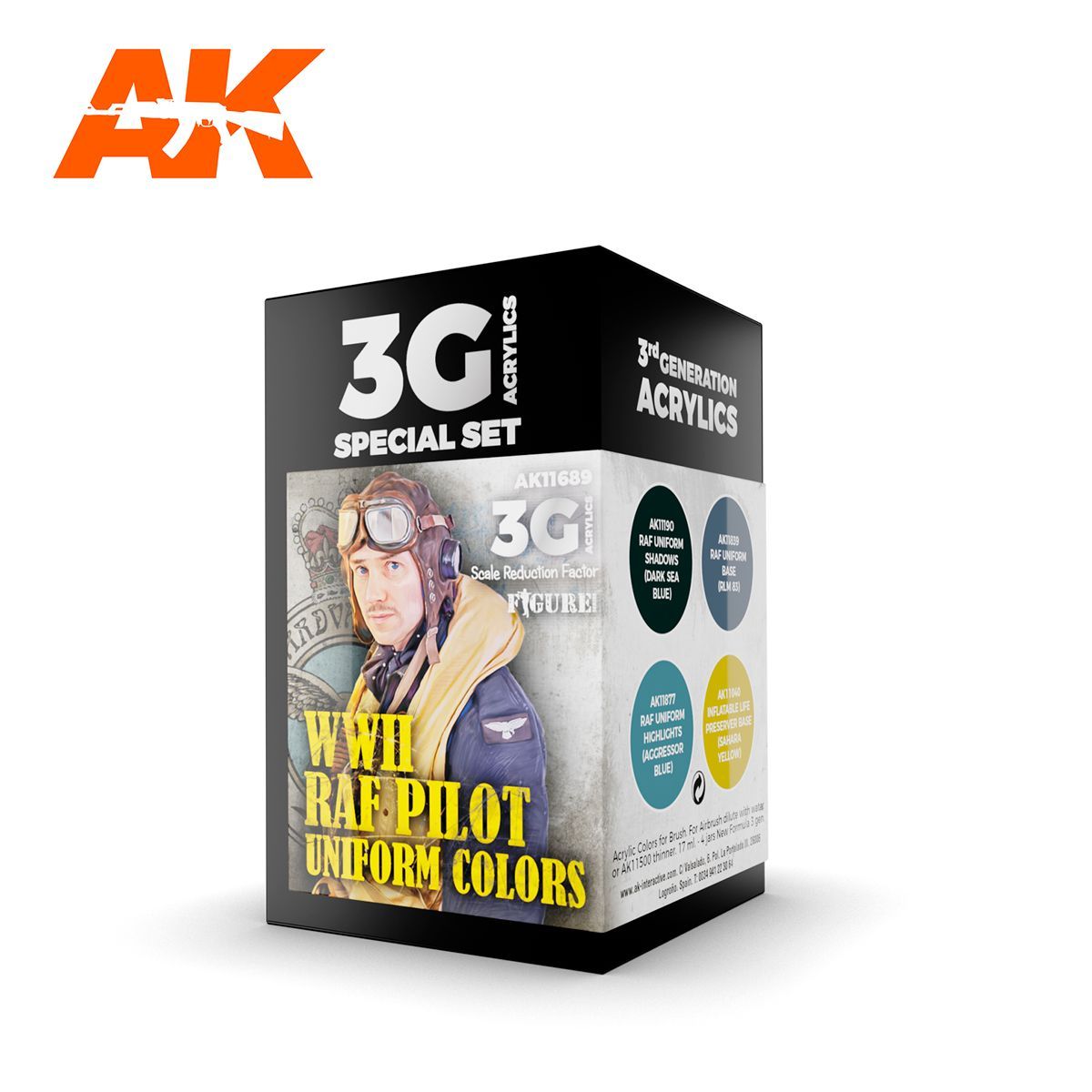


Shades for the blue-gray uniform of a British airman of the Second World War, including the yellow base of the inflatable life vest.
Responsibility details are not available.
Royal Air Force pilots of the Second World War wore a blue-gray tunic whose shade changed in service. New cloth looked deep, while washed and sun-faded cloth looked noticeably lighter. Over it they pulled an inflatable life vest in a garish yellow, so that a man in the water would be visible from as far away as possible. The contrast between the muted tunic and the bright vest makes a figure of a British airman a rewarding subject.
The three uniform shades are mixed so that they follow on from each other: the base, the shadow and the light share the same tone and differ only in brightness, so they can be blended smoothly without mixing any other paints.
First cover the whole tunic with the base, then work the shadow into all the folds and finally bring out the edges with a thin line or an almost dry brush. On small figures, rather overstate the difference between light and shadow, because it will soften optically once the matte surface has dried. Leave the vest markedly yellow and add dirt to it sparingly, otherwise the very thing that should catch the eye most will be lost in the overall view. You paint the remaining pieces of gear from your own stock: leather flying helmets, straps and boots ranged in brown tones, and metal buckles need only a dot of dark metal. The leather of the gloves takes a noticeably greater sheen than the cloth of the tunic.
Naši poradci a znalci sortimentu jsou připraveni odpovídat na Vaše dotazy (Po–Pá, 8–18 hod).
Zeptejte se na co potřebujete, odpovíme co nejdříve.
Texts from customers in the advice section reflect solely the opinions and views of the customers. MNF trade s.r.o. does not approve or verify customer texts in advance.
There are no questions here yet. Be the first to ask!