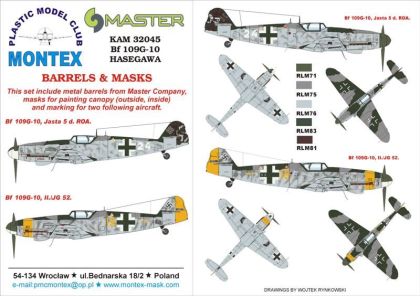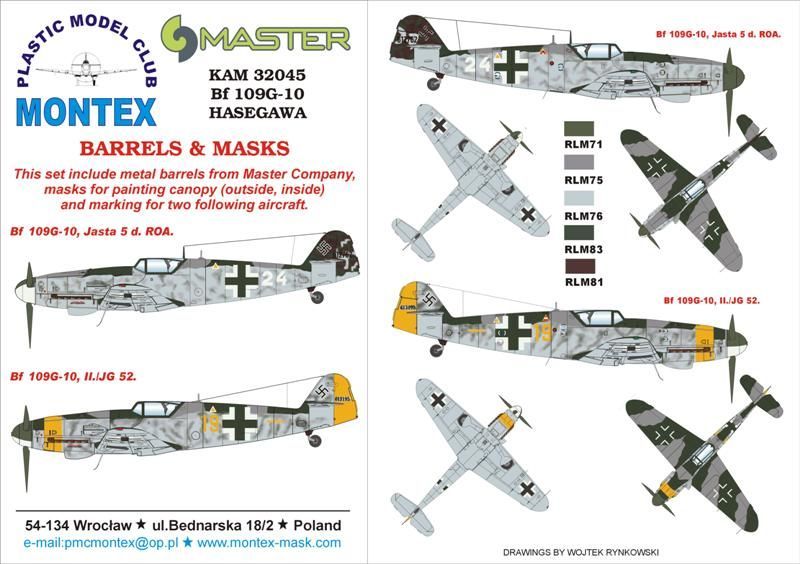
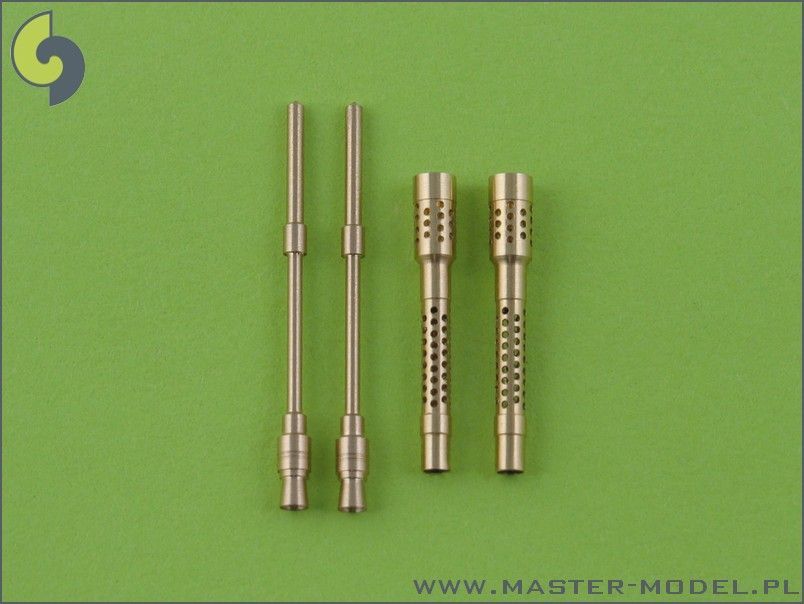
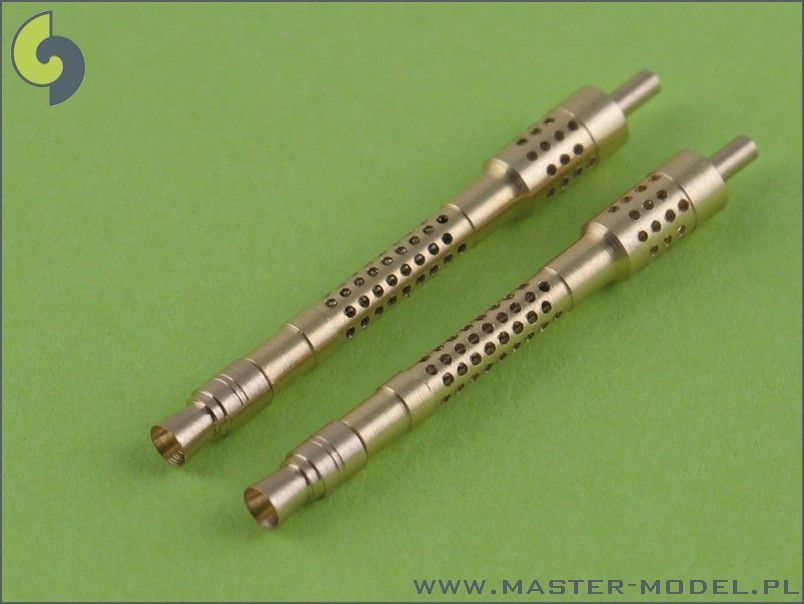
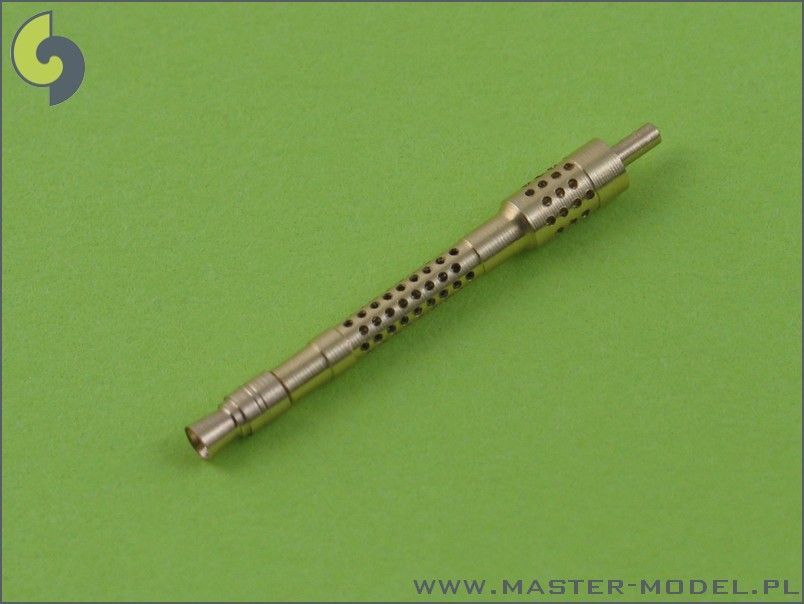
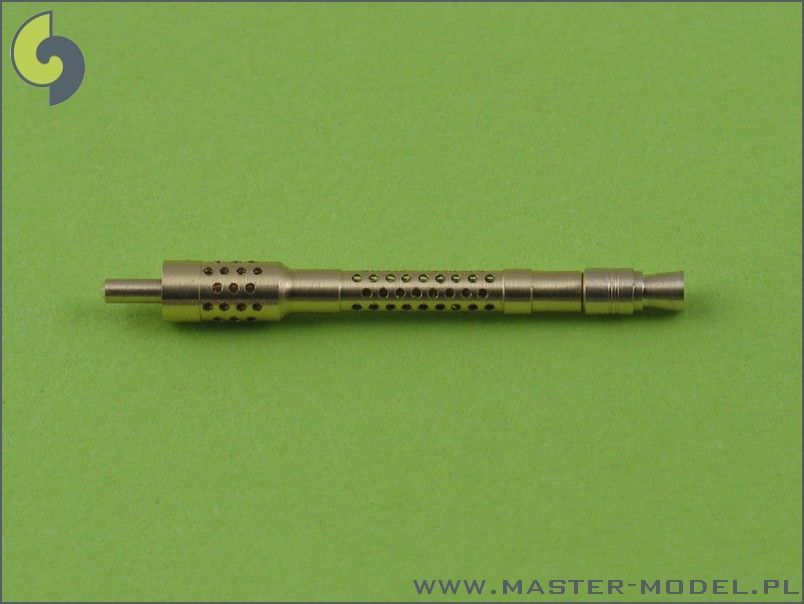
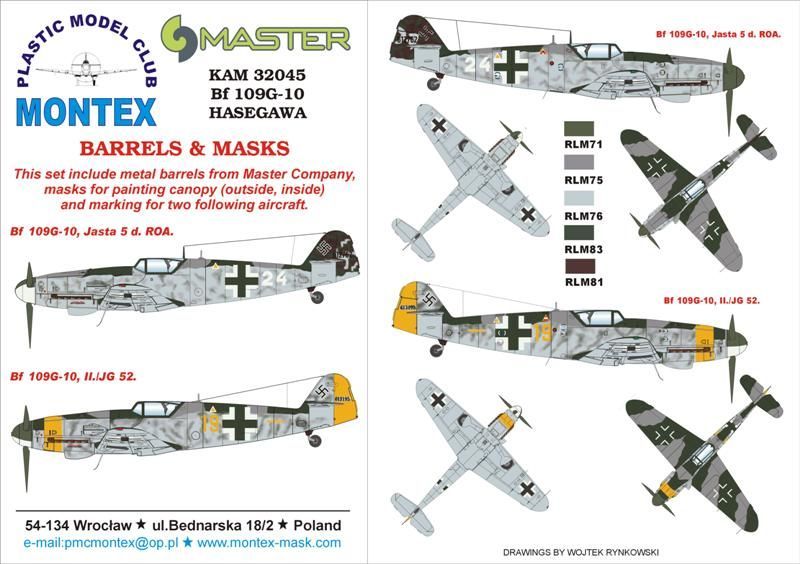
A pair of turned metal barrels in place of the plastic stubs above the engine, and sheets for masking the cockpit and two insignia with them.
Responsibility details are not available.
The rifle cartridge of 7.92 mm caliber was entirely sufficient at the beginning of the conflict. It shot through fabric coverings, thin duralumin sheets and wooden spars without trouble and the high rate of fire made up for the weak effect of a single hit. Over four years, however, the targets changed. A four-engine bomber had an armored seat, self-sealing tanks and so much mass that an ordinary round made only a hole the size of a finger in it.
The answer was a weapon of 13 mm caliber with an explosive shell, which roughly quadrupled the mass of the projectile. It is weapons of exactly that kind that sit above the engine on this subject, and you will find their muzzles in the box as turned metal parts. The rate of fire did drop, but a single hit now really did something, and at the end of the war that was a more significant figure than the number of rounds fired per minute. On a model the change shows in a thicker ring at the muzzle and a bulge over the breech.
Ready here are shapes covering the glazing from the outside as well as the inside and a pair of masks for the national insignia with them. The recommended kit is the model from the Hasegawa brand. A few practical tips: peel the mask off with tweezers by a corner, not with a fingernail, and if paint has bled under it, wait for full curing and scrape the excess away with a toothpick cut into a wedge.
Naši poradci a znalci sortimentu jsou připraveni odpovídat na Vaše dotazy (Po–Pá, 8–18 hod).
Zeptejte se na co potřebujete, odpovíme co nejdříve.
Texts from customers in the advice section reflect solely the opinions and views of the customers. MNF trade s.r.o. does not approve or verify customer texts in advance.
There are no questions here yet. Be the first to ask!