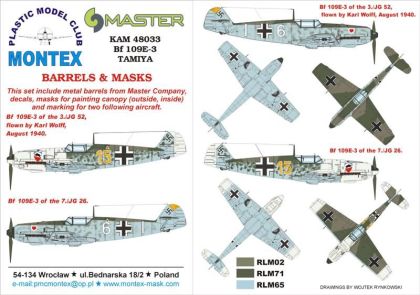
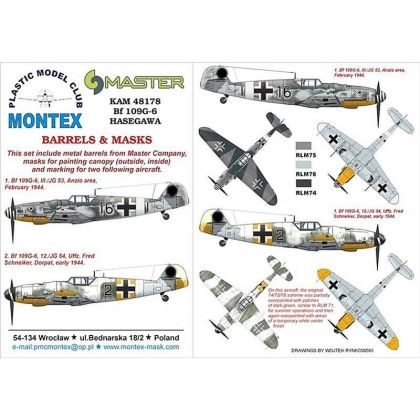
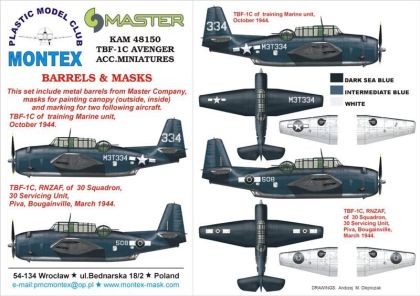
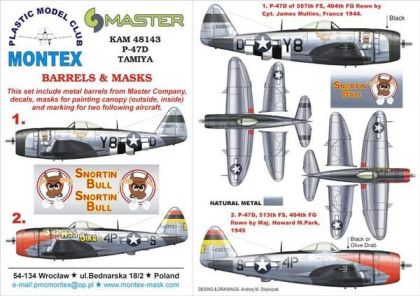
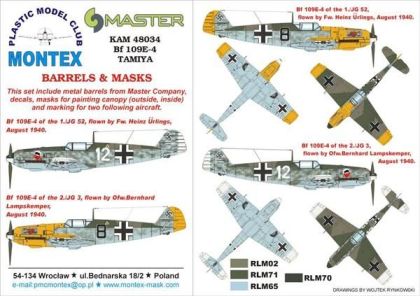
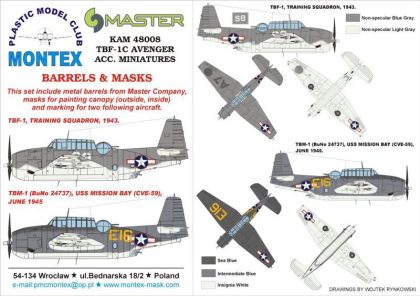
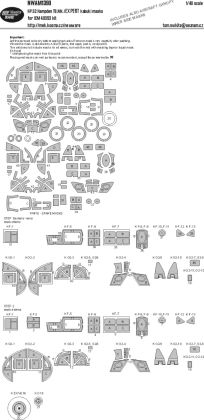
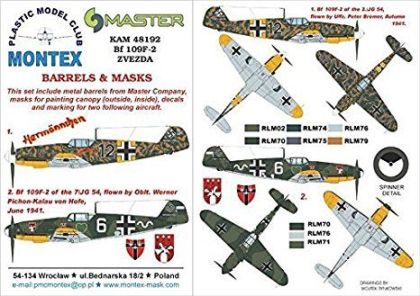
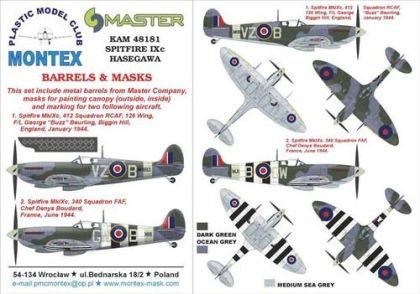
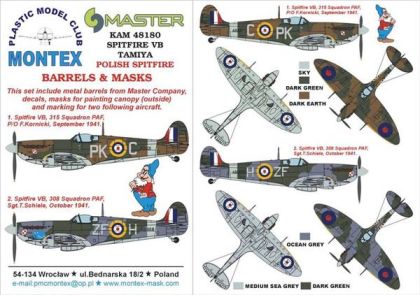
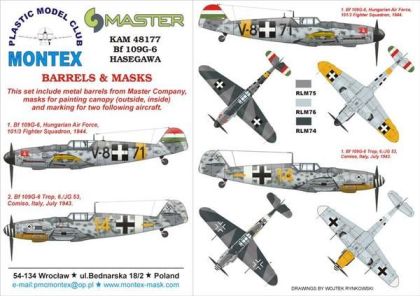
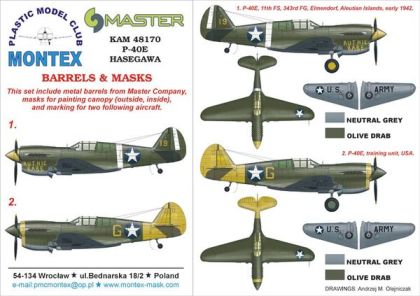
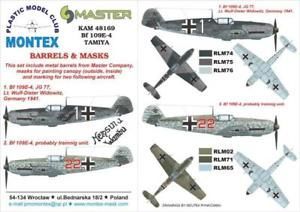
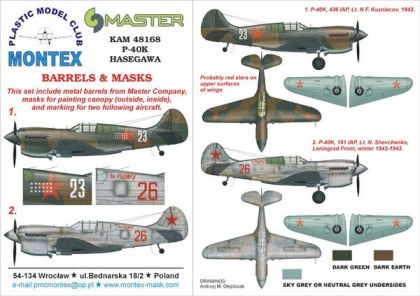
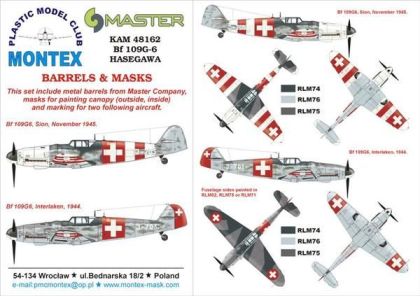
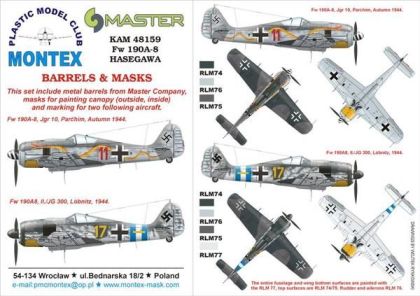
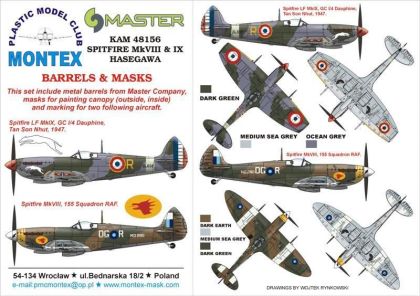
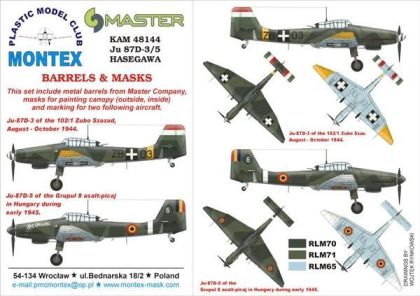
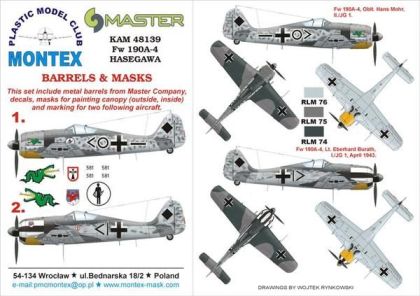
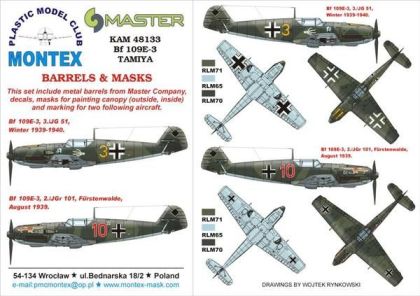
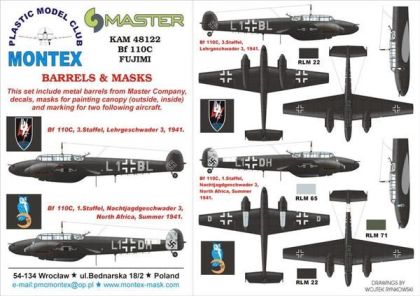
Montex and Master combination sets for aircraft tackle the two most visible weaknesses of a kit at once: spraying the canopy framing, and the moulded plastic gun muzzles. One bag holds die-cut Montex masks together with turned brass parts from Master, so the hood gets sharp framing while machine guns and cannon gain a genuine metal look. Below you will find how to identify the right set for the kit on your bench, and what to watch for when working with masks.
The core of every set is the Montex masking: precisely die-cut self-adhesive templates for the canopy, and on many sets for the wheels and national insignia as well. Spraying an insignia instead of applying a decal looks markedly more convincing on a matt camouflage finish. The other half comes from Master, a Polish specialist in turned brass; depending on the type that means machine gun and cannon barrels, and sometimes a pitot tube. Sets are listed for the Bf 109, Spitfire, Fw 190, P-40 and P-47, and alongside Montex the listing also carries die-cut masks from New Ware.
Masks are cut for one tooling, which is why every set title names the kit it belongs to. Glazing from another manufacturer has differently shaped frames and the template will not seat. Check both the scale and the kit named in the set title before ordering.
A moderately experienced modeller will cope: press the template onto degreased glazing, work the edges down with a cocktail stick and spray. A brass barrel needs nothing more than shortening the plastic part and a drop of cyanoacrylate, and it repays you with a perfectly round muzzle that moulded plastic will never match.
In the large 1:24 and 1:32 scales a metal barrel is close to mandatory, because the viewer sees it head on. In 1:48 the insignia masks are the bigger win, as a sprayed marking sits in the paint rather than on it and will never silver.
Choose the airframe the set will go on in aircraft model kits, then simply match the scale and the kit named on the set.