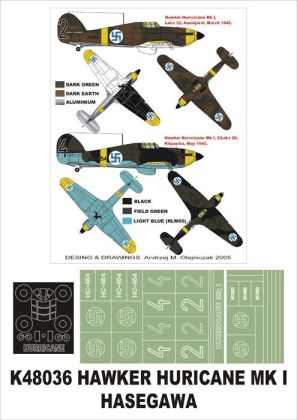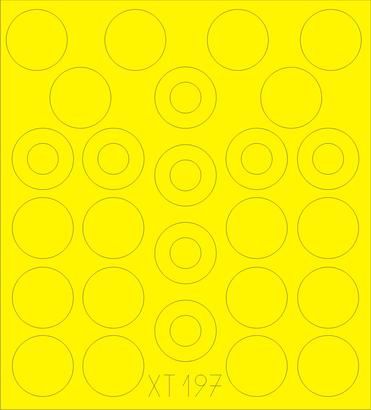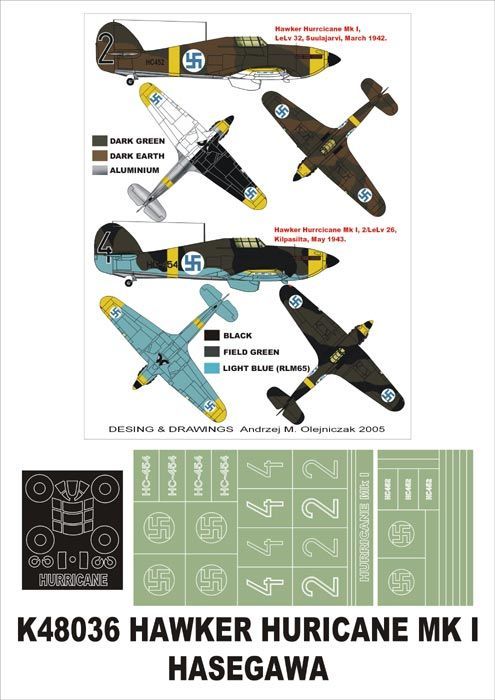
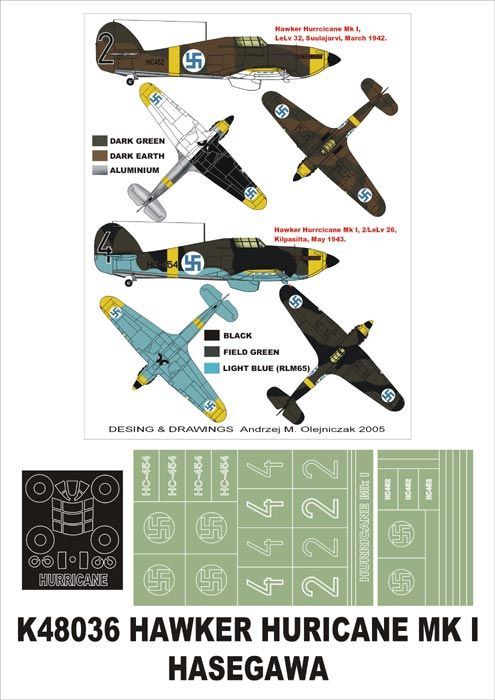
A set of masks in 1:48 for the Hurricane of the first series. It masks the outer surfaces of the glazing and adds a pair of stencils for spraying the national insignia.
Responsibility details are not available.
When the fighting over southern England began in the summer of 1940, the squadrons equipped with this type made up the greater part of the single-seat strength of Fighter Command. The victory statistics still credit Hurricanes with more opponents shot down than all the other British machines put together. That was due not only to numerical superiority but also to the tactics by which Hurricanes went for the bomber formations while their faster colleagues tied down the fighter escort.
Sydney Camm designed the fuselage as a truss frame of steel tubes covered with fabric, a technique inherited from biplanes. It looked outdated, but it had a practical consequence: splinters passed through the fabric without consequence and a damaged machine could be repaired at the airfield within a few hours. The wide track of the landing gear took the grass strips that were used for take-off at the time. Eight 7.7 mm machine guns were concentrated in the wing, outside the propeller disc.
The films cover the outer surfaces of the canopy and the windscreen, and two national insignia stencils are enclosed with them. The framing on this type is intricate and outlining it by hand with tape tends to be protracted, so a finished cut saves a substantial part of an evening.
Before you buy the sheet, compare its shape with the clear part of the kit you have at home. You will find neither a finished aircraft nor the paint to spray it with in the bag.
Naši poradci a znalci sortimentu jsou připraveni odpovídat na Vaše dotazy (Po–Pá, 8–18 hod).
Zeptejte se na co potřebujete, odpovíme co nejdříve.
Texts from customers in the advice section reflect solely the opinions and views of the customers. MNF trade s.r.o. does not approve or verify customer texts in advance.
There are no questions here yet. Be the first to ask!