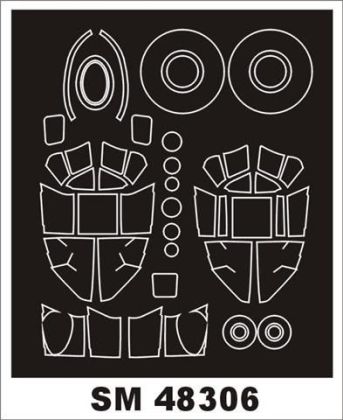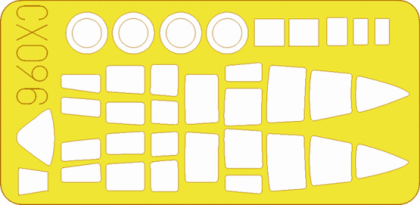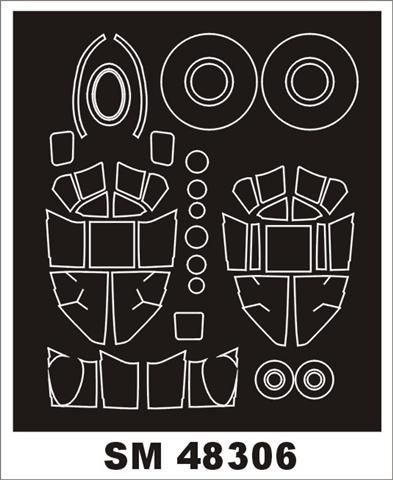
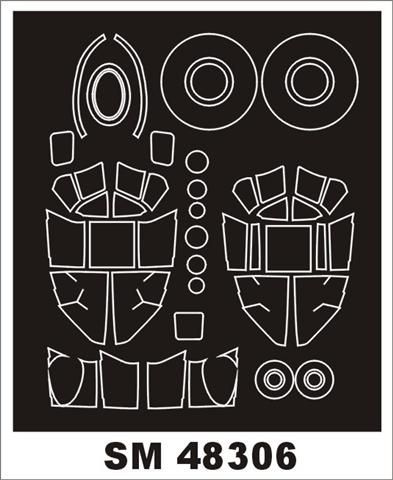
Cut glazing masks for the 1:48 bomber version of the de Havilland Mosquito, for the outer and the inner side. The cut matches the Revell kit.
Responsibility details are not available.
The Mosquito came about against the will of the authorities: a private project allowed for wooden construction, a crew of two and the fact that the machine would have not a single defensive machine gun. Speed was to serve it instead of armor, and it did. The bomber version carried its load into the heart of Germany and came back higher and faster than fighters could react to it. Wood also freed up capacity in aircraft factories, because furniture workshops bonded the fuselages. The fame of the type is associated today mainly with precision raids on individual buildings, where what mattered was that the bomb went through a window and did not hit a whole district. In the same role it later marked targets for night formations with flares.
The cockpit has a glazed nose with large rounded fields and side windows, where taping by hand almost never comes out symmetrical. The pre-cut parts are set between the frames and solve the symmetry for the modeler.
Work is done from both sides so that the framing does not stay translucent. The film adapts even to the domed front of the nose, provided it is laid on in sections and the edges are pressed with a toothpick. Any excess at the transition between fields is better cut off than forced down, because stretched film returns by itself after a while and reveals a stripe of unsprayed glass. A wooden surface is also sprayed smooth and without texture, so the only sharp detail in the front part of the model is precisely the framing.
Naši poradci a znalci sortimentu jsou připraveni odpovídat na Vaše dotazy (Po–Pá, 8–18 hod).
Zeptejte se na co potřebujete, odpovíme co nejdříve.
Texts from customers in the advice section reflect solely the opinions and views of the customers. MNF trade s.r.o. does not approve or verify customer texts in advance.
There are no questions here yet. Be the first to ask!