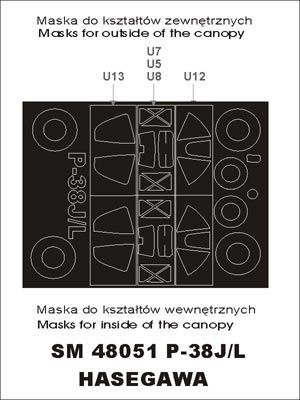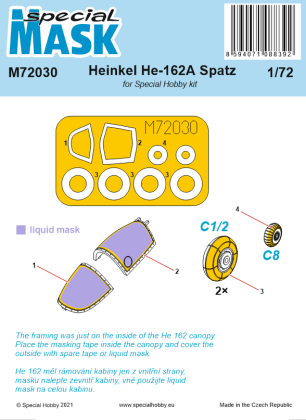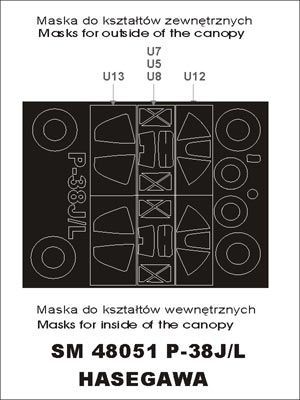
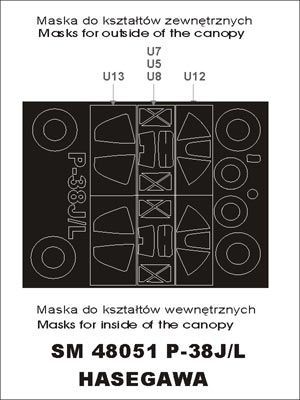
Templates for the glazing of the twin-boom American fighter, the late production versions, 1:48 scale. Face and reverse, shaped to the Hasegawa kit.
Responsibility details are not available.
The arrangement with two booms and a short nacelle in the middle did not come about on a whim. The 1937 requirement called for a rate of climb and a range that one engine could not deliver, so the designers settled on a pair. The result was priceless in the Pacific: over water a second engine meant a hope of getting back, and the long legs allowed bombers to be escorted where single-engine machines could not reach. The most successful American pilot of the whole war scored his victories on this very type.
The production forms named in the title are the mature ones. The intercoolers moved under the propellers into a deep chin, which finally stopped the carburetor freezing at altitude. Dive recovery flaps were added that pulled the machine out of a steep descent where it used to lose control, and the aileron controls received a booster. The difference between the two letters lies mainly in what came from the factory and what was fitted in the workshop.
The space for the pilot is wedged here between the booms and divided into an upper hinged section, side wind-down windows and a front pane with a frame. There are many facets and they are small, so cutting them along a straightedge does not pay off.
The shape of the parts matches the clear components by Hasegawa. A casting of another origin divides the cockpit differently and the templates would miss the frames on it.
Naši poradci a znalci sortimentu jsou připraveni odpovídat na Vaše dotazy (Po–Pá, 8–18 hod).
Zeptejte se na co potřebujete, odpovíme co nejdříve.
Texts from customers in the advice section reflect solely the opinions and views of the customers. MNF trade s.r.o. does not approve or verify customer texts in advance.
There are no questions here yet. Be the first to ask!