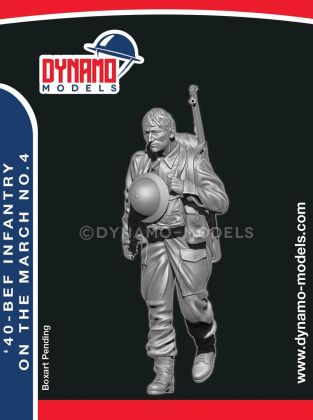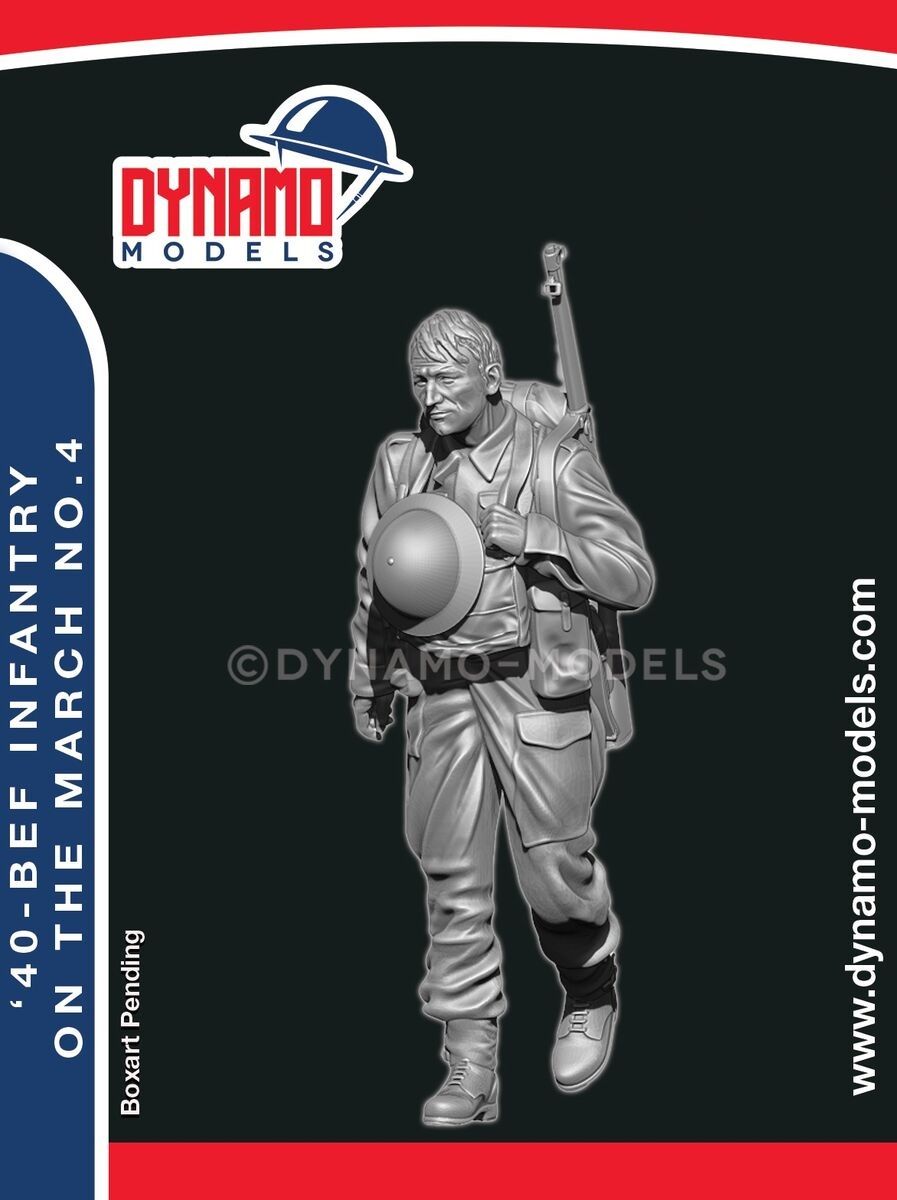
The closing fourth figure of the British marching quartet in 1:48 brings up the rear of a column and suits exactly its end, where the stride tends to be least in step.
Responsibility details are not available.
The four in the designation closes the basic quartet of British infantrymen on the move. In a scene it works well at the end of a column, where the movement tends to be least in step and where a figure can allow itself a more relaxed stance than the men at the front. The column then does not end abruptly but tails off, which is exactly the impression a tableau is after.
With a column it is rhythm that decides. Place the figures unevenly, vary the gaps between them and turn the whole group slightly at an angle to the edge of the base, so that the column leads the viewer's eye into depth. A raised verge, a wheel rut and a few blades of grass will do more for the impression of space than one more figure. It also works well to leave an open space in front of the first figure.
British units in France in 1940 moved through a countryside full of low banks, tree-lined roads and villages with rendered houses. Such a setting is easy to build in miniature and does not call for a large base. An interesting pairing is made by marching men and a motionless civilian cart or a farm animal by the road, because stillness and movement bring each other out.
Naši poradci a znalci sortimentu jsou připraveni odpovídat na Vaše dotazy (Po–Pá, 8–18 hod).
Zeptejte se na co potřebujete, odpovíme co nejdříve.
Texts from customers in the advice section reflect solely the opinions and views of the customers. MNF trade s.r.o. does not approve or verify customer texts in advance.
There are no questions here yet. Be the first to ask!