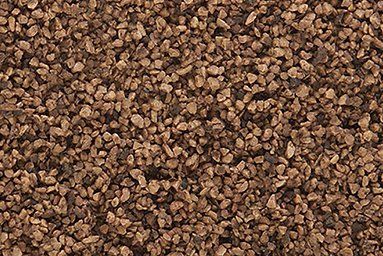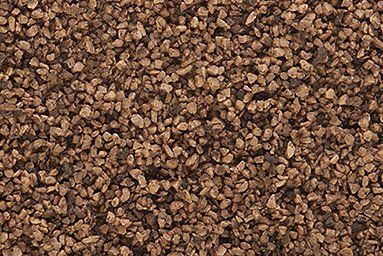
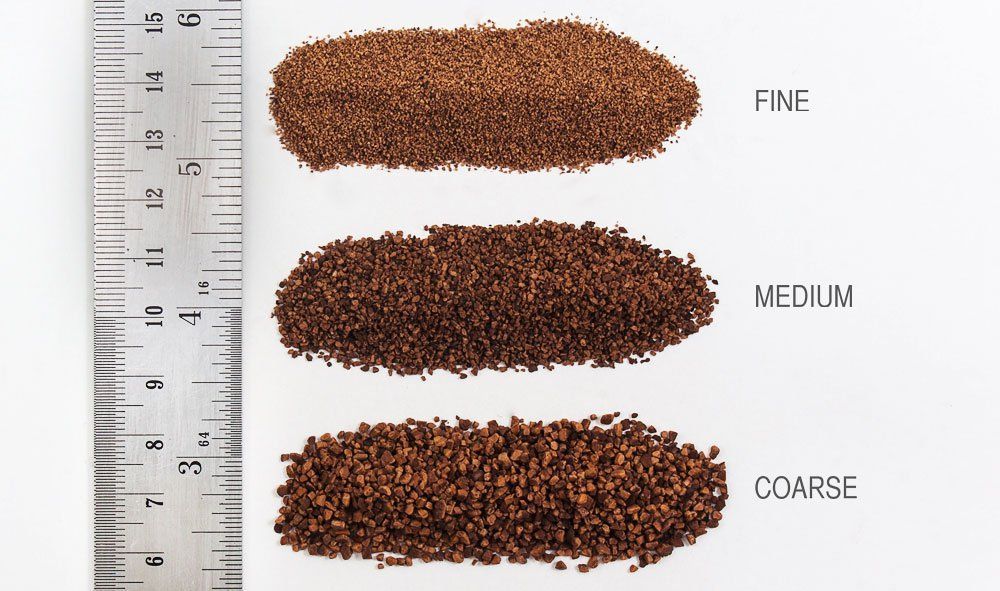
A brown scatter with a coarse grain, a 945 cm³ shaker. Large stone for the bigger scales, embankments and stony slopes.
Responsibility details are not available.
A coarse grade changes the look of a scene more than one would expect. The individual grains are clearly visible, the surface stops looking like powder and starts to look like stone that somebody loaded, hauled and tipped out. The brown coloring adds to that the impression of material that has been lying in place for years.
On large layouts it holds the scale better than fine stone, but it shows its real strength off the track: in the bed of a stream, on a slide below a rock face or as a load tipped into the bed of a truck. In all those places you need to see the shape of the individual stones.
Layering is a good idea. First spread finer material as a base and only then add the coarse grains on top. That creates a natural layering in which the fine material fills the gaps and the large pieces lie on top, exactly as in places where water flows through.
A coarse scatter asks for somewhat more glue, because larger voids stay between the grains. Even so it does not hold that the thicker, the better. Rather add a second pass with a thinned mixture once the first layer has dried.
If you want to create a heap of excavated material, pour the stone into a cone through a tube of paper. It will slide of itself into the slope that a real pile has too.
Naši poradci a znalci sortimentu jsou připraveni odpovídat na Vaše dotazy (Po–Pá, 8–18 hod).
Zeptejte se na co potřebujete, odpovíme co nejdříve.
Texts from customers in the advice section reflect solely the opinions and views of the customers. MNF trade s.r.o. does not approve or verify customer texts in advance.
There are no questions here yet. Be the first to ask!