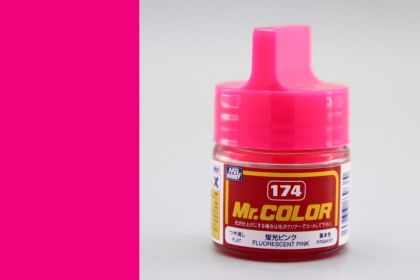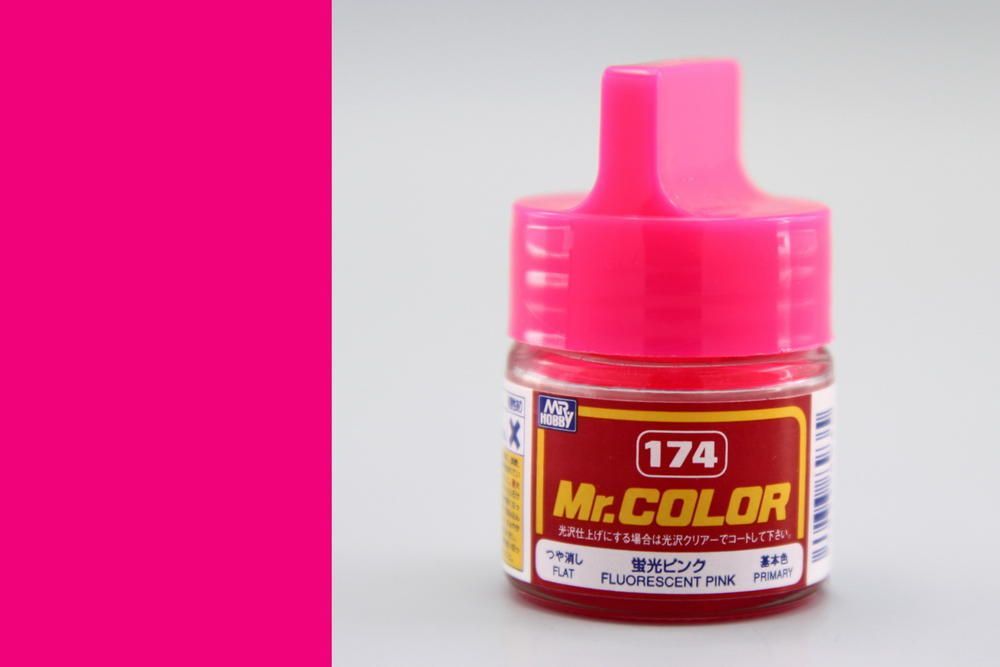

A fluorescent pink with a rich, almost glowing look. It needs a white base and several thin coats, or it stays translucent.
Responsibility details are not available.
Fluorescent pigments can convert invisible ultraviolet radiation into visible light, so in daylight they look more intense than a natural pigment ever could. Modelers reach for this pink on the warning markings of training targets and rescue aircraft, on sports cars and motorcycles from the 1980s, on robots and sci-fi equipment where a detail needs to really pop, and also on tabletop-game figures.
Glowing pigments cover almost nothing, since their grains have to let light through. On a dark or gray surface, the pink disappears into the murk. The process is simple: first a rich white undercoat, and once it dries, three to four very thin passes with a pause between each. Applying it more heavily does not help; a thick layer will curdle and roughen the surface.
Bright shades have one weakness worth knowing about in advance: they gradually fade in direct sunlight. So place a finished model away from a window and seal the surface with a varnish. Anyone painting gaming figures will appreciate that the shade can be shifted toward a warmer tone with a drop of orange without losing its glow. It is thinned with the same lacquer thinner as the rest of this family; water will ruin it. Load the airbrush with a thinner mix than you would use for an ordinary opaque color.
Naši poradci a znalci sortimentu jsou připraveni odpovídat na Vaše dotazy (Po–Pá, 8–18 hod).
Zeptejte se na co potřebujete, odpovíme co nejdříve.
Texts from customers in the advice section reflect solely the opinions and views of the customers. MNF trade s.r.o. does not approve or verify customer texts in advance.
There are no questions here yet. Be the first to ask!