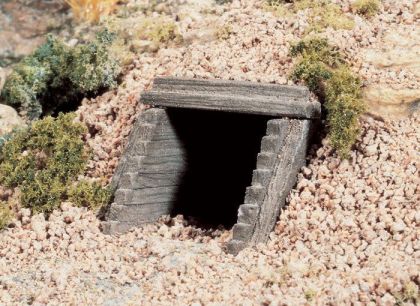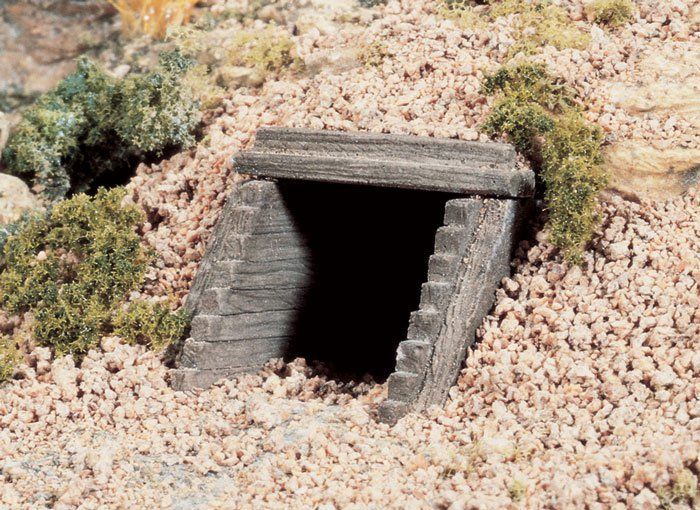
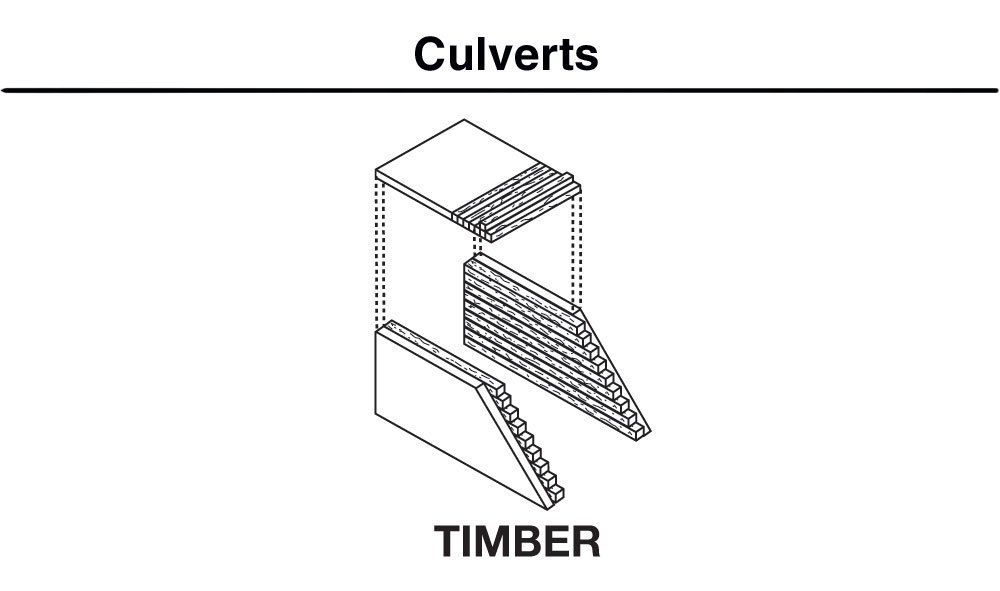

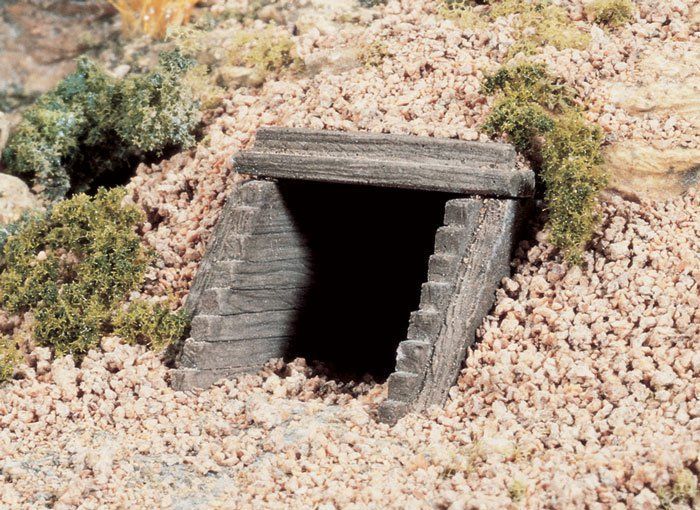
A wooden timber culvert for an HO layout. Outer dimensions of roughly 3.17 x 6.03 x 2.54 cm, and the surface is waiting for a stain or a pigment.
Responsibility details are not available.
Timber culverts were the answer to haste and a shortage of money. Where the building went quickly, where a line was to serve only for as long as timber or ore was being extracted and where the forest was right behind the embankment, the gangs put together a simple box of hewn logs and planks, threaded it through the roadbed and moved on. It lasted ten or fifteen years before damp and rot got it, and then it was either replaced or superseded by a stone object. There were hundreds of them on North American logging railroads and in Europe too they were allowed for on temporary lines and sidings.
The casting captures the face of such a structure complete with the visible pattern of growth rings and cracks in the wood. The outer measurements are approximately 3.17 cm in width, 6.03 cm in depth and 2.54 cm in height, so it is a deep and low object that hides in a smaller embankment in the ratio 1:87.
Wood is painted differently than stone. Start with a heavily thinned gray-brown tone, which runs into the grooves, and only then bring out the edges of the planks with a dry brush. The lower part is licked by water all year round, so the darkest tone belongs there, with a narrow faded band above it left by the fluctuating water level. A few details move the result on the most:
Naši poradci a znalci sortimentu jsou připraveni odpovídat na Vaše dotazy (Po–Pá, 8–18 hod).
Zeptejte se na co potřebujete, odpovíme co nejdříve.
Texts from customers in the advice section reflect solely the opinions and views of the customers. MNF trade s.r.o. does not approve or verify customer texts in advance.
There are no questions here yet. Be the first to ask!