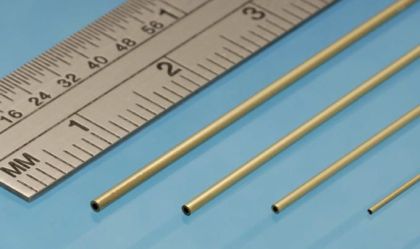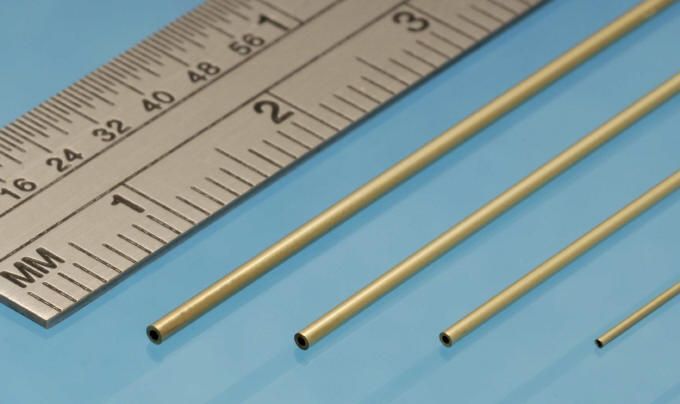
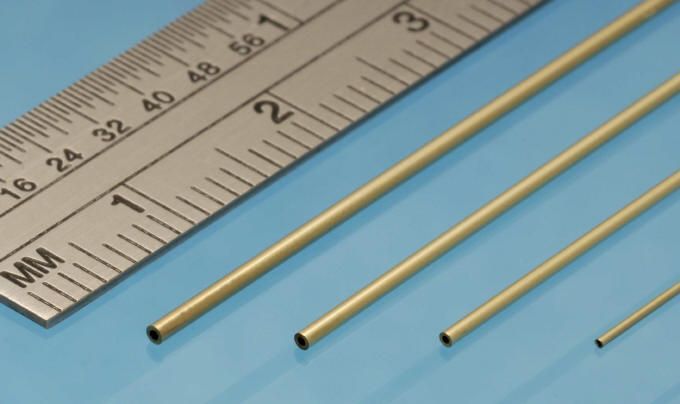
An Albion Alloys metal tube with diameters of 1.9 and 1.7 mm; one piece measures 305 mm.
Responsibility details are not available.
Just under two millimeters of outer diameter move this size to jobs where thinner material already flexes noticeably. At the same time the 1.7 mm bore opens the option of threading a wire, a steel string or a thinner tube through the tubing and joining two parts with a pin that will not be seen.
Modelers use a size like this for exhaust mouths, barrel collars, flap hinges, grab handles, railing posts and for reinforcing glued joints inside resin parts. Once chucked in a drill, the metal can be sanded into a cone or chamfered, which is not possible with a plastic substitute without collapsing the wall. The surface can also be blackened with a metal patina product to gain a dark metal tone with no spraying.
Bending metal tubing is always a compromise between radius and flattening. A small radius stretches the wall on the outside and the section gets squashed, so a tight wire is pushed into the bore before bending and the bend is made over a cylinder rather than over an edge. On parts where a bend does not have to look good, it is usually cleaner to make an elbow from two chamfered pieces glued together.
Keep offcuts longer than a couple of centimeters even after the build is finished. An offcut can make a handle, a spacer ring or a housing for a magnet, and hunting out a whole piece again for that is unnecessary.
Naši poradci a znalci sortimentu jsou připraveni odpovídat na Vaše dotazy (Po–Pá, 8–18 hod).
Zeptejte se na co potřebujete, odpovíme co nejdříve.
Texts from customers in the advice section reflect solely the opinions and views of the customers. MNF trade s.r.o. does not approve or verify customer texts in advance.
There are no questions here yet. Be the first to ask!