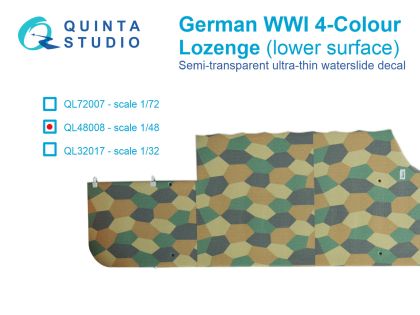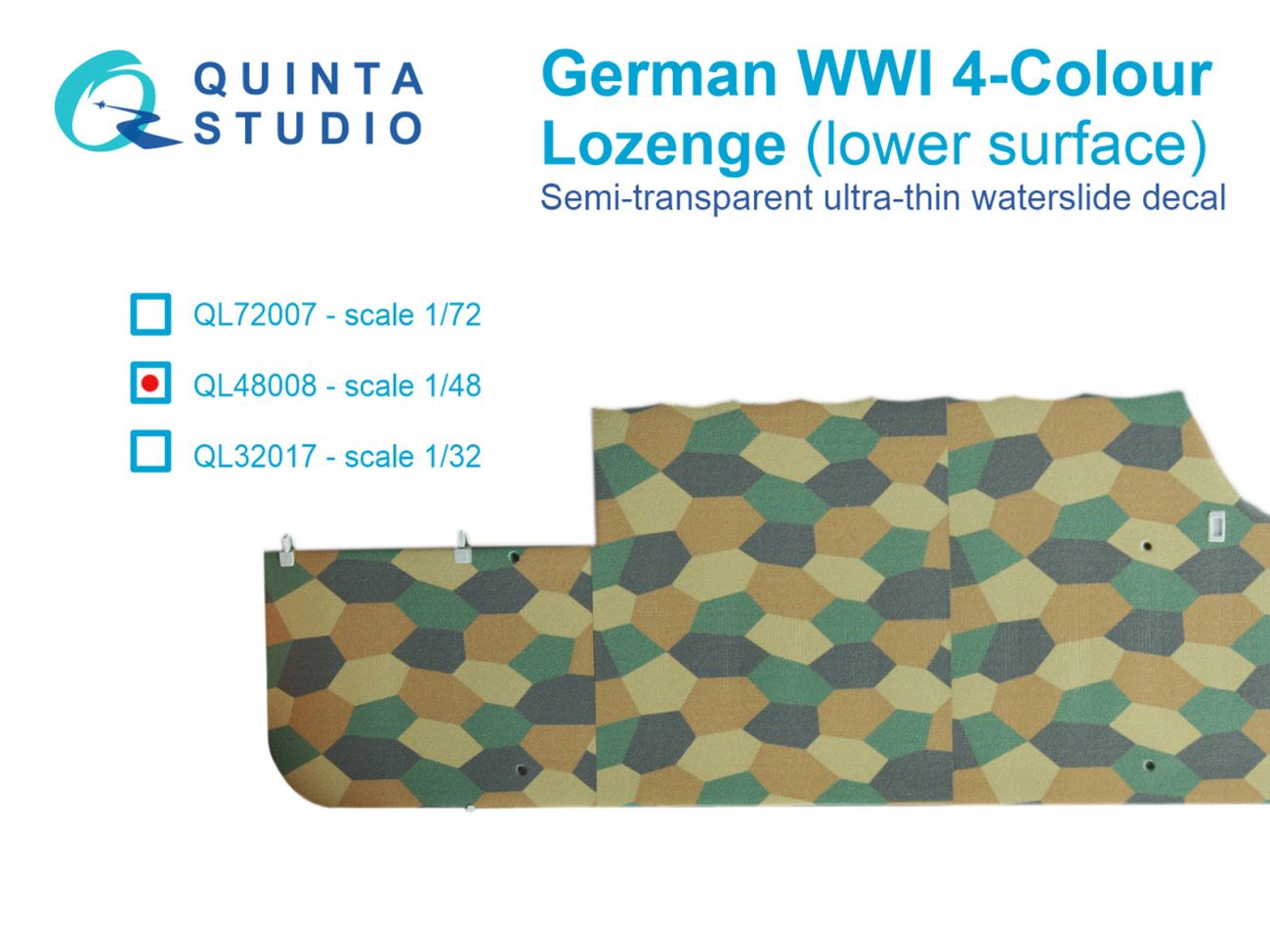
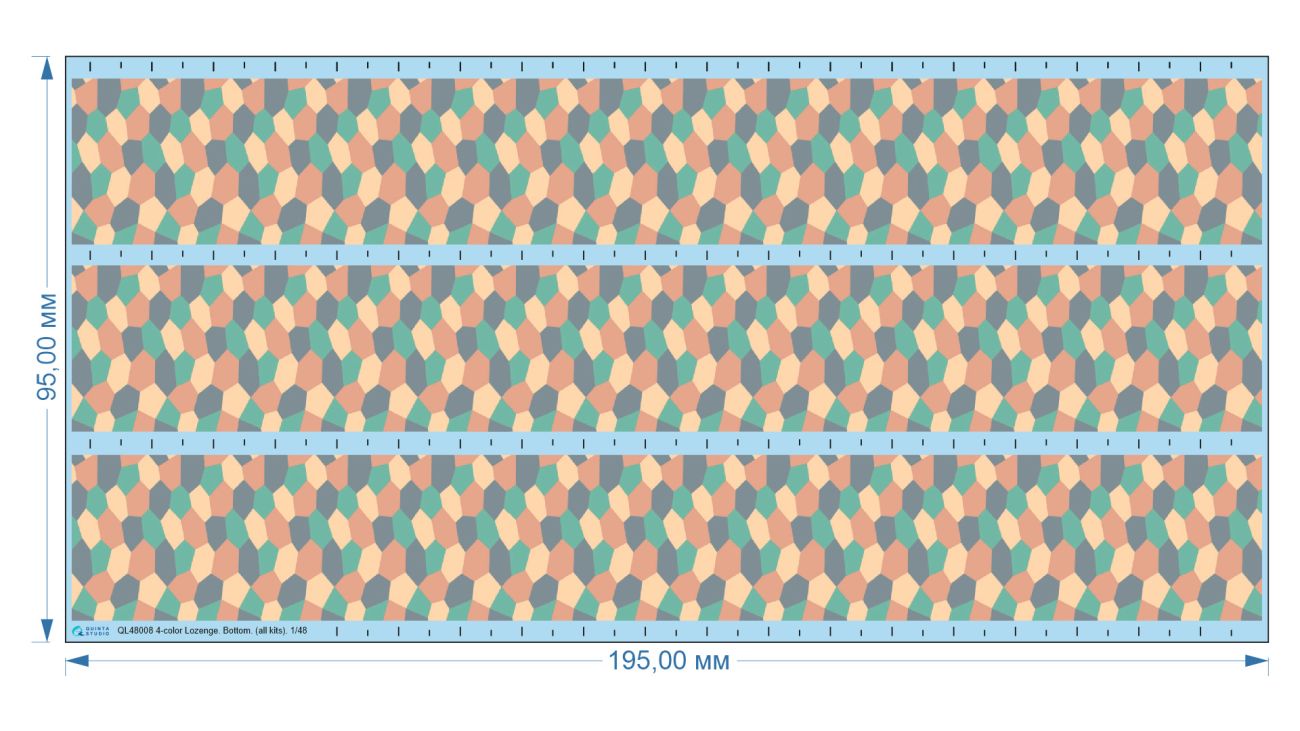
A decal sheet with the four-color lozenge pattern for the lower surfaces of German First World War aircraft, in 1:48 scale.
Responsibility details are not available.
German aircraft of the First World War were given a covering of printed fabric with a polygonal pattern known as lozenge. The pattern took the place of sprayed camouflage: the colored fields repeated in a regular grid and broke up the outline of the surface when seen from a distance. Variants with different numbers of shades were used, and the lower surfaces usually carried a lighter version than the upper ones. This sheet brings the four-color variant for the lower surfaces.
These are classic wet decals. Cut out the piece you need, dip it in water for a moment and let it stand until the film starts to slide freely on its backing. Move it into place, adjust the position and press the excess water out with a soft stick, working from the middle toward the edges. The base should be smooth and glossy; on a matte surface air gets trapped under the film and the decal goes white.
Cover the surface piece by piece and watch that the pattern lines up; in 1:48 scale you have plenty of room to align the grid, which makes any overlap all the more noticeable. On ribs and pressings use a decal softener, which settles the film into the surface, and do not move the part until it is dry. Finally, varnish the surface so that the edges of the film disappear and the finish looks uniform.
The sheet will be appreciated by builders of German First World War aircraft who want the lozenge pattern instead of laborious painting. The package contains decals only; the model, paints, varnish and decal softener are not included, unless stated otherwise.
Naši poradci a znalci sortimentu jsou připraveni odpovídat na Vaše dotazy (Po–Pá, 8–18 hod).
Zeptejte se na co potřebujete, odpovíme co nejdříve.
Texts from customers in the advice section reflect solely the opinions and views of the customers. MNF trade s.r.o. does not approve or verify customer texts in advance.
There are no questions here yet. Be the first to ask!