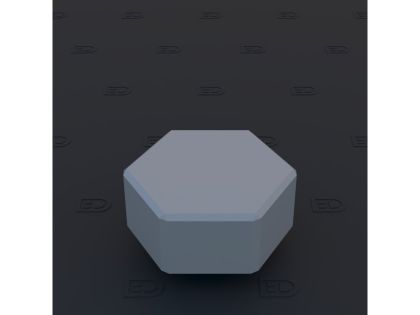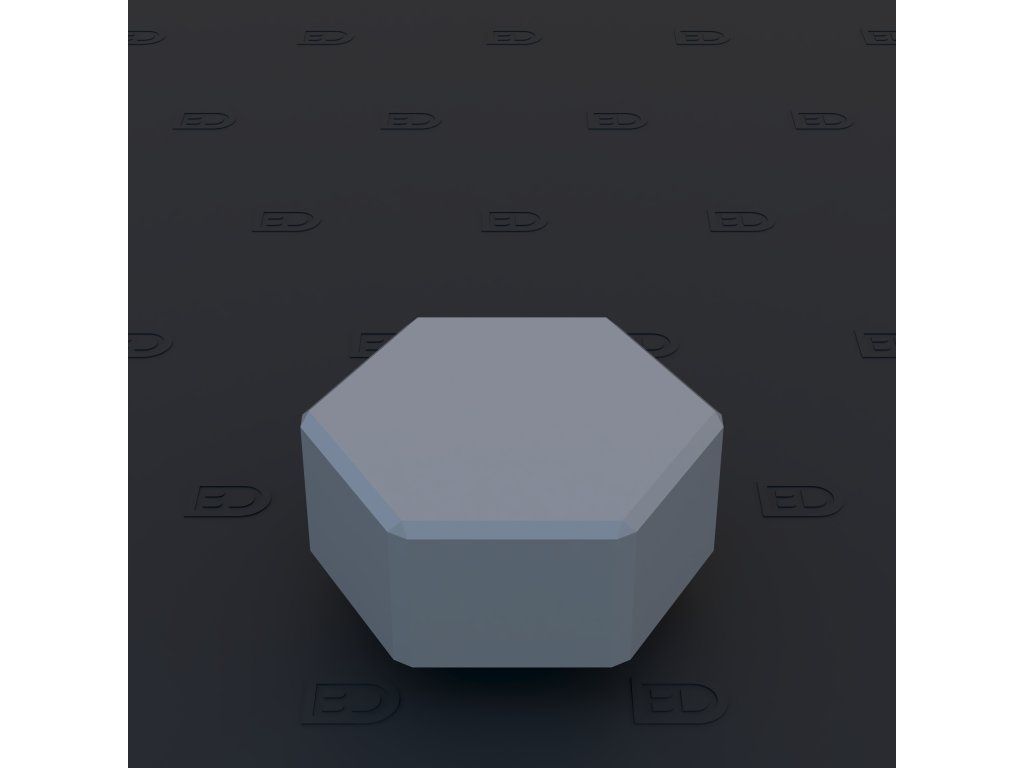
A hexagon head of 0.9 mm in a metal version. It does away with cutting off and reshaping the plastic stubs on a kit.
Responsibility details are not available.
Kits tend to have the joints suggested only as a cylindrical stub with a hinted edge that a mold will never make sharp. Anyone who wants an engine that really bears looking at will shave that stub off, level the surface and fit a piece with honest geometry. That exchange is exactly what this part is for, and the most unpleasant part of it drops away, namely the attempt to file the edges on something that is held only in tweezers.
0.9 millimeters is already something you will make out on a model even without a magnifier. It suits the joints of engine covers, the mounting of pillion footpegs or the mounting feet of the frame. If you are building a machine with exposed mechanics, it is one of the steps that carries the largest share of the impression.
First shave the original stub off with a sharp knife, sand the surface over with fine paper and only then drill. When the order is reversed, the bit slides sideways off the domed surface. Choose a light working pad, so that a piece that drops off can be seen, and work over the table in a hollow made of paper. A fastener of this size that flies away is looked for on a carpet in vain.
With a larger number of places to fit, make a test on a plastic offcut beforehand. That way you verify both the choice of bit and the behavior of the glue, and on the model you then only repeat a routine you have settled into.
Naši poradci a znalci sortimentu jsou připraveni odpovídat na Vaše dotazy (Po–Pá, 8–18 hod).
Zeptejte se na co potřebujete, odpovíme co nejdříve.
Texts from customers in the advice section reflect solely the opinions and views of the customers. MNF trade s.r.o. does not approve or verify customer texts in advance.
There are no questions here yet. Be the first to ask!