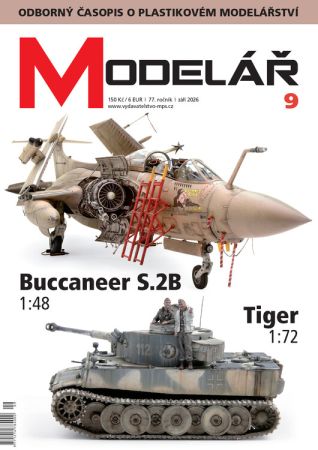
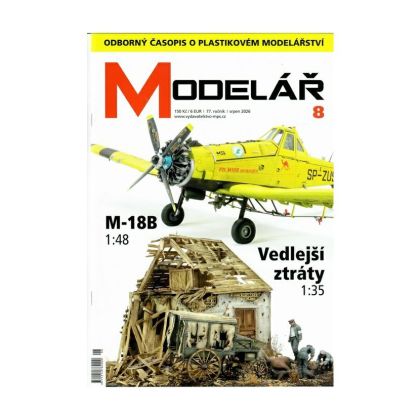
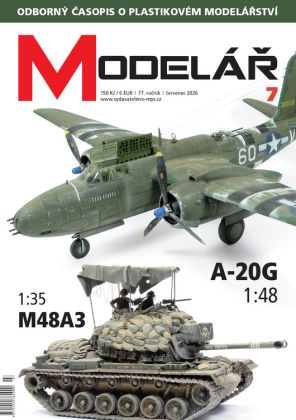
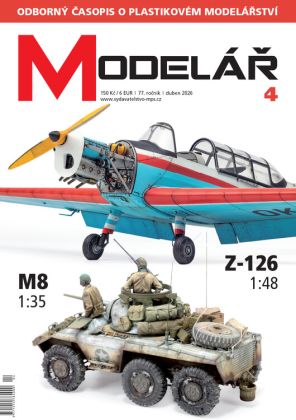
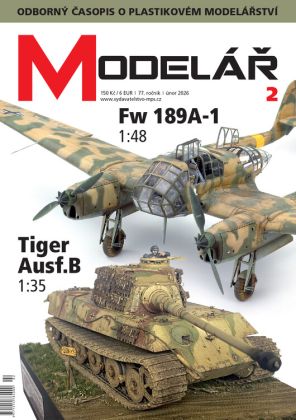
This year's Modelar numbers are gathered under the 2026 volume, so the run can be completed without searching the whole magazine catalogue. Individual issues appear as they were published, which means you can pick up precisely the number missing from your shelf. For anyone starting to collect, the current volume is the logical entry point, with earlier numbers continuing on from it. As with every volume of the title, a single issue spans plastic kit reviews, scale plans, flying models and bench technique, so two numbers from the same year can read quite differently. How to work with the volume is set out below.
The section covers individual numbers identified by month and year, such as No. 2/2026 or No. 9/2026. What any particular issue contains is described on that issue - the mix differs each time and generalising it would be misleading.
If you read the magazine regularly, the easiest approach is to close a gap as soon as you notice one. Older volumes are harder to complete, which produces a simple rule most collectors follow: keep the current year whole and fill the older ones as you come across numbers.
Some readers buy an issue for one article or one set of scale plans; others buy for completeness. For the first group it is worth reading the description of each number before ordering, since the magazine covers plastic kits, flying models and paper subjects in the same issue.
Method articles are where language counts. Thinning ratios, the distinction between a wash and a filter, or the sequence of layers in a finish are all considerably easier to absorb in your own language than in translation.
Books and other periodicals sit in modelling literature.