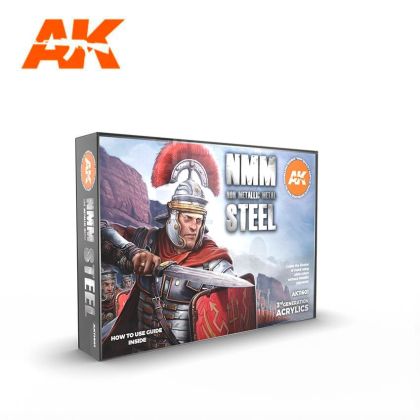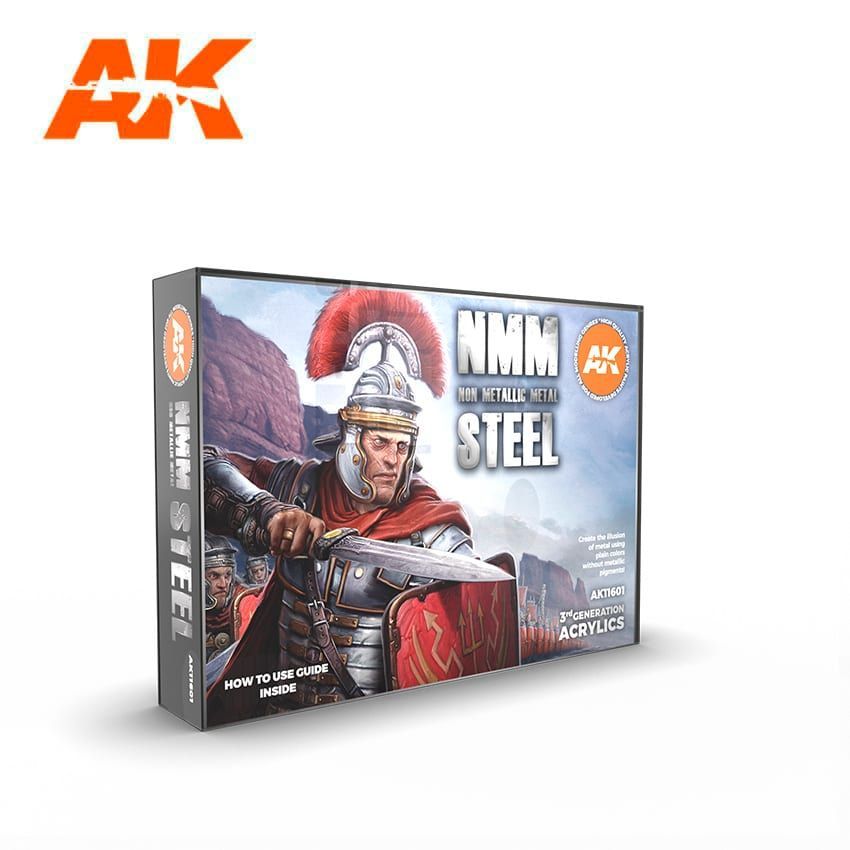
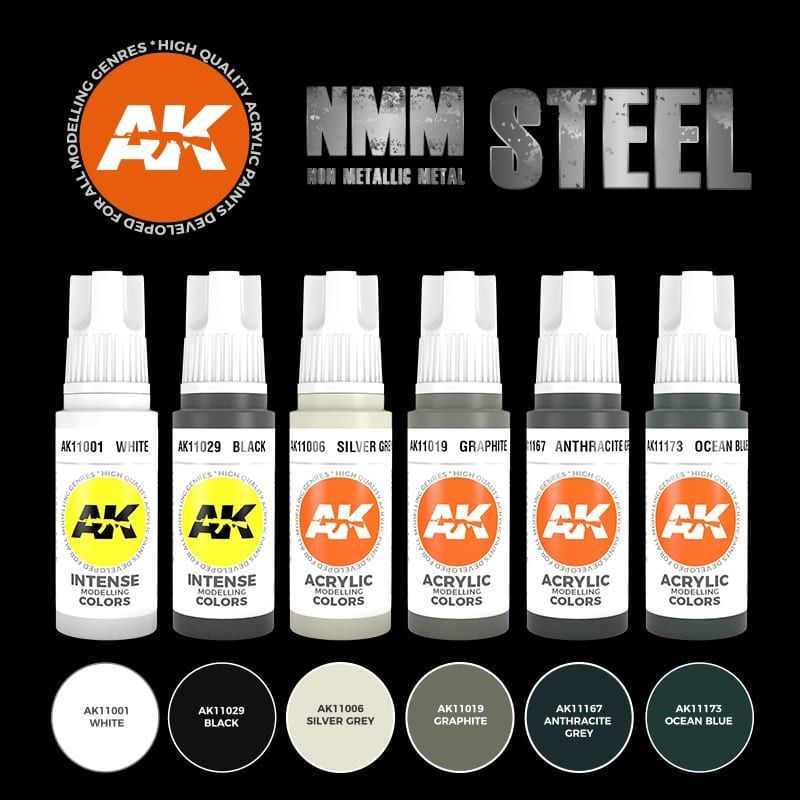
Six shades for the painted metal technique with no metallic pigment. White, black, two grays, anthracite and ocean blue.
Responsibility details are not available.
The technique known by the abbreviation for non-metallic metal builds the shine of steel purely on the contrast of light and dark areas, without a single grain of aluminum flake. In a photograph it looks more convincing than metallic paint, because the reflection stays where the painter put it and does not change as the model is turned.
The six in the package are put together to a purpose: white and black form the extremes, a silver gray and graphite occupy the middle, an anthracite gray aims at the deepest recesses and an ocean blue adds a cool tinge. That blue is often the key to conviction, because polished steel reflects the sky and without a cool tone it looks like nothing but bare gray.
You work from the darkest to the lightest and the transitions have to be sharp. On a blade a light stripe usually runs along the edge and another along the back, with a dark center left between them. On flat surfaces, such as armor or a helmet, the reflection breaks in a clear line rather than in a soft blur.
In summary: six 17 ml jars, a water-based acrylic binder, a matte finish, brush and airbrush alike. The shine comes only from a final clear coat; the paints themselves dry matte.
Practice pays off on a simple shape. Before you start on decorated armor, try the method on an ordinary sphere or a cylinder. You will see where the brightest point should lie, where the reflection breaks and how narrow a strip is enough for the impression of shine. Carrying the same logic over to a busy casting is then a matter of patience, not of talent.
Naši poradci a znalci sortimentu jsou připraveni odpovídat na Vaše dotazy (Po–Pá, 8–18 hod).
Zeptejte se na co potřebujete, odpovíme co nejdříve.
Texts from customers in the advice section reflect solely the opinions and views of the customers. MNF trade s.r.o. does not approve or verify customer texts in advance.
There are no questions here yet. Be the first to ask!