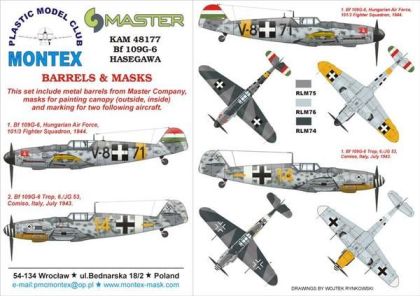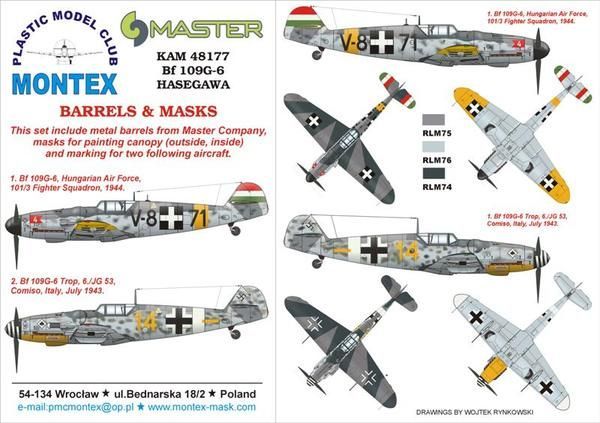
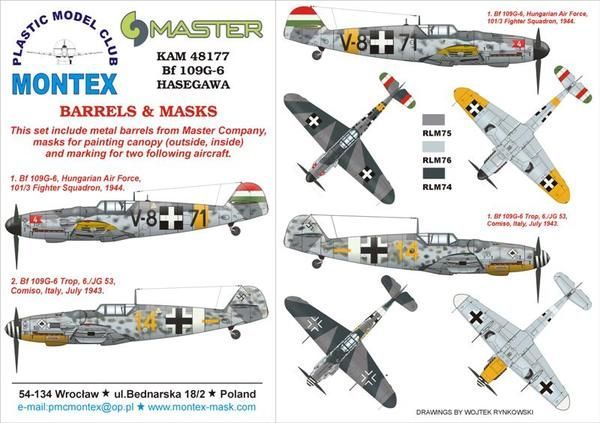
The Bf 109G-6 in 1:48. The set contains masks for the glazing for both sides of the frame, two sets of national insignia and three metal components, namely the tips of the MG 131 machine guns and a Pitot tube.
Responsibility details are not available.
The sixth production version of the Messerschmitt Bf 109 appeared in the spring of 1943 and became the most numerous of all. The change by which it is recognized at first glance came with the armament: instead of MG 17 machine guns of 7.92 mm caliber it received a pair of MG 131 of thirteen millimeters caliber. Those, however, would not fit into the slim cowling, and so two prominent bulged fairings appeared ahead of the cockpit. German pilots had the word Beule for them and the name caught on so well that it is used to this day.
What to watch out for when deciding. The package supplies the tips of both machine guns, not barrels in their full length. That is directly connected with the shape described above: the weapon is largely hidden under the fairing and only a short piece projects out. The visual gain is therefore more modest than on types with weapons in the wing. Anyone building a Gustav for the sake of prominent muzzles should allow for that in advance.
The pattern is the Hasegawa model. The recommended sequence of work is simple: first apply the masks, then spray, and fit the metal parts at the end. The tips are fitted onto sanded plastic and hold by themselves; a drop of thin cyanoacrylate is enough. This is therefore not work that would require experience with photo-etch or resin. The only tools to have ready are a sharp knife and a needle file.
Naši poradci a znalci sortimentu jsou připraveni odpovídat na Vaše dotazy (Po–Pá, 8–18 hod).
Zeptejte se na co potřebujete, odpovíme co nejdříve.
Texts from customers in the advice section reflect solely the opinions and views of the customers. MNF trade s.r.o. does not approve or verify customer texts in advance.
There are no questions here yet. Be the first to ask!