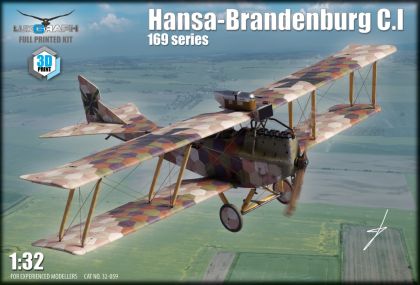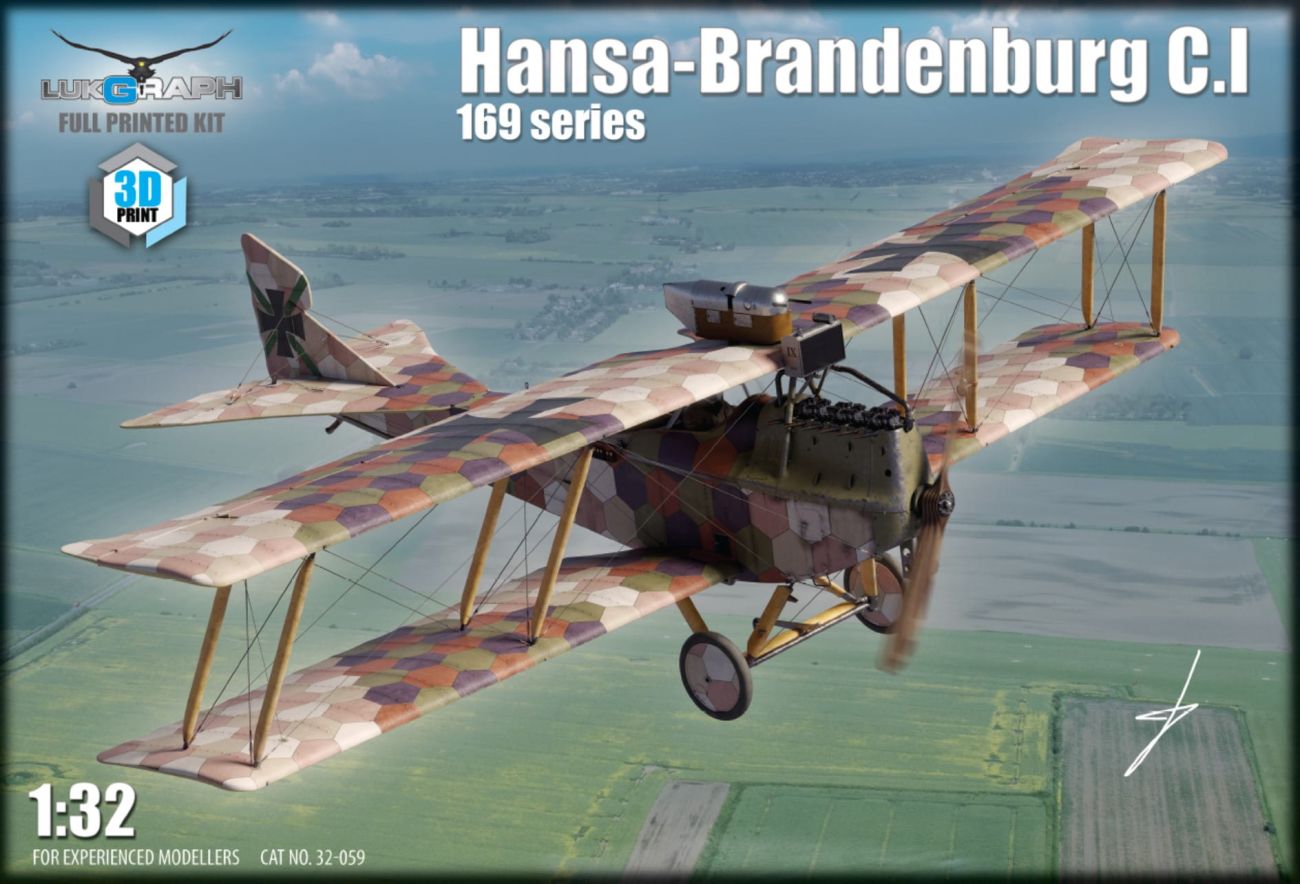
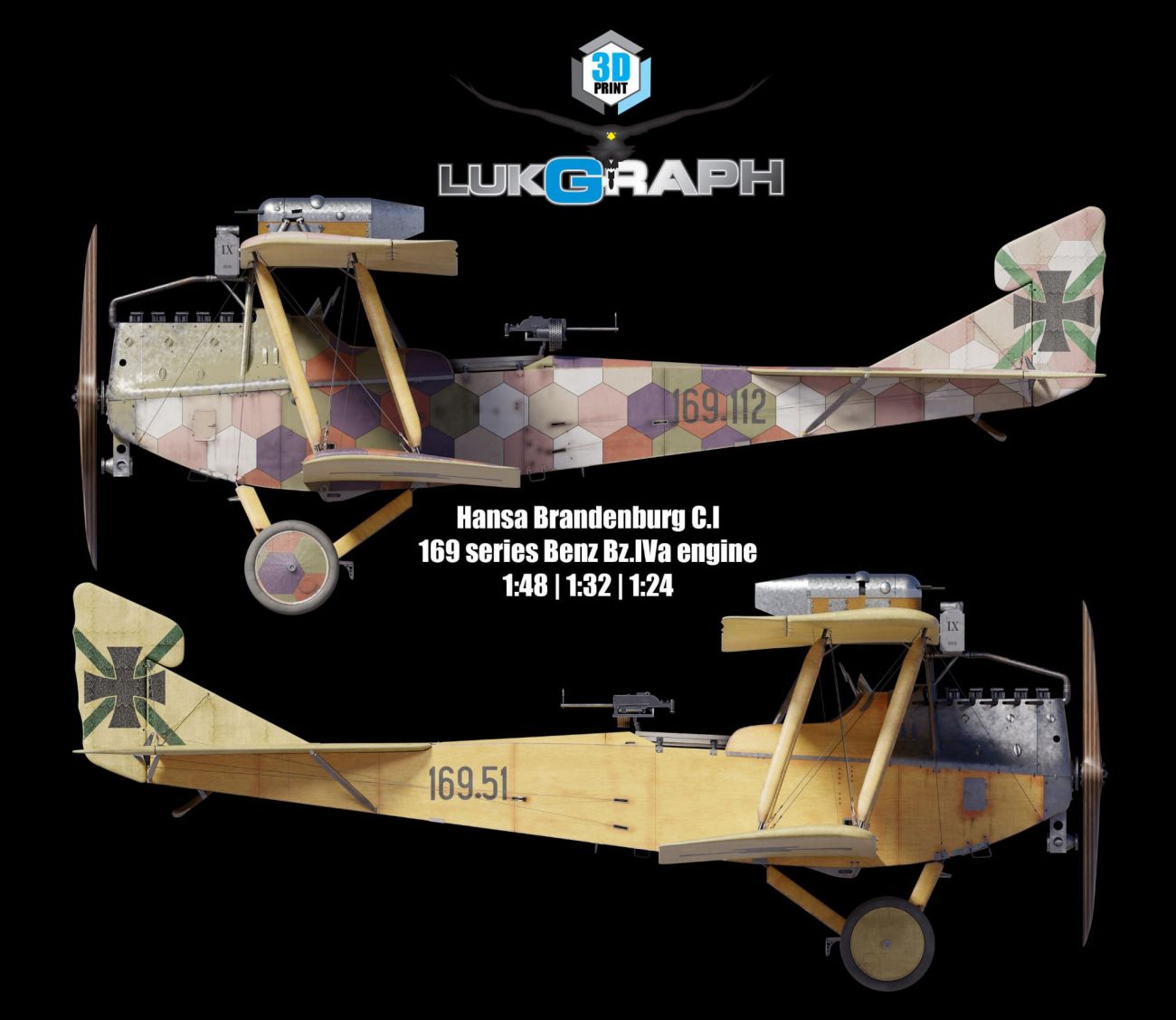
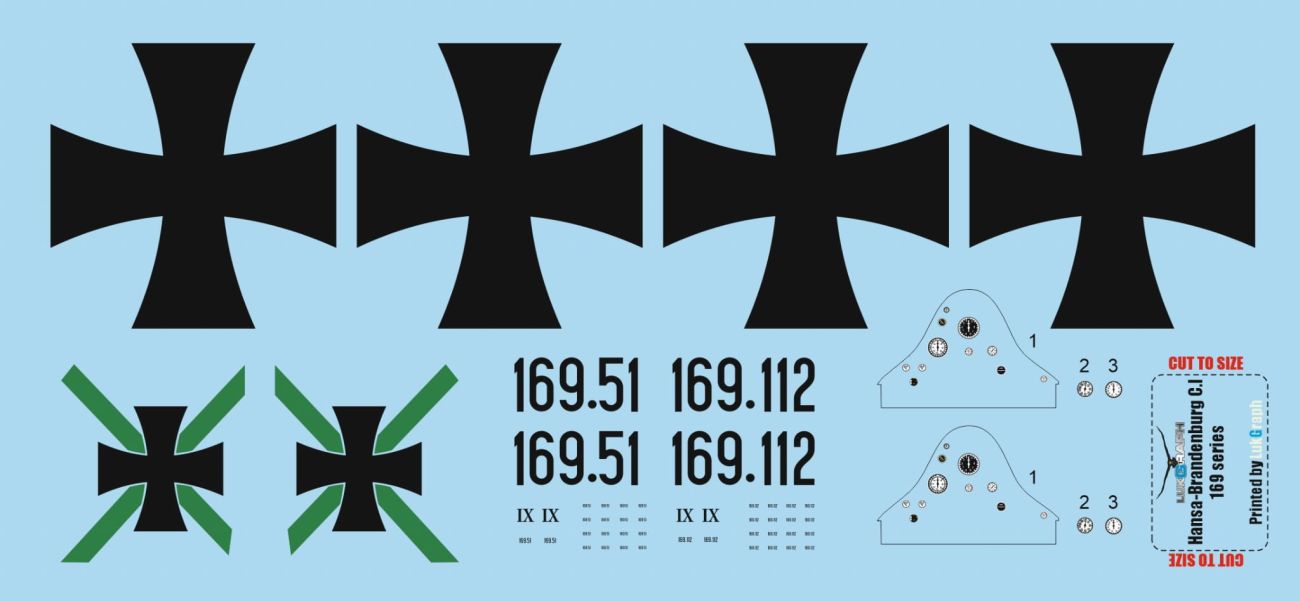
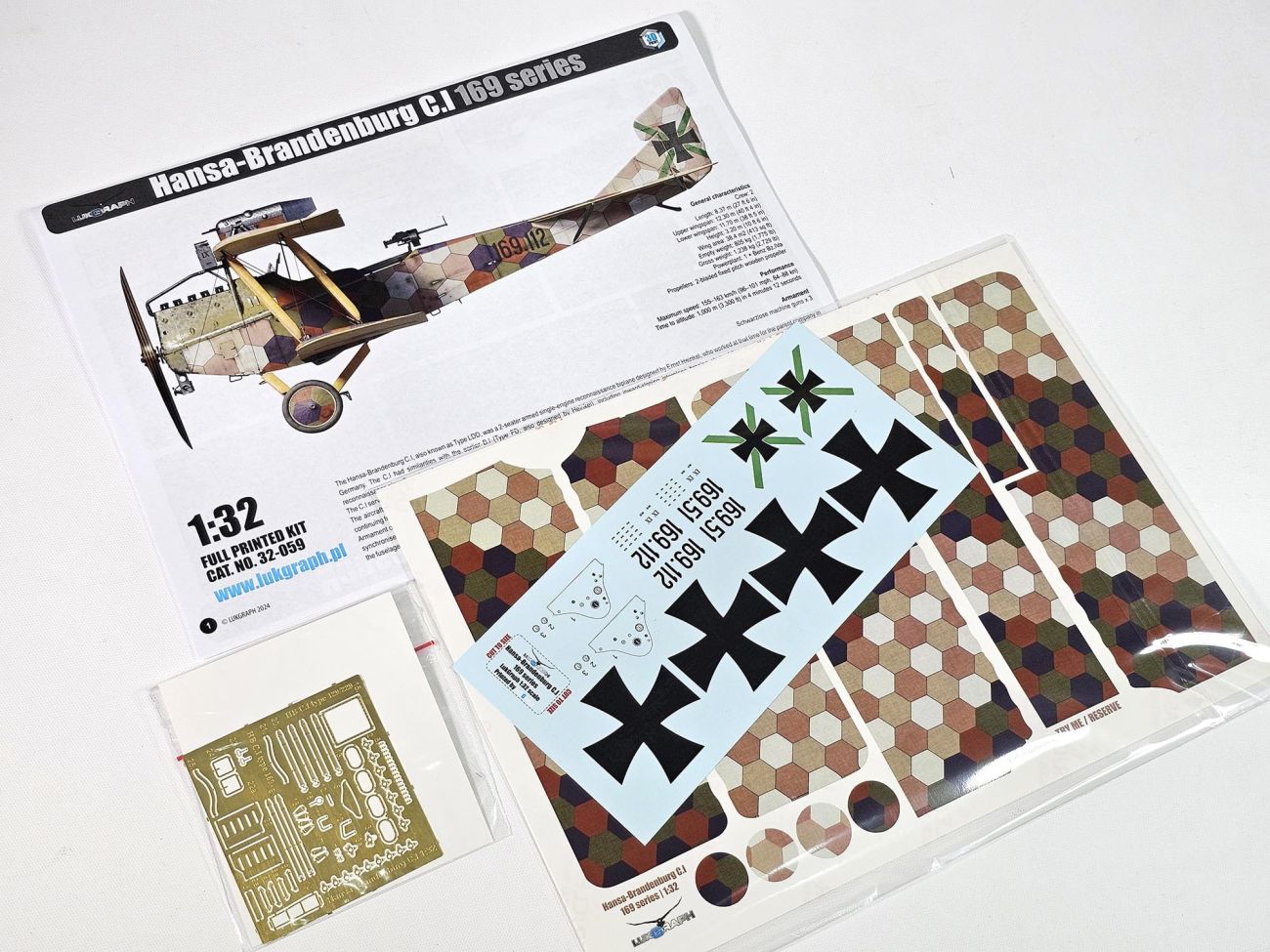
Hansa-Brandenburg C.1, series 169 in 1:32 scale from the manufacturer Lukgraph - a fully 3D printed resin kit of the Austro-Hungarian First World War reconnaissance biplane for experienced modelers. This box captures series 169 with the Mercedes D.IVa engine in the basic edition.
Responsibility details are not available.
A model of the Austro-Hungarian reconnaissance and observation biplane of the First World War in 1:32 scale from the Polish manufacturer Lukgraph. It is not injection-molded plastic - it is a fully 3D printed resin kit. The box captures series 169 with the Mercedes D.IVa engine; the manufacturer states two color schemes for it. The wings have two internal channels for stiffening rods (2 x 1.6 mm), and the struts and the landing gear are drilled through so that wire can be threaded - the assembled structure is considerably more rigid as a result.
Watch out - the manufacturer makes three similar boxes of the same aircraft and they differ fundamentally. This one is series 169 in the basic edition. The series 169 PREMIUM version is the same aircraft with the same engine, but it also contains transparent decals with a wood and fabric effect and turnbuckles for the rigging. The third box is series 129/229 - that is not the basic version of this one but a different production series of the aircraft with the Hiero 6 engine. Choose by series and engine first and only then by edition.
The Hansa-Brandenburg C.1 was a two-seat reconnaissance, observation and light bombing biplane of the Austro-Hungarian air service - that is, an aircraft of the monarchy that also included the Czech lands. It originated in the design office of Ernst Heinkel, was among the most widespread machines of the Austro-Hungarian air service and was built under license by several companies in many series that differed mainly in their engines. That is exactly why it makes sense to choose a model by the specific series. The Czech connection is strong: after 1918 these aircraft were taken over by the Czechoslovak Air Force, and the Prague company Aero derived its own A.14 and A.15 aircraft from the type with Hiero engines built in Prague - they also flew with Czechoslovak Airlines on mail routes.
Do not bond 3D printed parts with polystyrene cement - it will not hold. Use cyanoacrylate glue (super glue), and epoxy on loaded joints. Wash the parts with soapy water before painting, cut off the print supports and sand strictly wet - resin dust is harmful to health, do not inhale it, use a respirator and ventilate. Without a primer the paint does not hold well on a print. The most demanding and at the same time the most important part of the build is the rigging - the wires between the wings, the struts and the fuselage. Let us be frank: it is a lot of work and takes patience; without the rigging, though, a biplane looks unfinished. The structure is prepared for it: the channels in the wings and the drilled-through struts and landing gear let the wire be threaded through, and the holes only need clearing with a small drill now and then.
The model is supplied unassembled and unpainted as a 3D printed resin kit. Glue, paints and accessories are not included in the package, unless stated otherwise.
Naši poradci a znalci sortimentu jsou připraveni odpovídat na Vaše dotazy (Po–Pá, 8–18 hod).
Zeptejte se na co potřebujete, odpovíme co nejdříve.
Texts from customers in the advice section reflect solely the opinions and views of the customers. MNF trade s.r.o. does not approve or verify customer texts in advance.
There are no questions here yet. Be the first to ask!