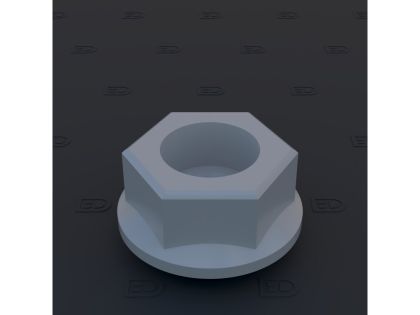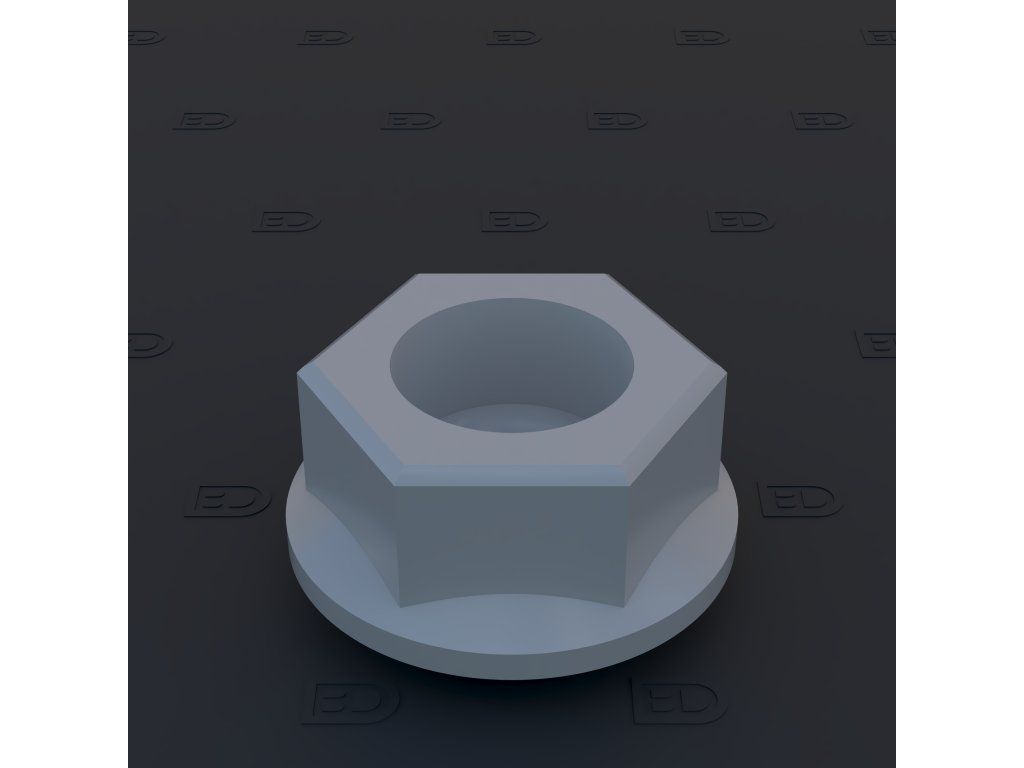
Five coarser diameters of the arbor shape together, a range of 0.8 to 1.2 mm. It covers the more load-bearing joints from the engine mounts to the exhaust hangers.
Responsibility details are not available.
The coarser diameters are more comfortable to work with, and that is why the most common failure happens precisely with them: a drop of cyanoacrylate glue creeping up the shank fills the relief of the head. The detail the modeler bought the part for then vanishes under a smooth film, and a white bloom settles around the joint as well, clinging to the surrounding paint too.
Never meter it onto the head but into the hole, and with a pin rather than straight from the bottle. The amount should be smaller than seems sensible: an excess has nowhere to escape and is squeezed upward. Cyanoacrylate glue benefits from an accelerator applied only after seating and from a distance, otherwise it dulls the paint. Where there is time, a slow-setting epoxy serves better.
The range from eight tenths to twelve tenths of a millimeter covers joints that are sturdy on the subject: the engine mounts, the fork pivots, the exhaust brackets, the footpeg feet. The arbor shape adds a shoulder under the head here, thanks to which the joint looks lifted off the surface, that is the way a washer behaves on a real machine.
It pays to compare the head with the surrounding details of the part. When there is a molded plastic joint from the mold next to it, the new diameter should keep to that size, otherwise the model contradicts itself. Molded imitations can be cut off and replaced, but it is better to know that before you start drilling.
Naši poradci a znalci sortimentu jsou připraveni odpovídat na Vaše dotazy (Po–Pá, 8–18 hod).
Zeptejte se na co potřebujete, odpovíme co nejdříve.
Texts from customers in the advice section reflect solely the opinions and views of the customers. MNF trade s.r.o. does not approve or verify customer texts in advance.
There are no questions here yet. Be the first to ask!