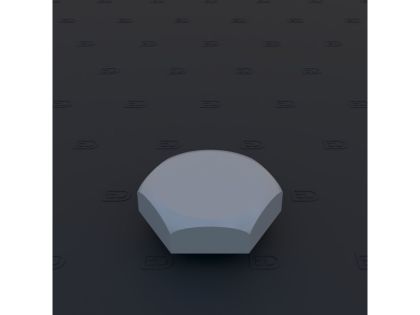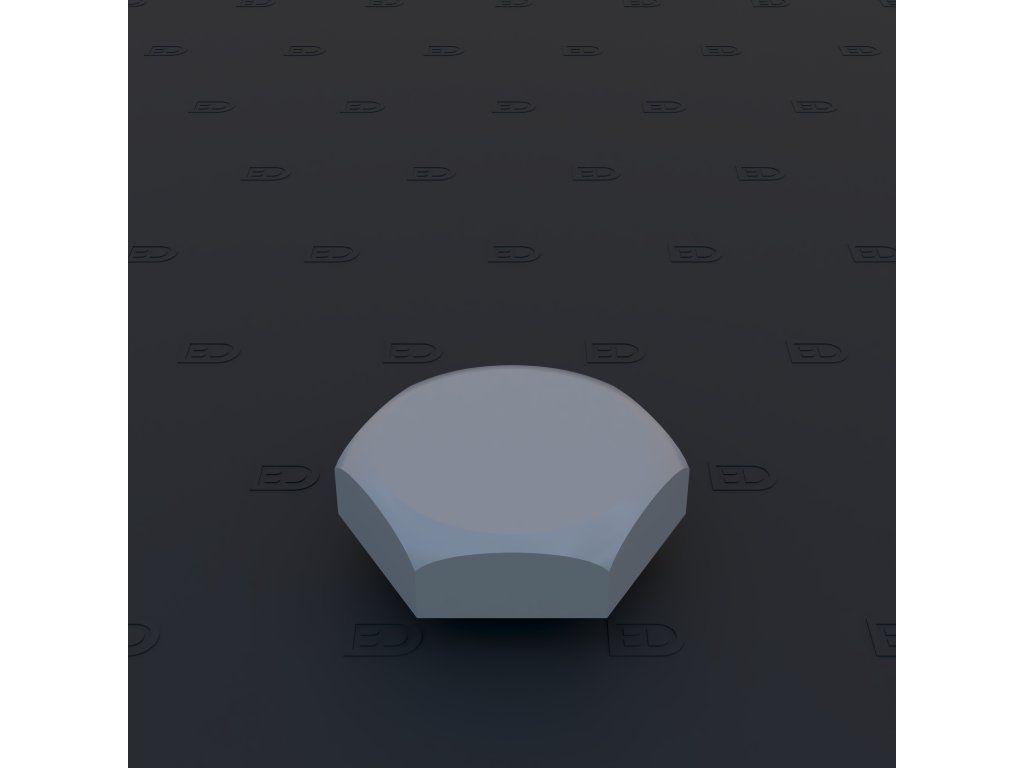
The coarser part of the scale in one package. According to the name it covers values from 1.3 mm to 2.0 mm, that is sizes for the load-bearing joint groups and exterior details of larger models.
Responsibility details are not available.
The higher values are used differently from the small ones. They do not serve to fill a surface but to mark particular joint groups: places where something fundamental is joined to something else. The eight tenths of a millimeter of difference between the extreme values of this span are clearly noticeable on a model, so the builder can tell the main joints from the secondary ones by size and give the machine the hierarchy that the subject has as well.
There are three typical places. First the hubs and rims of wheels, where the joint has to transfer large forces and at the same time allow replacement. Second the flanges of pipework and tanks, that is anywhere two parts meet across a gasket and have to come apart. Third the mounting of frame parts and hangers. In all three cases the common denominator is strength plus demountability, and that is exactly the combination a rivet cannot offer, because it can only be removed by destroying it.
This line of reasoning can also be turned around. When you see large smooth heads with no flats in a photograph, in a place that looks like a service joint, it is most likely a plug or a pin rather than a fastener. It likewise holds that a regular circle of small heads around an opening is usually an edging rather than a mounting.
Naši poradci a znalci sortimentu jsou připraveni odpovídat na Vaše dotazy (Po–Pá, 8–18 hod).
Zeptejte se na co potřebujete, odpovíme co nejdříve.
Texts from customers in the advice section reflect solely the opinions and views of the customers. MNF trade s.r.o. does not approve or verify customer texts in advance.
There are no questions here yet. Be the first to ask!