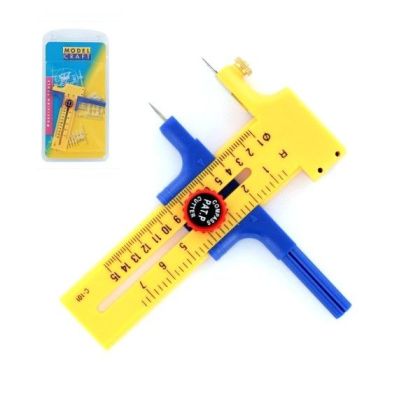
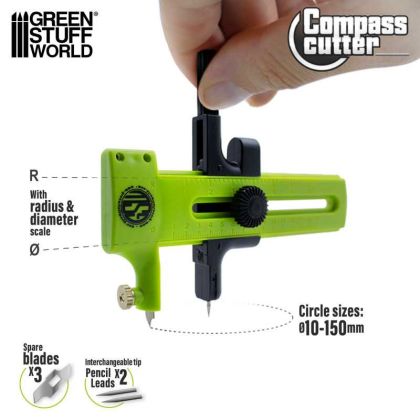
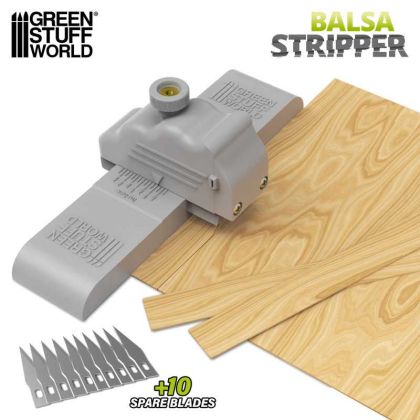
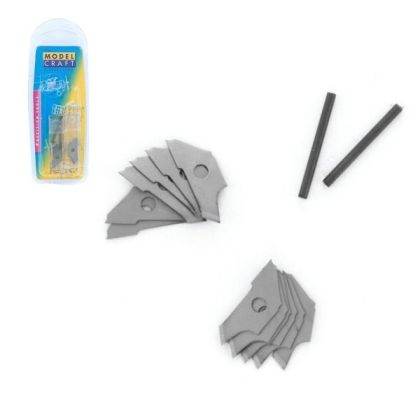
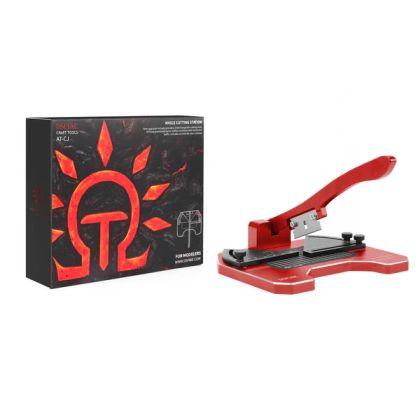
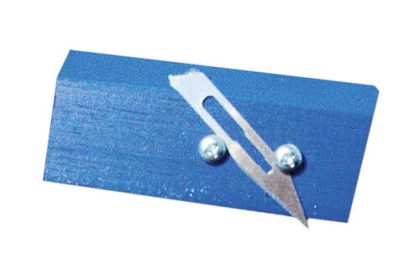
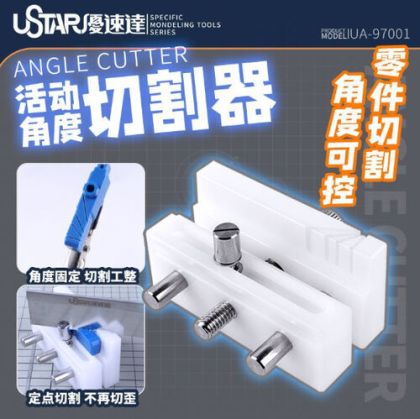
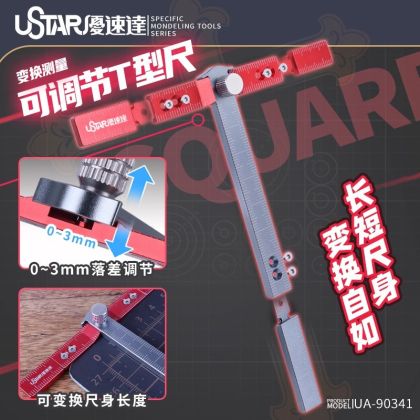
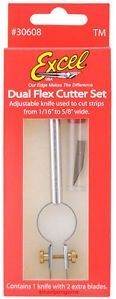
A circle cannot be cut freehand, and nor can the same angle be judged twenty times in a row. That is what circle and strip cutters are for: compass cutters with an adjustable radius produce an accurate disc or opening, rotary cutters part thin material with a smooth stroke, angle cutting stations hold a part at a set angle, and strip cutters slice profiles and balsa to a repeatable width. The value is repeatability rather than speed. Set the radius or the angle once and every piece that follows comes out the same, which is the whole point.
There are more round shapes on a model than you would guess: engine and instrument covers, hatches, carriage windows, wheel discs, mirrors, bases under figures, circular openings for exhaust nozzles. And more repeated shapes still — identical panels of cladding, strips of the same length, profiles chamfered to the same angle. A tool that reproduces a result saves both hours and temper.
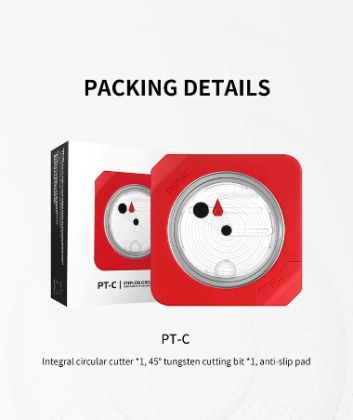
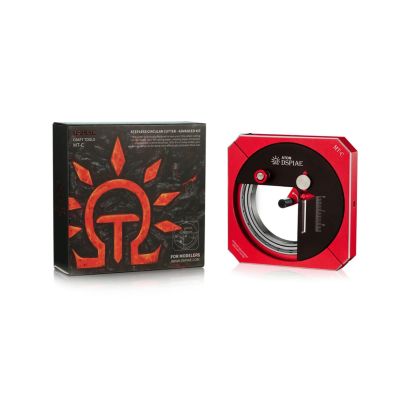
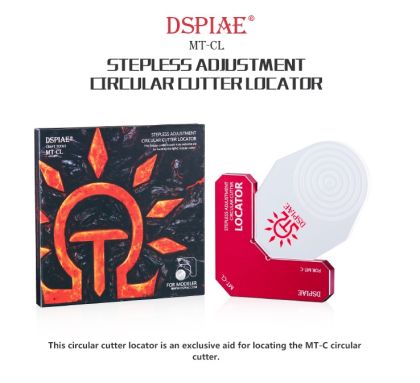
A point that seats in the centre and an arm with an adjustable radius. They cut a disc or an opening in thin styrene, card, film or masking tape. The commonest modelling use is masking circular areas — discs cut from tape fit exactly and the edge is clean. Material comes from masking supplies.
These part thin material with a rolling or drawn wheel instead of tearing it. They suit films, thin plastics and cleanly guided long cuts.
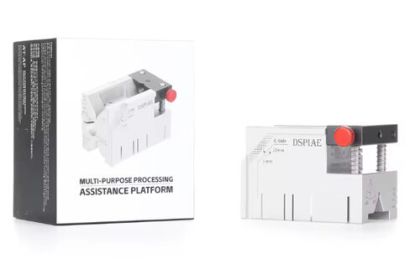
A jig with a guide that holds a blade or saw plate at a precisely set angle. It is used for mitred joints, for shortening profiles to the same length, and anywhere a cut really has to seat. This is where the difference lies between scratch work that looks glued and scratch work that looks manufactured.
These slice balsa and profiles into strips of constant width. They earn their keep building structures, flooring and cladding, where many identical pieces are needed.
Always seat the compass point in a pre-made dimple, or it shifts on the first revolution and the circle comes out irregular. Cut with several light turns rather than one heavy one. On angle jigs, check the setting on an offcut before you touch the part. Keep the material on a cutting mat and a stock of edges from spare blades within reach.
When a hole should be drilled rather than cut, the quicker route is drilling and milling.