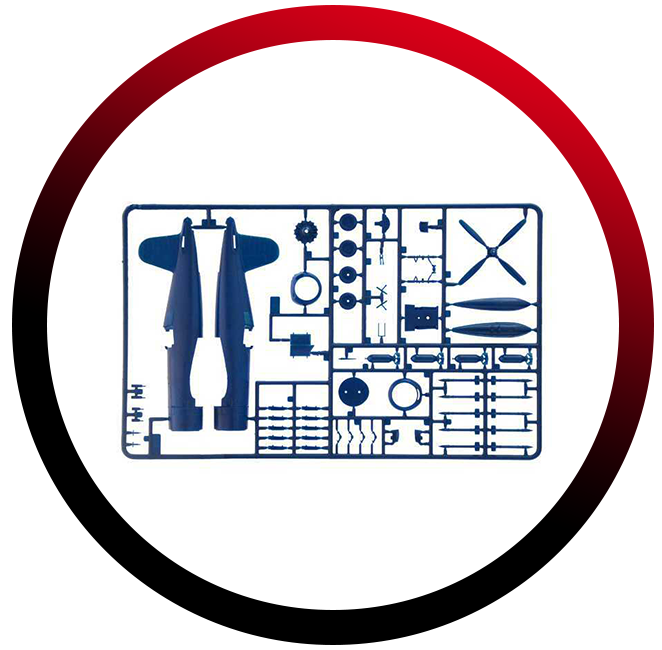
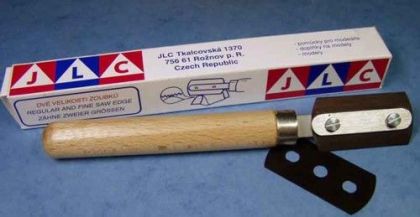
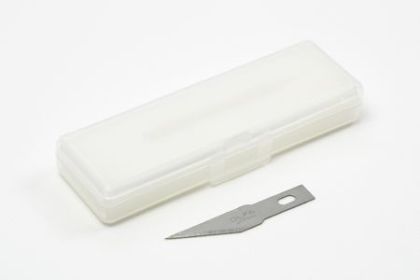
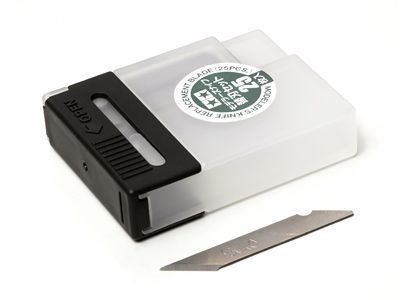
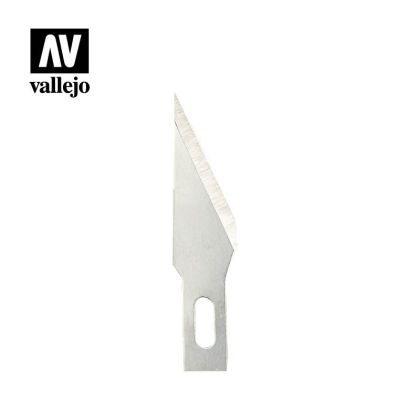
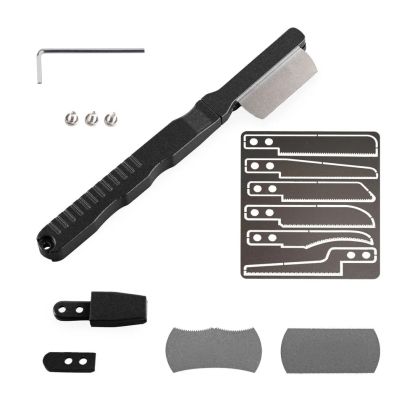
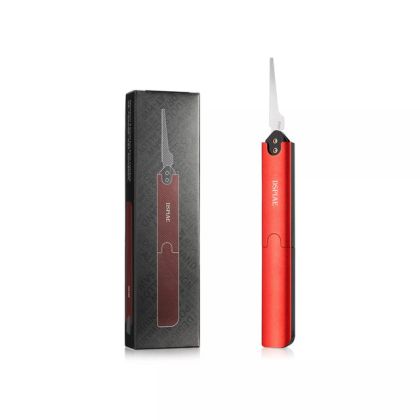
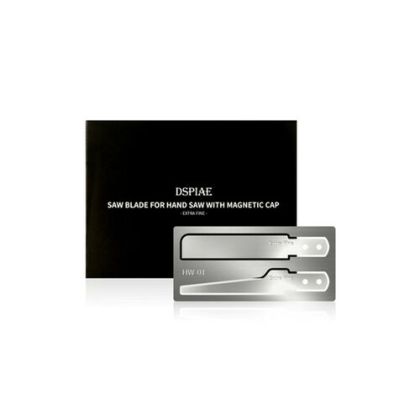
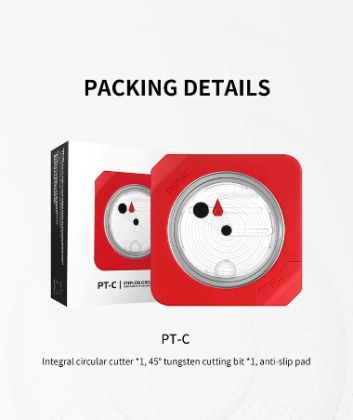
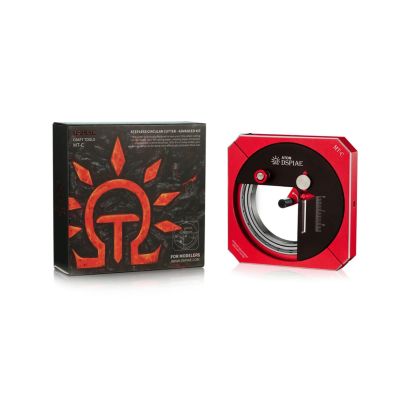
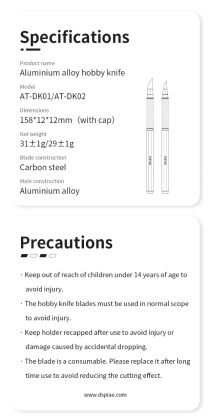
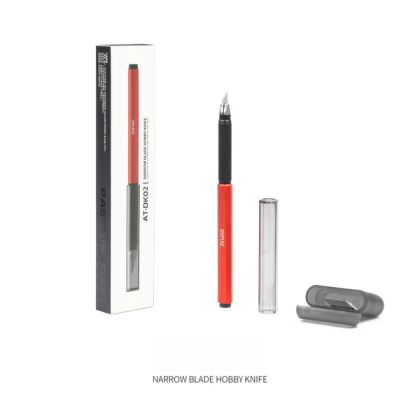
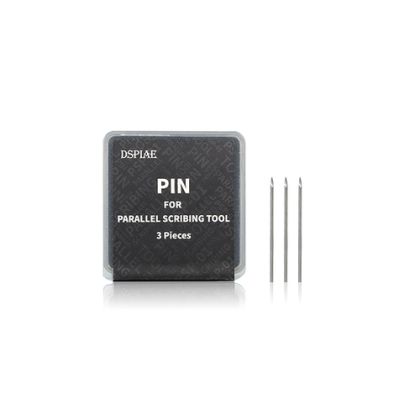
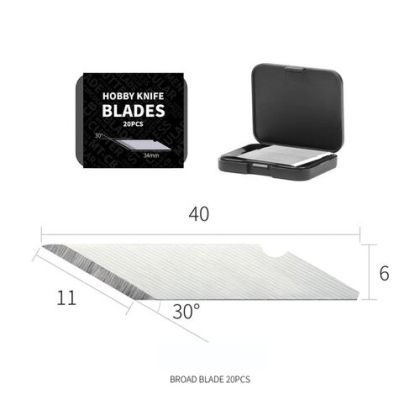
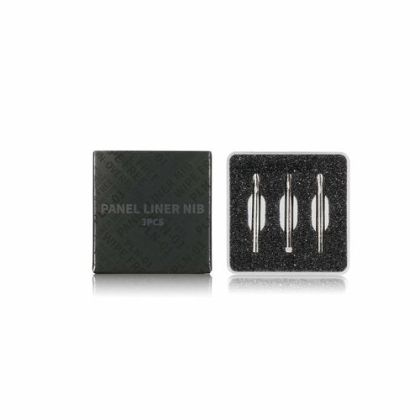
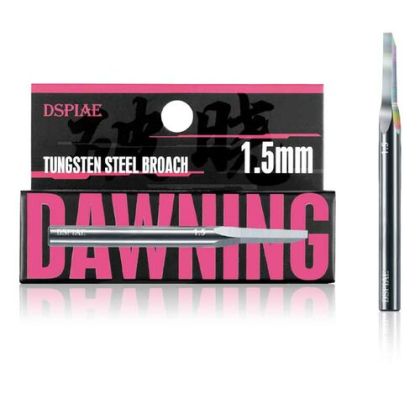
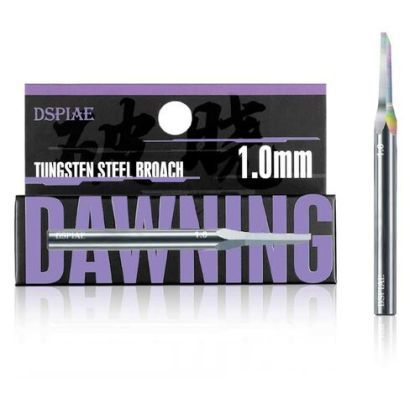
Every model starts with a cut — a part has to come off the sprue and lose its stub. And once modifications begin, cutting becomes daily work: shortening profiles, dividing a fuselage for a conversion, opening out a hatch, taking off flash. This section holds the tools for all of it: scalpels and knives, modelling saws with a very thin blade, chisels and scrapers, circle cutters and strip cutters, and spare blades for every handle in the drawer. The trick is knowing which of them loses you the least material.
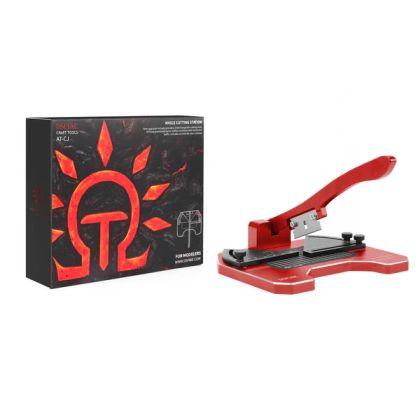
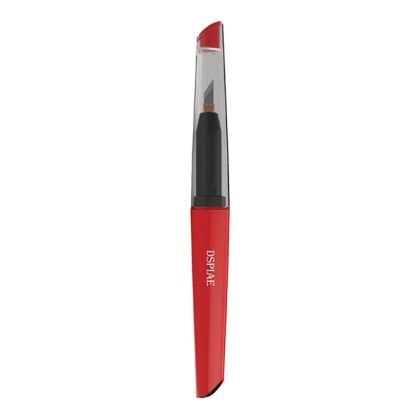
It is not one group of tools but several, separated by how they part the material. Scalpels work with a very thin replaceable blade and suit fine cuts. Knives have a sturdier body and take more pressure on thicker stock. Saws remove a narrow kerf and are the only route through thick styrene or resin. Chisels take material away by cut or by draw, and circle and strip cutters produce accurate circles and repeatable shapes.
Up to about a millimetre of styrene a blade will do — score the line and snap the material in the groove. A thicker section no longer lets a blade track straight and it starts to wander, so a saw takes over. On resin and metal a saw is the only sensible option, because a blade snaps on hard material.
Every cut removes the width of the tool. Modelling saw blades are often only one to three tenths of a millimetre thick for exactly that reason. When a part is cut into two pieces that have to meet again, that figure decides the result.
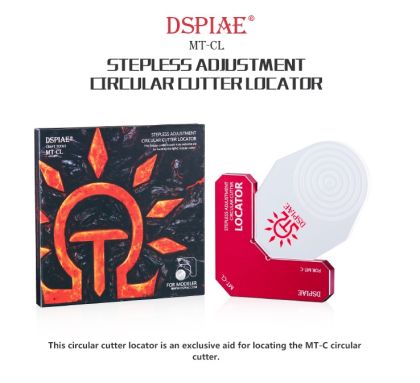
A straight cut follows a steel edge from rules and squares. A circle is never cut freehand; that is what a circle cutter is for. A repeated identical shape belongs to a punch or a template.
A blunt blade is more dangerous than a sharp one, because it has to be forced and slips easily. Change blades more often than you feel like doing — a stock from spare blades costs a fraction of a ruined part. Keep a cutting mat under the work at all times; it holds the blade on its path and saves the bench top.