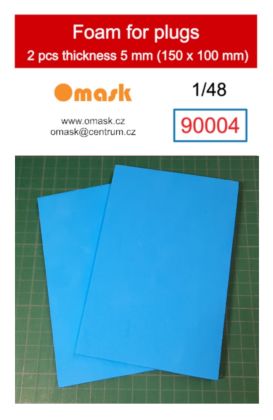
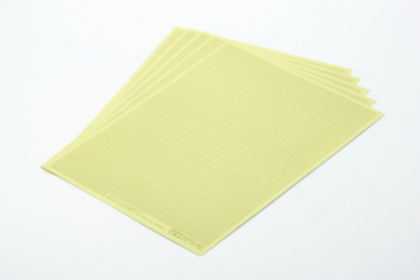
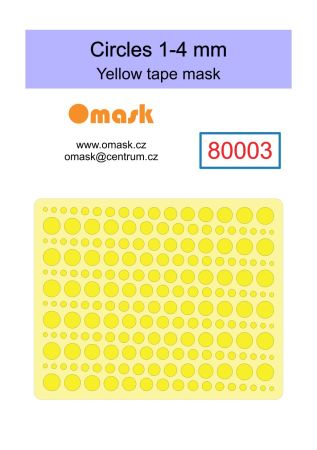
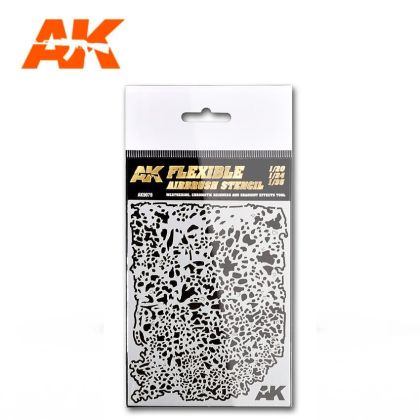
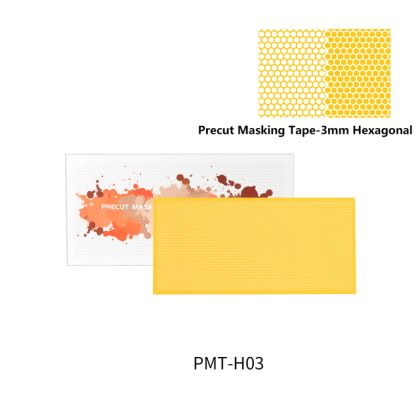
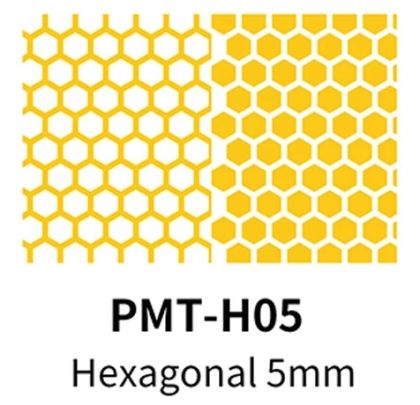
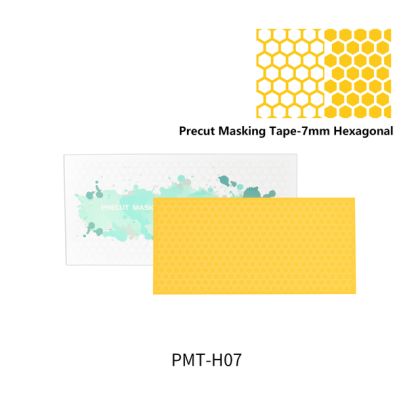
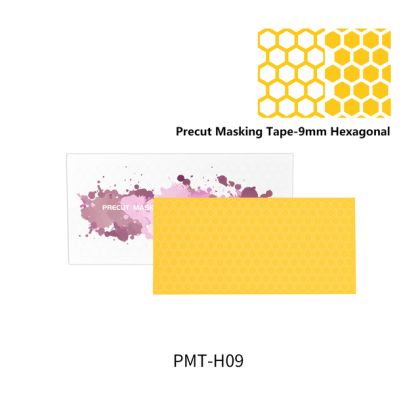
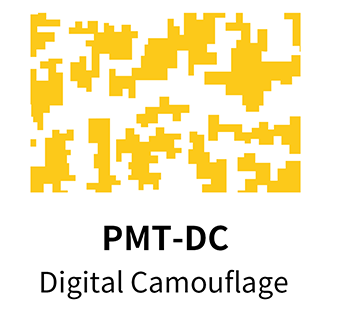
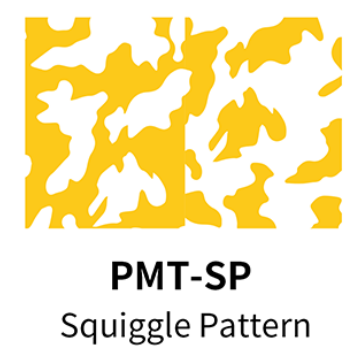
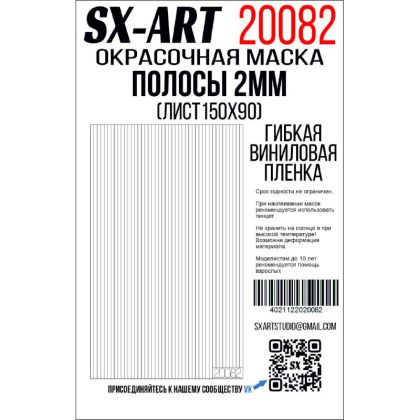
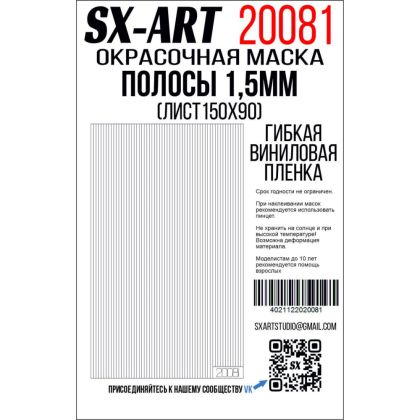
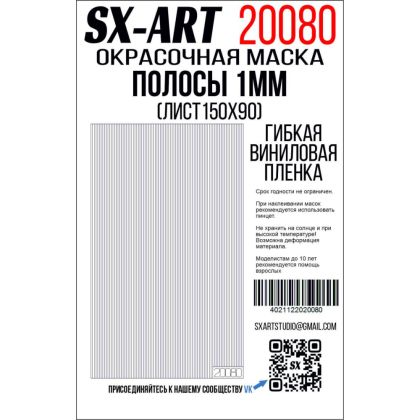
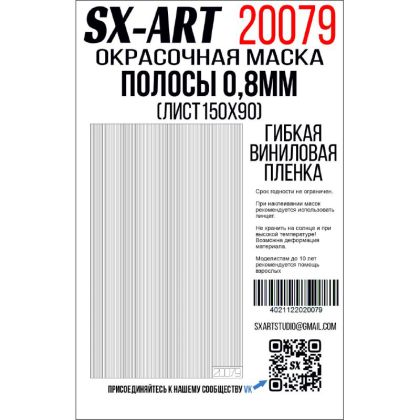
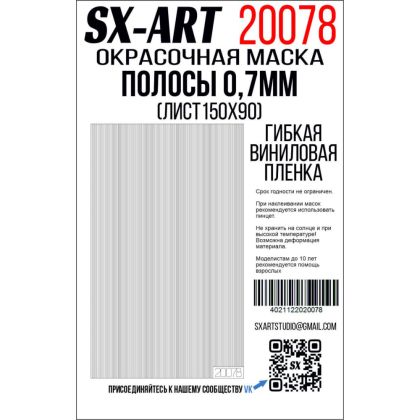
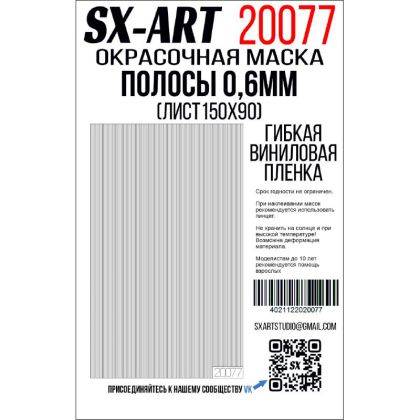
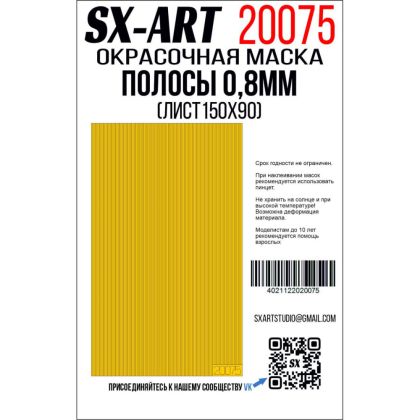
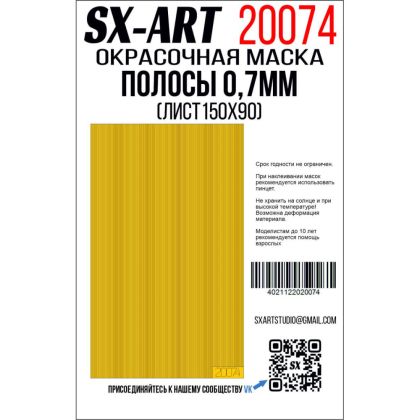
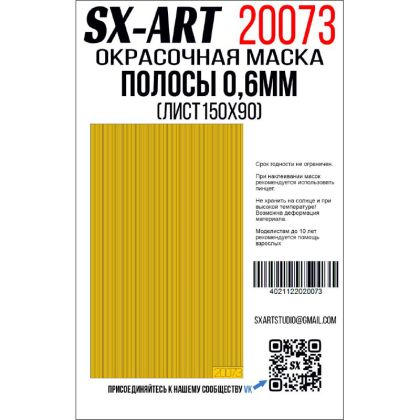
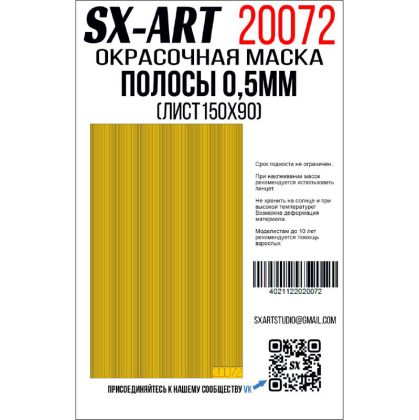
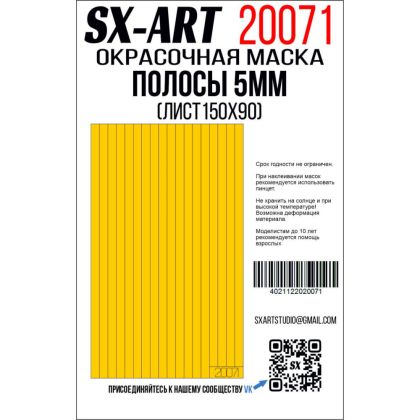
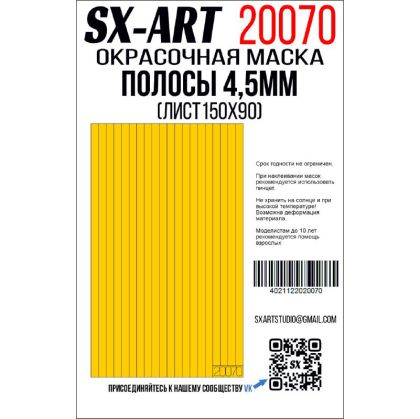
Some patterns cannot be cut by hand. Hexagonal grids, digital camouflage, scalloped bands and regular lines a few tenths of a millimetre wide ask for a precision no blade held in the fingers will give. Universal masks, stencils and sheets carry those patterns ready-made: you lay them on, spray and lift them off.
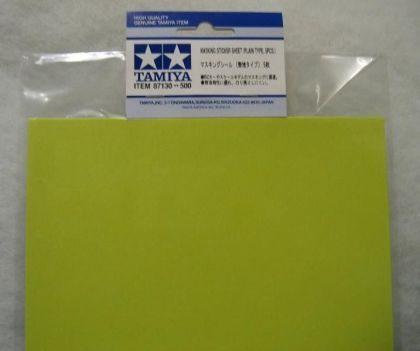
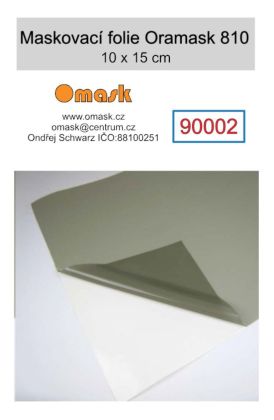
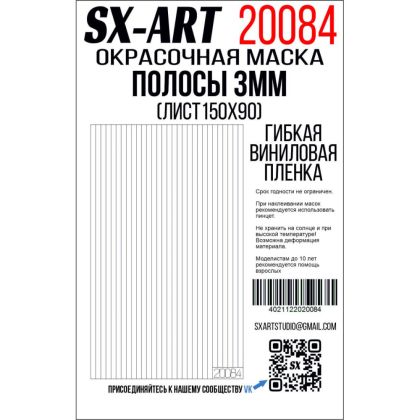
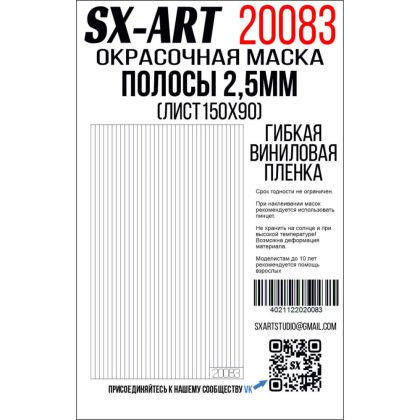
The listing holds pre-cut tapes with finished patterns as well as plain self-adhesive film in individual widths, which serves for running thin lines and for guiding the rest of the masking. Both are described below, along with the spraying technique that keeps a many-edged stencil tight.
Its first virtue is repeatability. On a scheme built from dozens of identical elements a hand-cut shape differs from element to element and the result looks unsettled rather than military. A stencil gives every element the same size and outline. Its second virtue is accuracy on very narrow lines, where a few tenths of a millimetre of wander is immediately obvious.
Lay the mask on a fully cured base coat and press every edge down. Spray square to the surface in thin passes and build the colour gradually, because a pattern with many edges lets paint creep more readily than a single straight strip ever would.
Narrow self-adhesive strips define lines, divide colour fields and act as a guide for the rest of the masking. They are also what you use when you want a thin line of the original shade left untouched.
A stencil handles the pattern, not the surrounding area. Cover that with material from masking tapes or masking putty, or the overspray will travel further than you planned.
Further masking materials are in the parent heading masking supplies, and the shades for the camouflage itself in model paints.