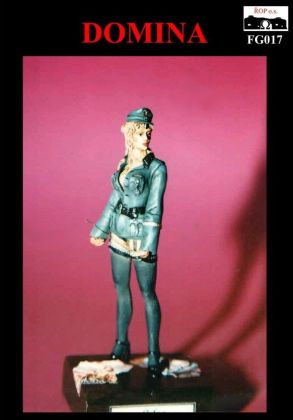
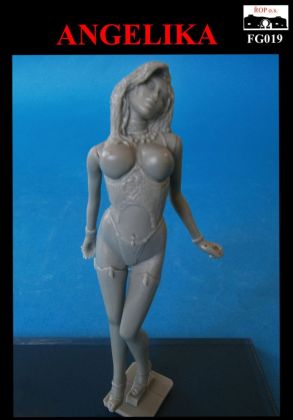
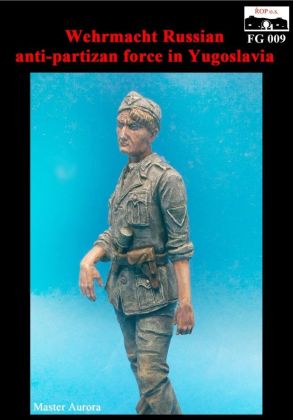
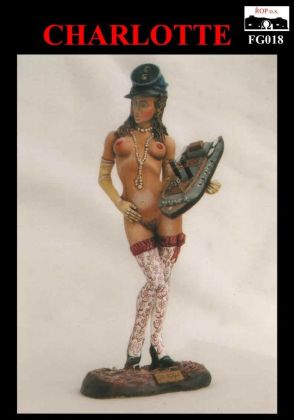
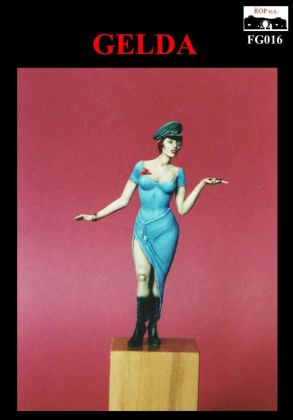
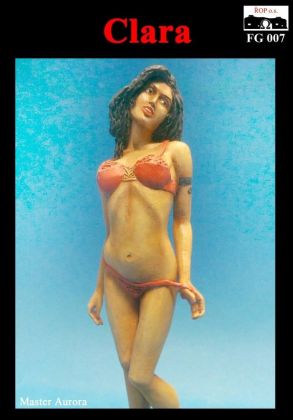
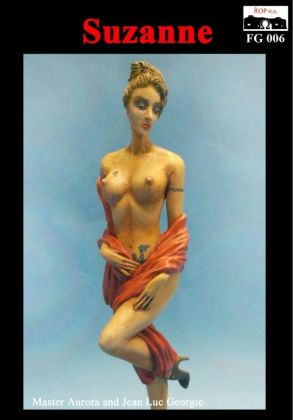
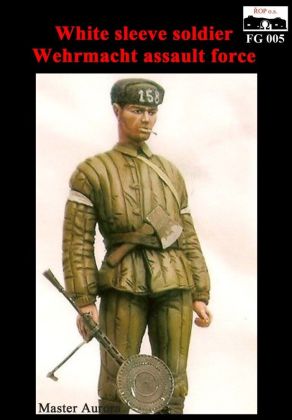
Twelve centimetres changes the nature of the work. At 120 mm the face, the hair and the cloth are genuinely painted rather than indicated, with transitions and undertones, and there is nowhere to hide a shortcut. The selection mixes two lines: character female figures, each treated as a standalone sculpture, and military subjects from the Eastern Front.
As with the other millimetre formats, 120 mm is the height of the figure and not a scale, so these are collector pieces for a plinth rather than material for a diorama. Castings arrive unassembled and unpainted, which means washing off the mould release and sawing away the pour blocks before anything else.
A figure this tall puts a human face at roughly eight millimetres, enough for an iris, a lip line and the shift in tone across a cheek, and enough for every unblended transition to show. The skills that carry a 1:35 figure, strong shadow and bold highlight, look crude here; what works instead is patience, thin paint and many passes.
The named single figures are essentially sculpture: little equipment, a lot of skin and cloth. They are the better choice if you want to practise flesh tones and drapery without fighting webbing and weapons, and they look right on a plain turned plinth with no groundwork at all.
The Eastern Front pieces bring uniform, kit and weathering into play, which makes them slower but gives more variety of texture: wool, leather, steel, dust. They also invite a small base, since a soldier benefits from somewhere to stand.
Plan the order of work before opening a paint pot, because a figure this size is built as much as it is painted. Clean the casting thoroughly, assemble dry to check the joints, and fill them properly; a visible seam at the shoulder undoes everything after. Decide early whether the arms go on before or after the torso is painted, since the choice decides which areas you can still reach.
Prime light, map your shadows before you start blending, and keep paint far thinner than feels useful. Build flesh from a mid tone outwards rather than from white. A set of brushes in several sizes earns its place here, and the colour mixing itself is straightforward with any decent range of model paints.
Smaller formats and the Czechoslovak subjects are listed under ŘOP figures.