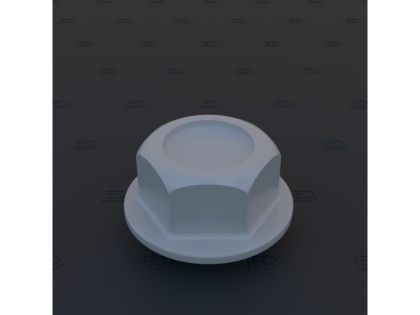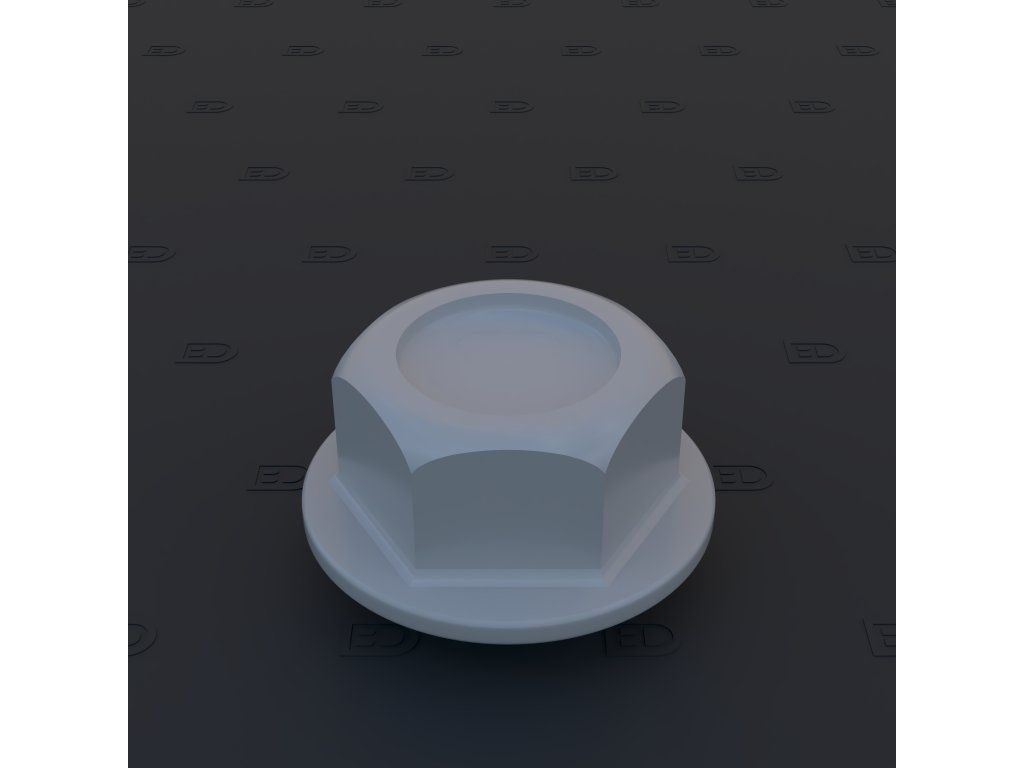
A lowered hex head a flat millimeter wide, with a washer of larger diameter. At this size choosing the right grade is no longer enough; how accurately the seating is prepared for the part plays a part too.
Responsibility details are not available.
The width of the head is only half the task. The other half is the hole the part seats in. A bit a tenth wider lets the head tilt, a bit a tenth narrower leaves it standing above the surface. Both, multiplied by twelve, are errors in the order of millimeters of reality, and that is precisely why in the large scales it pays to test dry on an offcut of the sprue system before drilling into the part.
A procedure that proves itself: first mark the center with a point, then drill with the thinnest bit you have, and only then widen to the target diameter. The hole thus stays where it is meant to be and does not slide off a curved surface. With parts of harder material it helps to drill slowly and keep clearing the swarf, otherwise the hole runs out into an oval.
A washer of larger diameter is an ally in this respect. It overhangs the rim of the hole, so small burrs or a slightly irregular rim stay hidden under it. That does not mean, though, that it can be drilled by eye: a tilted head will not hide under the washer and even a fleeting look from the side will reveal it.
Finally a practical small thing: prepare rather more holes than the number of parts you want to install. A bit breaks easily at fine diameters, and a spare seat made in advance means the work will not be interrupted by a hunt for a new tool in the middle of a build in progress.
Naši poradci a znalci sortimentu jsou připraveni odpovídat na Vaše dotazy (Po–Pá, 8–18 hod).
Zeptejte se na co potřebujete, odpovíme co nejdříve.
Texts from customers in the advice section reflect solely the opinions and views of the customers. MNF trade s.r.o. does not approve or verify customer texts in advance.
There are no questions here yet. Be the first to ask!