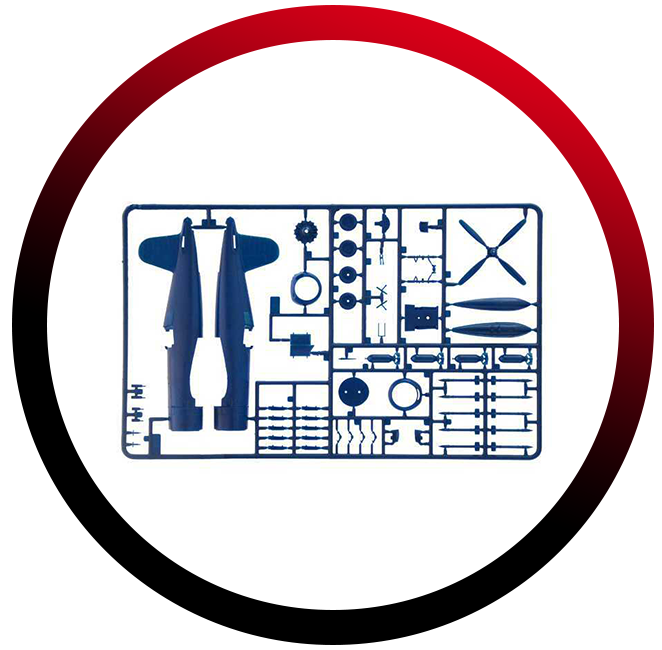
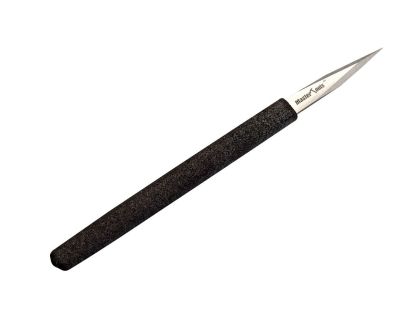
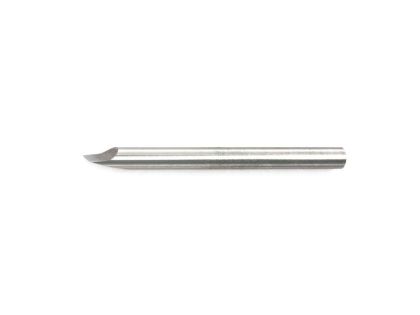
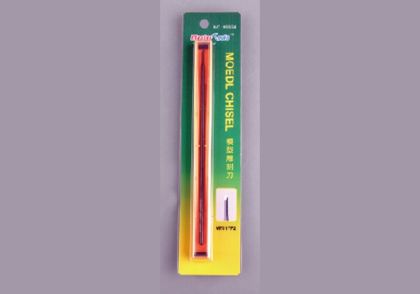
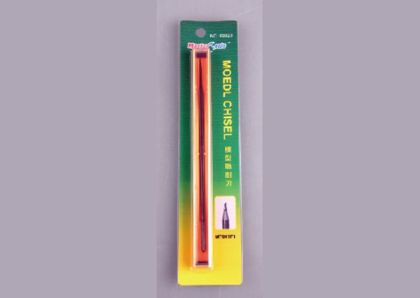
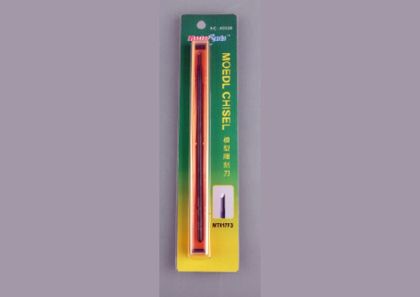
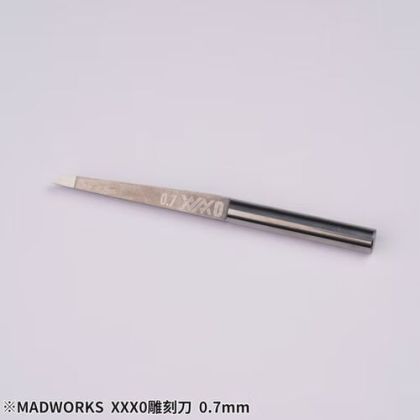
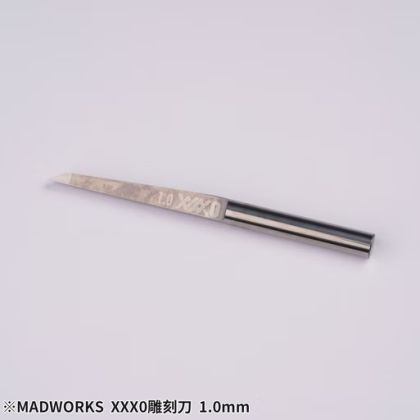
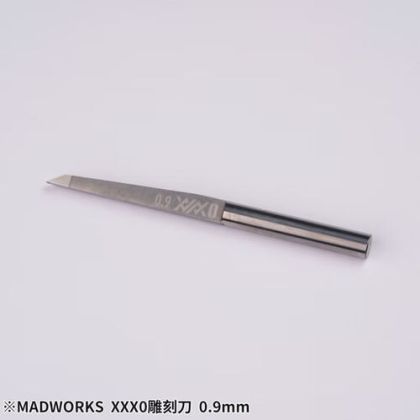
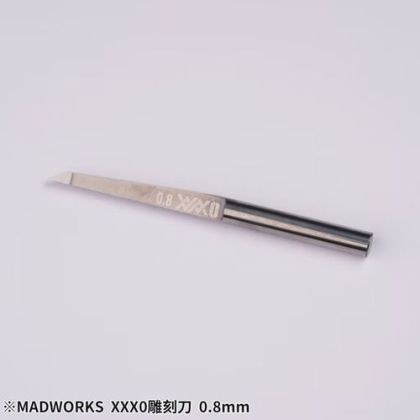
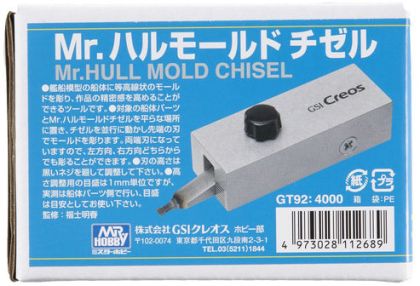
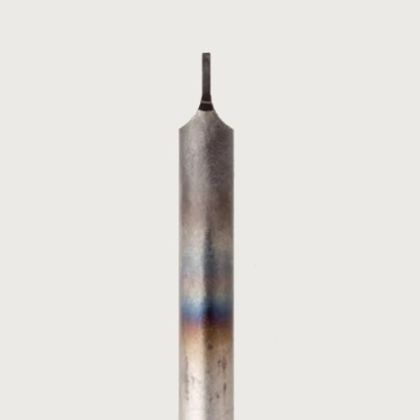
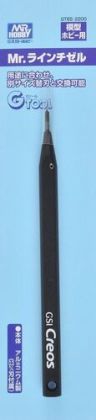
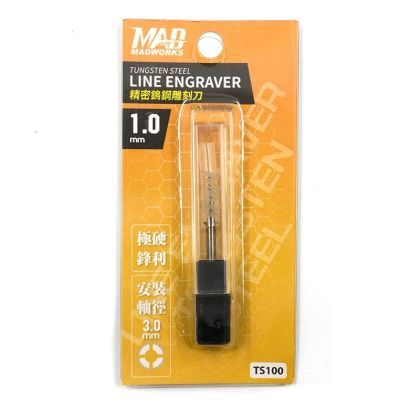
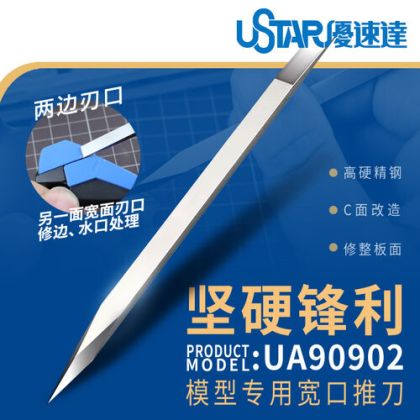
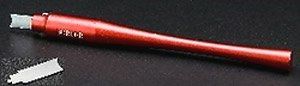
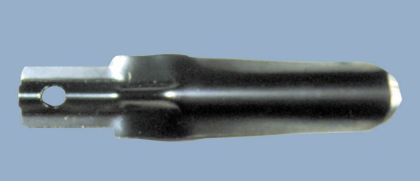
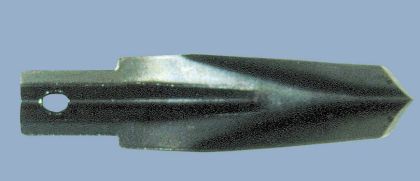
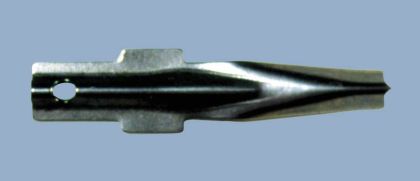
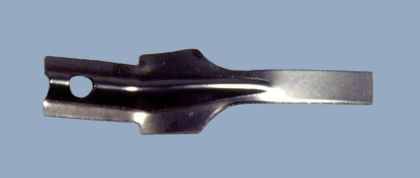
Chisels and scrapers work differently from a knife: they do not part a component, they take material away in layers. That is what the job needs when you are dealing with a mould seam, a patch of flash, a sprue stub in an awkward corner, or when a groove has to be cut out of solid material. The category offers flat chisels with a straight edge, shaped chisels in V and U profiles, carbide scrapers and burnishers for draw work, and interchangeable handles to hold them all.
In control. A knife cuts through, an abrasive levels indiscriminately — a chisel removes material exactly where you place it and only as much as you allow. On a model that is irreplaceable in two situations: when raised material has to go and the detail beside it must survive, and when you are taking material out in depth, inside a cowling or when thinning a wall.
A straight edge in widths from a fraction of a millimetre upwards. They are used to shave a sprue stub level with the surface, to remove flash and to clear the flat bottom of a groove. They also open an already cemented joint carefully, without levering anything.
A V profile cuts a sharp groove to a point, a U profile a rounded one. They are used to cut shaped detail, to suggest gouges and dents, and to work soft material. Combined with two-part putty they produce detail no kit ever contained.
Tools for drawing rather than pushing. The edge is led across the surface and lifts a very thin shaving. On a mould seam it is the gentlest method there is: you take the raised ridge off and the row of rivets alongside it stays untouched, whereas an abrasive would remove both together.
Carbide holds an edge far longer and copes with cured filler, resin and printing resin. Interchangeable handles let one comfortable grip serve several profiles — a similar system turns up in scribing and panel lines.
Take thin layers and never go to full depth in one pass. Lead the tool away from you and keep the part firmly held, ideally in a small vice from stands and clips. On draw work hold the tool close to vertical; only then does a scraper cut instead of following the unevenness beneath it.
When the job is to restore a panel line rather than to remove material, the right tool is a scriber from scribers and chisels.