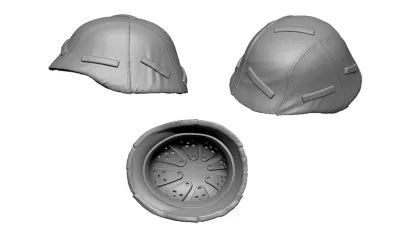
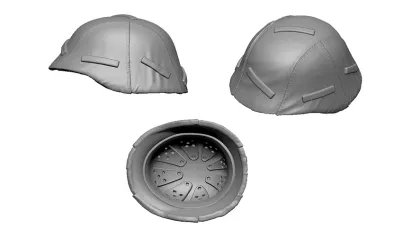
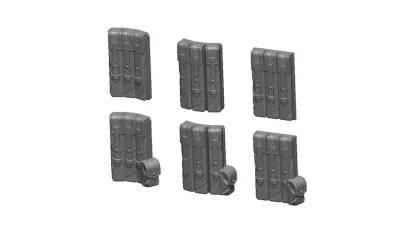
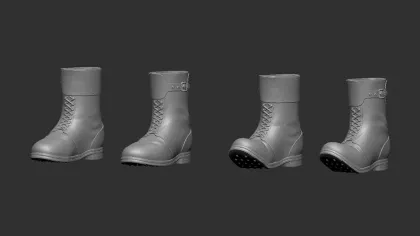
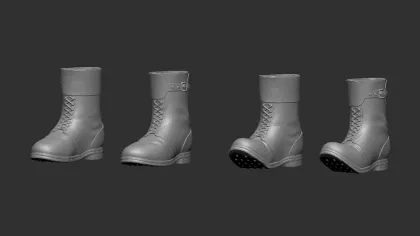
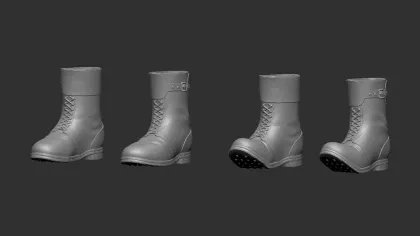
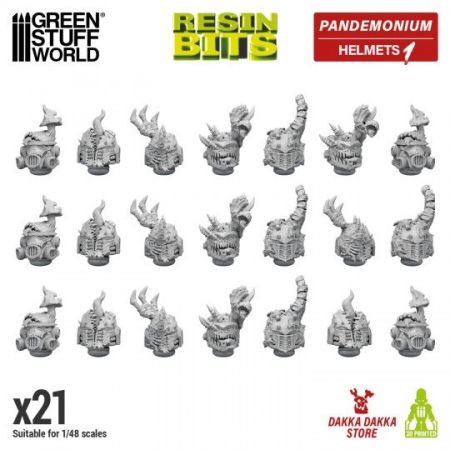
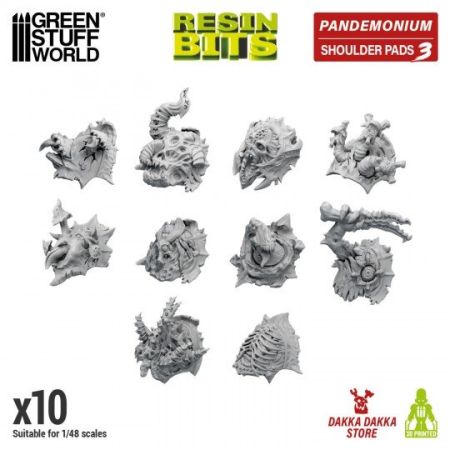
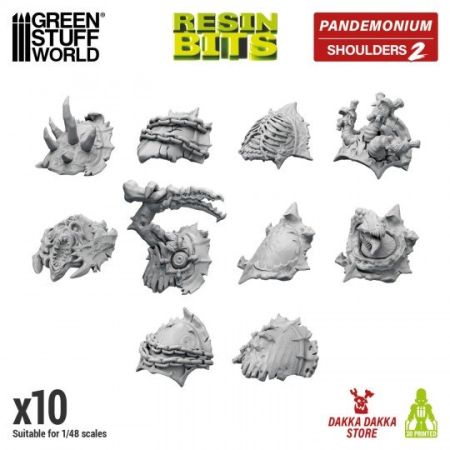
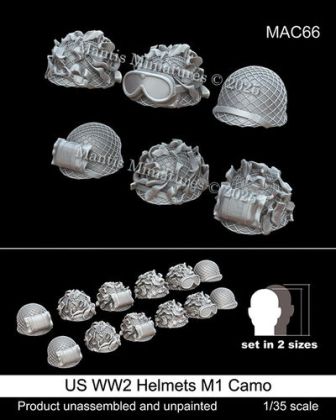
Casting in polyurethane resin reaches a level of detail that injection moulding cannot: the taut folds of a helmet cover, the exact shape of a pouch flap, the tread of a field boot. That is why resin dominates equipment sets and standalone figure castings alike. The listing runs from individual items of two world wars through present-day load-bearing kit to skulls, creatures and genre parts such as alternative heads and shoulder pads.
Most ranges exist in parallel sizes for 1:72, 1:48, 1:35 and 1:16, so the same motif can be bought for a small infantryman and for a large crewman and your scenes keep one handwriting. The guide below covers how resin differs from plastic and how to work it safely.
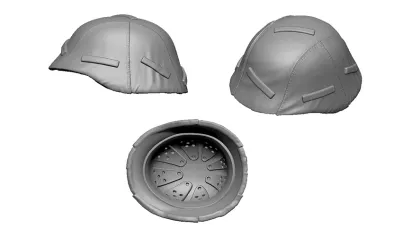
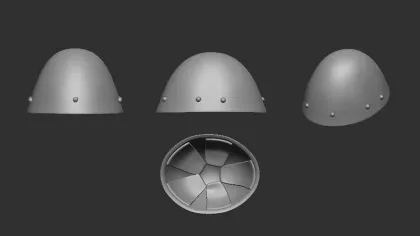 1:35 Czechoslovak helmet vz.32 (detail)
5.96 €
1:35 Czechoslovak helmet vz.32 (detail)
5.96 €
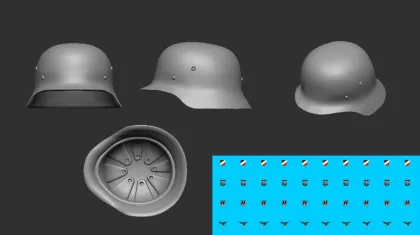 1:35 German helmet M35/40 (Stahlhelm) (detail) + decals
6.36 €
1:35 German helmet M35/40 (Stahlhelm) (detail) + decals
6.36 €
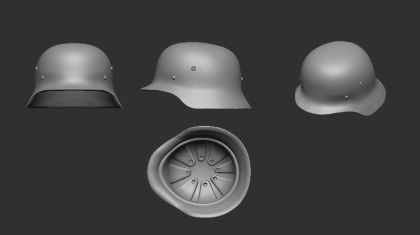 1:16 German helmet M35/40 (Stahlhelm) (detail)
5.96 €
1:16 German helmet M35/40 (Stahlhelm) (detail)
5.96 €
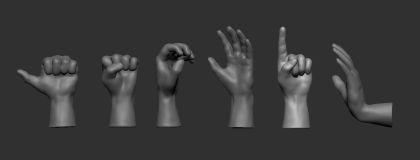 1:35 Palm hands
5.96 €
1:35 Palm hands
5.96 €
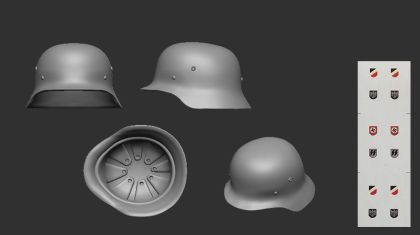 1:16 Německá helma M35/40 (Stahlhelm) (detail) + obtisky
6.36 €
1:16 Německá helma M35/40 (Stahlhelm) (detail) + obtisky
6.36 €
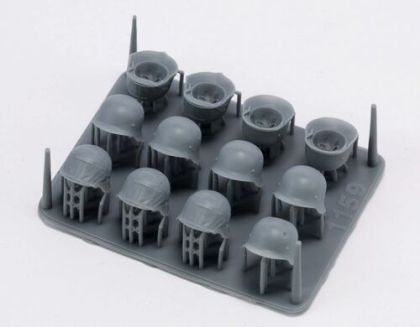
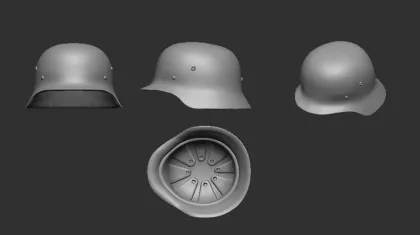 1:35 German helmet M35/40 (Stahlhelm) (detail)
5.96 €
1:35 German helmet M35/40 (Stahlhelm) (detail)
5.96 €
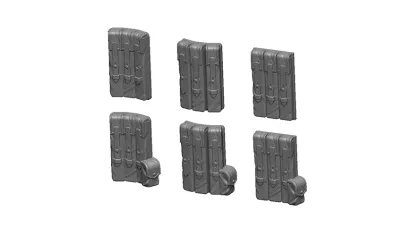
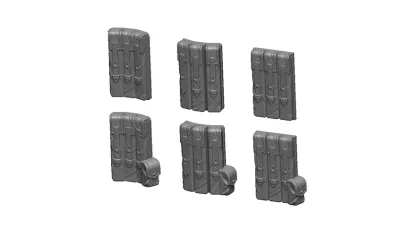
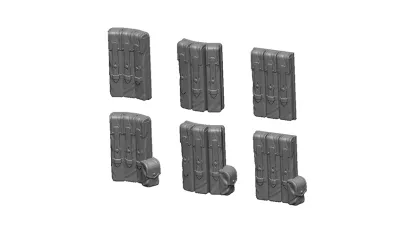
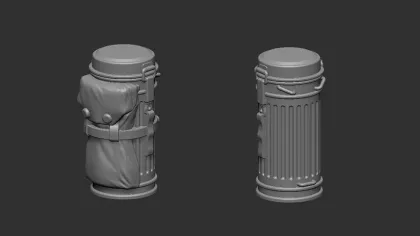
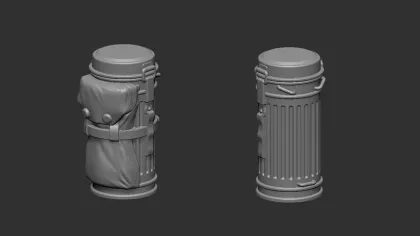
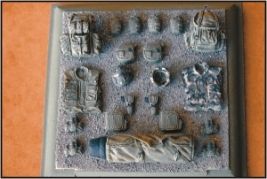
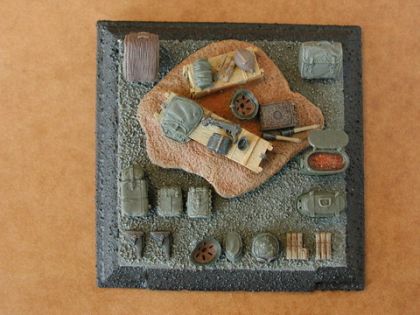
Two kinds of product share the listing. The first is equipment: helmets with covers, submachine-gun pouches, boots, canisters and modern pouch rigs, released as matching ranges across several sizes. The second is castings meant to stand on their own, from anatomical props to fantasy conversion parts. In both cases the appeal is the same, namely edges and textures that survive at any viewing distance. Resin also takes crisp undercuts that a two-part steel mould could never release, which is why pouches, straps and cloth covers look so different here from their injected equivalents.
Buy equipment in the scale of the figure and the period of the subject. A covered steel helmet belongs on a wartime infantryman, a plate carrier on a present-day operator. The widest selection is cut for 1:35 model figures, while the largest detail parts serve 1:16 model figures.
Wash parts in warm water with a little detergent to remove release agent, then cut away the casting blocks and sand the stub flat. Resin will not bond with polystyrene cement, so use cyanoacrylate, and fill any remaining seam with putty. Always sand resin wet; the dust does not belong in your lungs.
The commonest use of all is improvement. A plastic figure from a kit receives a resin helmet, pouches and boots, and it suddenly holds its own next to far more ambitious castings. A single coat of primer across both materials pulls the result together.
Etched brass, insignia sheets and scenic props are listed alongside under figure model accessories.