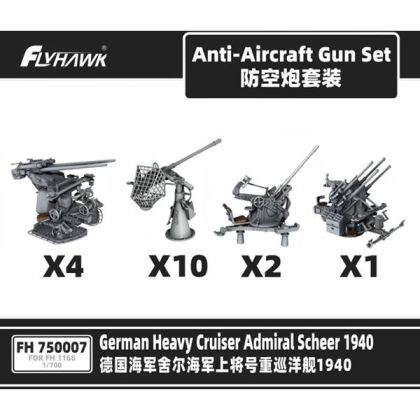
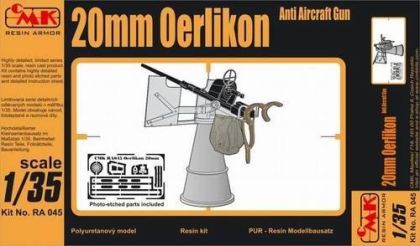
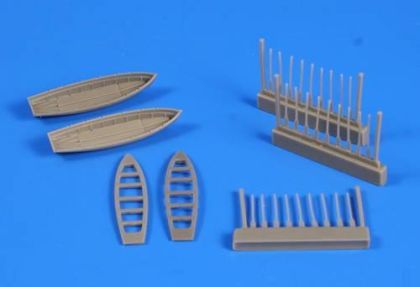
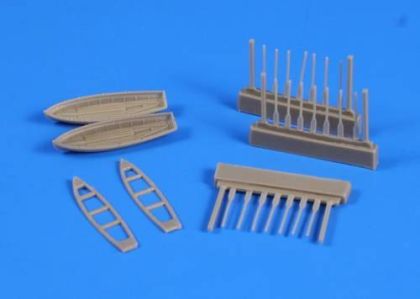
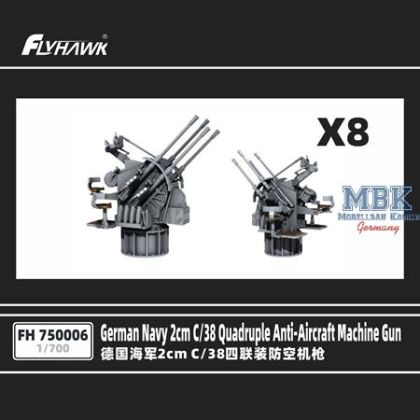
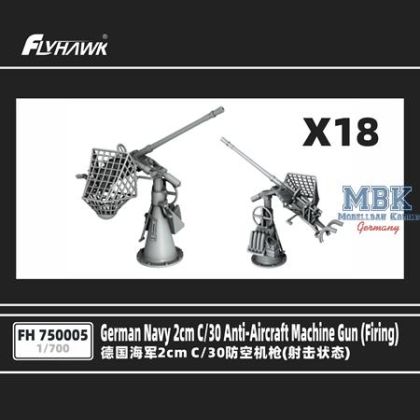
Cast resin and stereolithographic printing reach shapes an injection mould cannot: undercuts, walls a few hundredths of a millimetre thick, woven and creased textures. That is why resin ship model accessories replace simplified kit parts with anti-aircraft guns, ship's boats and life rafts, ventilators, searchlights, bollards and whole deck fittings.
The range is split by scale, from the tiny 1:700 to the substantial 1:72, and a growing share of the parts is 3D printed rather than cast. Resin behaves differently from polystyrene under the knife and under glue, so the sections below cover both choosing a set and preparing one for paint.
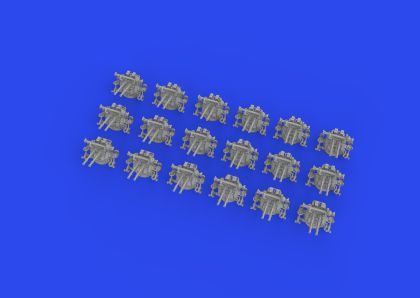 1:350 IJN Type 96 25mm AA gun (double) PRINT
6.80 €
1:350 IJN Type 96 25mm AA gun (double) PRINT
6.80 €
 1:350 IJN Type 96 25mm AA gun (single) PRINT
6.80 €
1:350 IJN Type 96 25mm AA gun (single) PRINT
6.80 €
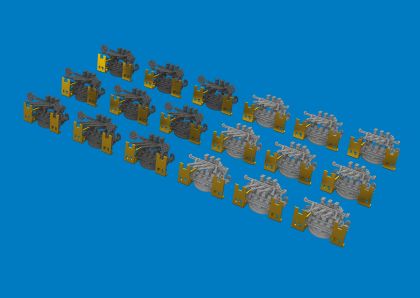 1:350 IJN Type 96 25mm AA gun (triple)
6.80 €
1:350 IJN Type 96 25mm AA gun (triple)
6.80 €
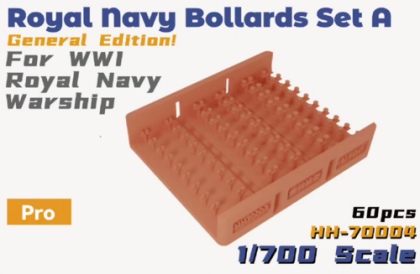
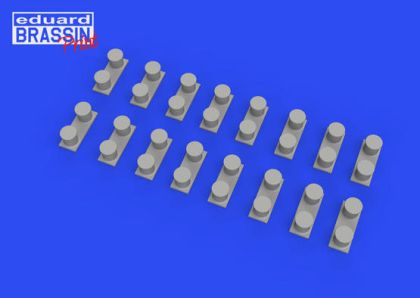 1:350 WWII USN battleship bollards 3D PRINTED
6 €
1:350 WWII USN battleship bollards 3D PRINTED
6 €
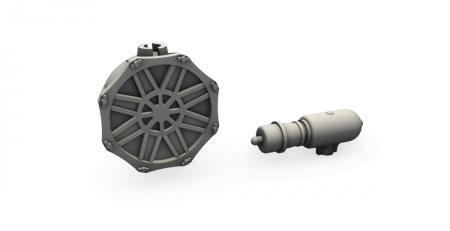
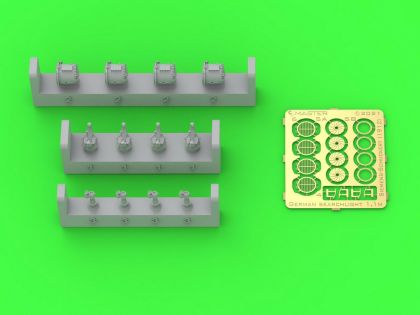 1:350 SMS Emden - German searchlight 1,1m - (resin and PE parts) - (4pcs)
11.96 €
1:350 SMS Emden - German searchlight 1,1m - (resin and PE parts) - (4pcs)
11.96 €
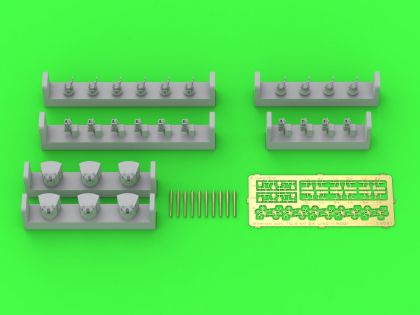 1:350 SMS Emden - 10,5 cm SK L/40 guns - (resin, PE and turned parts) - (6pcs shielded and 4pcs open mount)
25.16 €
1:350 SMS Emden - 10,5 cm SK L/40 guns - (resin, PE and turned parts) - (6pcs shielded and 4pcs open mount)
25.16 €
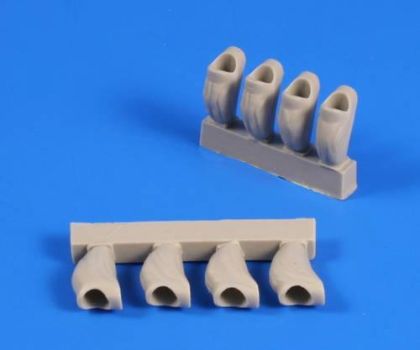
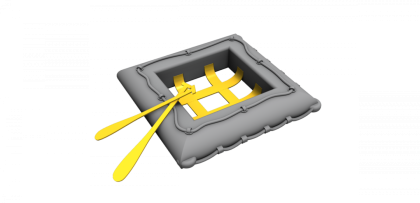
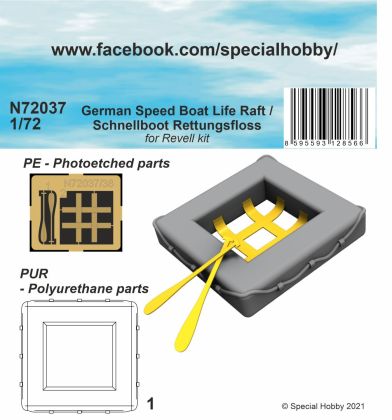
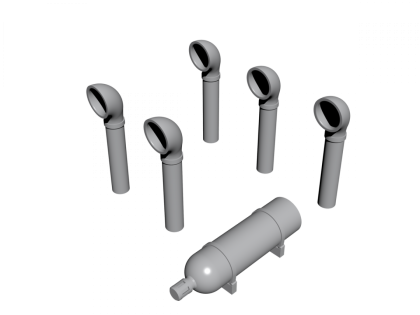
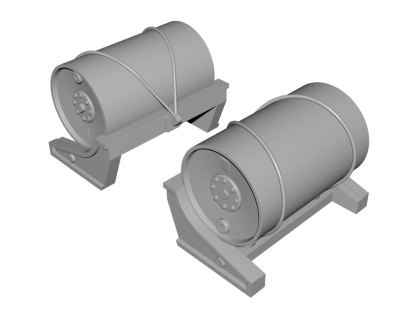
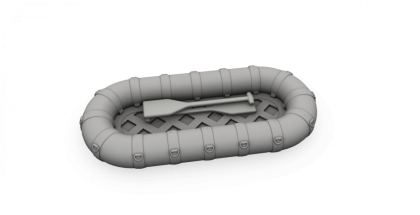
Casting resin and resin printing capture the things a steel mould cannot reach: gun barrels with drilled muzzles, ventilator cowls that are genuinely hollow, life rafts with their lashings cut clear, and turret covers whose canvas falls in natural folds. One set of castings often changes the overall impression of a hull more than hours spent sanding the original parts ever would.
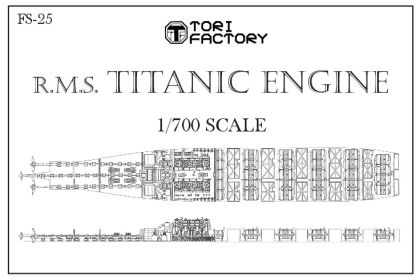
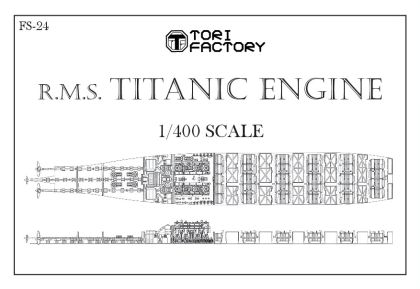
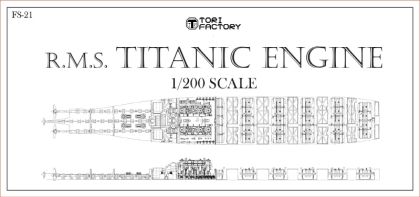
Always buy in the scale the hull is built to. The deepest choice sits in 1:350 resin ship fittings and 1:700 resin ship fittings, where castings most often replace anti-aircraft armament. Large hulls are served by 1:200 resin ship fittings and 1:72 resin ship fittings, with boats, rafts and torpedo boat weapons. Collectors' hulls draw on 1:144 resin ship fittings, and everything outside those series, rigging blocks for sailing ship models included, is listed under resin ship fittings in other scales.
Generic sets, such as gun mountings, rafts or bollards, suit any vessel of the right navy and period. Parts cut for one ship, say a particular battleship's boat stowage or a liner's engine room, must match the kit catalogue number quoted in the title.
Resin takes cyanoacrylate or two-part epoxy, never polystyrene cement. Wash the release agent off before painting and cut casting blocks away with a razor saw rather than snapping them, since resin shatters where plastic bends.
If this is your first attempt at resin, start with one generic armament set and see how the material cuts and glues before committing to a full superdetailing project. The complete upgrade picture is laid out in ship model accessories.