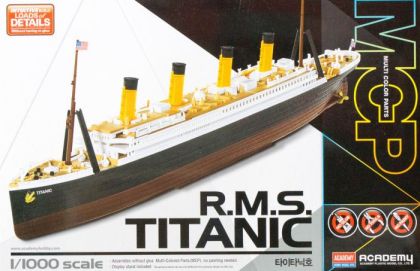
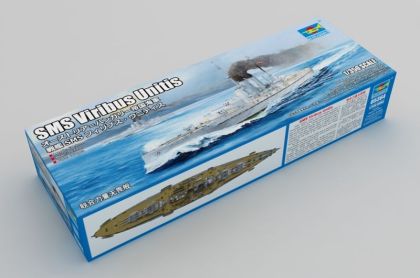
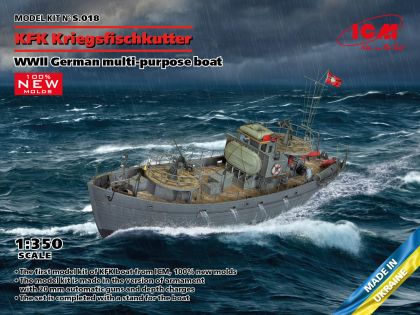
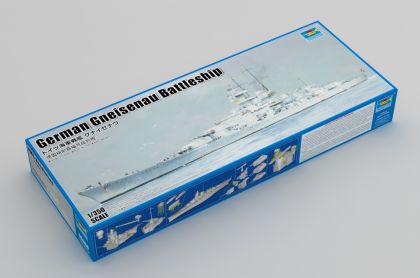
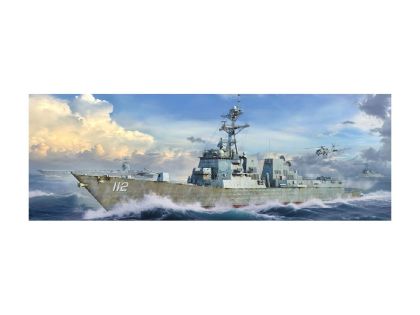
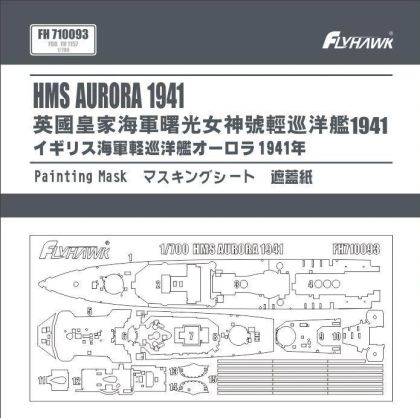
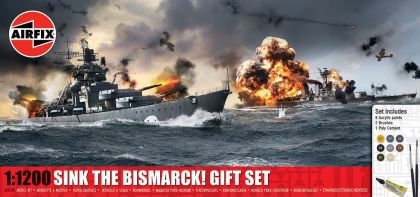
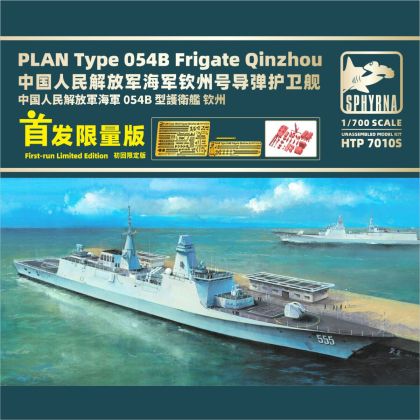
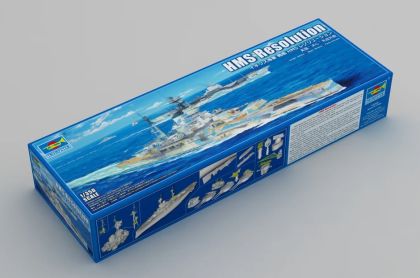
Ship kits reward patience like no other branch of scale modelling. A battleship hull carries hundreds of separate parts, and every railing, boat and radar screen you add stays visible from a metre away. The catalogue covers warships, ocean liners, historic sailing ships and small craft, in scales running from pocket-sized fleet miniatures to museum-grade giants. Scale is the first decision you make here, because it governs the building technique as much as the finished length. The guide below sorts the scales out and points you to the right shelf.
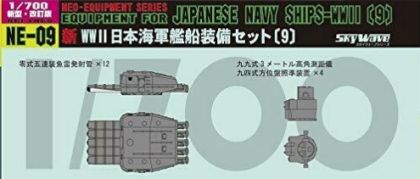
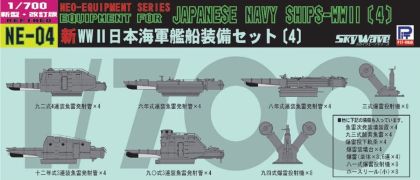
Ship modelling spreads across a wider range of scales than any other subject, simply because an aircraft carrier and a patrol boat cannot sensibly share one. Below roughly 1:1000 you work with silhouettes and whole task forces. Between 1:700 and 1:350 sits the mainstream, where most kits and almost all aftermarket parts live. At 1:200 and larger a hull turns into a months-long project with planked decks, rivet detail and fitted interiors. Choose the scale first and the ship second.
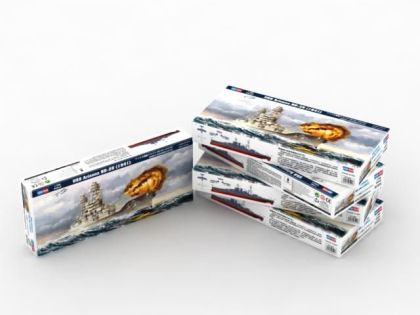
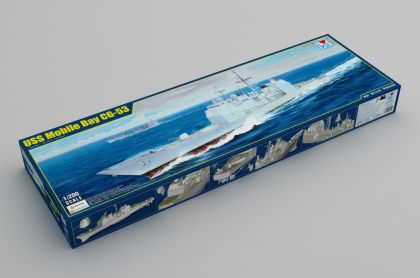
1:700 ship model kits offer the widest choice of warships and the easiest storage, while 1:350 ship model kits are the display standard for battleships and cruisers. For the largest surface ships, 1:200 ship model kits push detail further again.
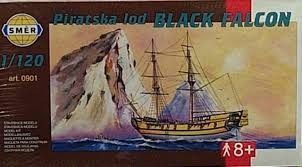
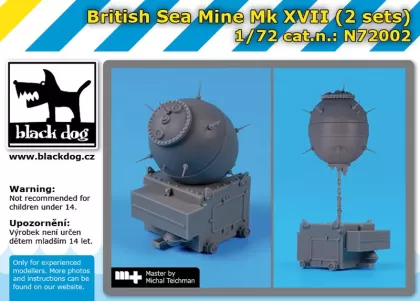
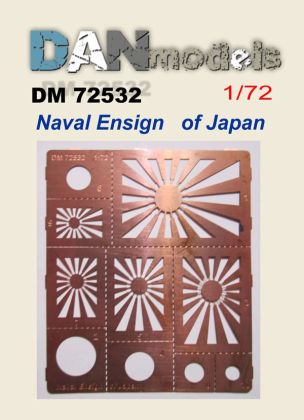
Vessels under about forty metres are usually moulded big: 1:72 ship model kits cover torpedo and fast attack boats, with crew figures moulded to match. Masts, yards and rigging belong to sailing ship models, from Viking longships to three-deckers. Below the waterline you will find submarine model kits in matching scales.
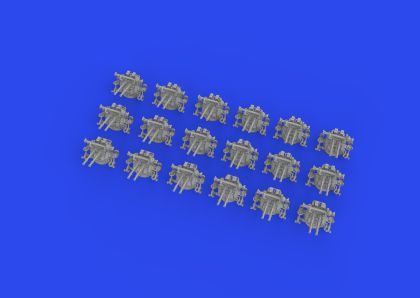
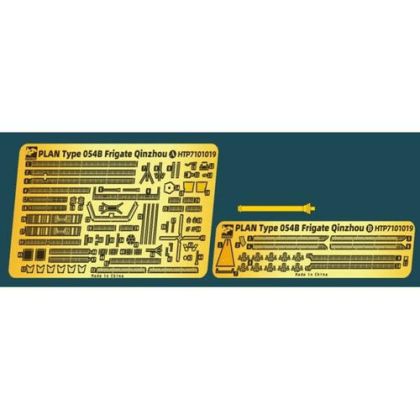
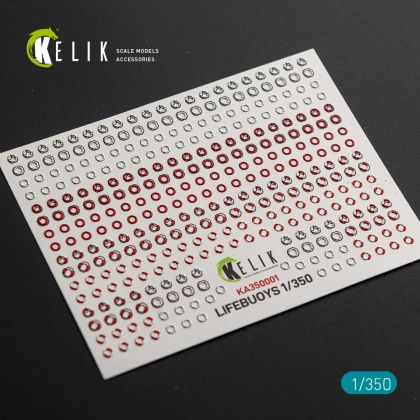
Work in that order and nothing turns up on the bench in the wrong size: hull, then deck, then the fine metalwork cut for exactly that scale.