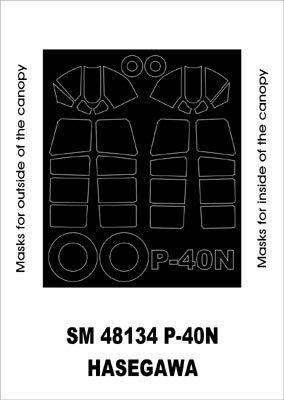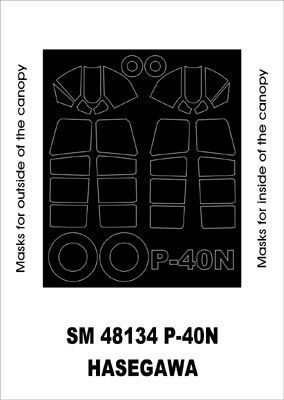
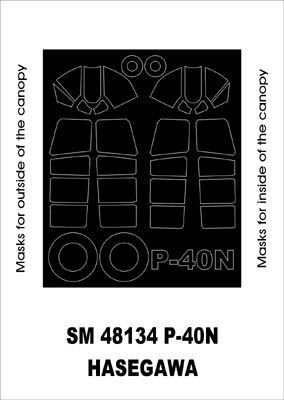
Masks for the glazing of the late Warhawk in the N version in 1:48 scale, with shapes for the outer and the inner side of the canopy. It allows for the Hasegawa kit.
Responsibility details are not available.
The letter N marks the last and at the same time the most numerously built version of the Curtiss fighter. The designers shed weight on it wherever they could: aluminum radiators instead of brass, smaller fuel tanks and, in the first production blocks, only four machine guns instead of six. The reward was the highest speed this type ever reached and a noticeably better rate of climb. It was flown by American groups in the Pacific and over Burma, by Australian and New Zealand squadrons under the name Kittyhawk and by the Chinese-American Composite Wing.
The most visible difference from the older versions is the shape of the glazing behind the pilot. The spine of the fuselage was cut down and instead of metal sheet it received glazed panels, so the pilot could finally see what was happening behind him. It is that modification which makes masking a somewhat longer job, because besides the sliding section and the windscreen the rear glazing has to be dealt with as well, and it runs from the side onto the spine and has not a single straight edge.
It is good to seat the film on a polished surface and press it down around its perimeter with a blunt tool, so that the edge nowhere stands up. The rear panels are slightly curved in two directions and it is exactly there that masking with tape by hand usually falls apart. After spraying and pulling the masks off, the framing is left in sharp lines and the transparent areas clean.
Naši poradci a znalci sortimentu jsou připraveni odpovídat na Vaše dotazy (Po–Pá, 8–18 hod).
Zeptejte se na co potřebujete, odpovíme co nejdříve.
Texts from customers in the advice section reflect solely the opinions and views of the customers. MNF trade s.r.o. does not approve or verify customer texts in advance.
There are no questions here yet. Be the first to ask!