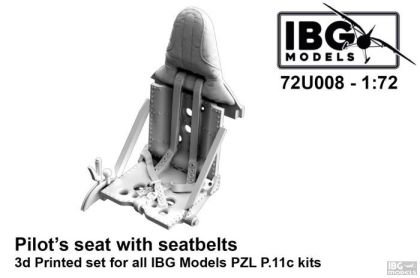
A pilot's seat with belts for the PZL P.11c 1:72 from IBG is a 3D printed accessory for the cockpit. It is not an aircraft model but a replacement part for the kit of the Polish fighter.
Responsibility details are not available.
The set is a detail accessory for a plastic kit, not an aircraft model. It replaces the pilot's seat in the IBG PZL P.11c kit in 1:72 scale with a 3D printed component that has the harness belts printed directly into it. For 1:72 that is a practical solution: the seat and the belts are finished in a single piece, so there is no assembling of small photo-etched parts, and the detail is markedly finer than on a plastic part from a mold.
The PZL P.11c was a Polish high-wing fighter with the characteristic high gull wing of the so-called Polish type, which opened up the pilot's view upwards and forwards. At the beginning of the 1930s the design was among the best in the world, but by the end of the decade it was already outclassed by modern monoplanes with retractable landing gear. Even so, P.11c machines formed the backbone of the Polish fighter arm in September 1939, and their pilots scored victories despite the loss in performance. The Bristol Mercury radial engine was license-built in Poland.
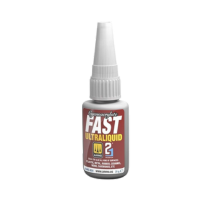
Separate the component from the print supports with a sharp scalpel, level the seating surface and degrease it. It is glued with cyanoacrylate glue (super glue). Paint the seat separately from the rest of the cockpit while it is accessible: the belts need only be brought out in a different shade and with a fine wash, which pulls out the stitching and the buckles. Fit it into the fuselage only after painting and dry-fit it first.
Naši poradci a znalci sortimentu jsou připraveni odpovídat na Vaše dotazy (Po–Pá, 8–18 hod).
Zeptejte se na co potřebujete, odpovíme co nejdříve.
Texts from customers in the advice section reflect solely the opinions and views of the customers. MNF trade s.r.o. does not approve or verify customer texts in advance.
There are no questions here yet. Be the first to ask!