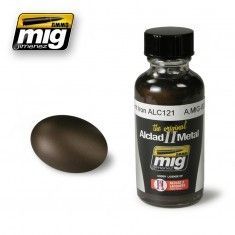
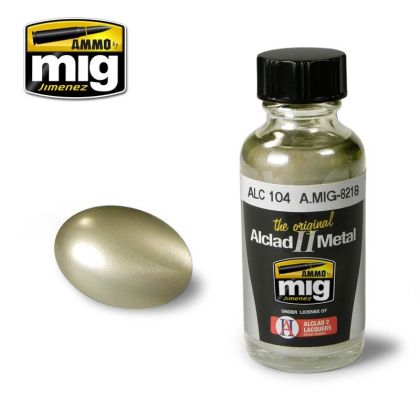
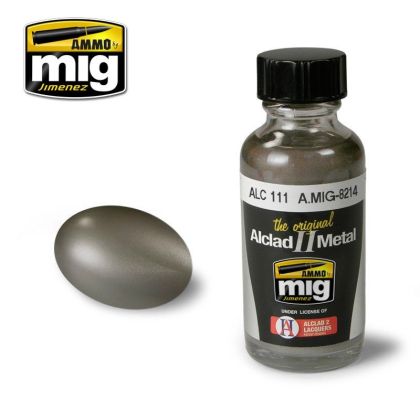
This part of the Alclad II range holds metal shades in 30 ml bottles aimed at the jobs that recur on almost every model: aluminium skin, magnesium, copper and the burnt tones with violet and blue shifts used on exhaust stacks and heat-stressed panels. The paint is sprayed in thin passes, and the finish it gives depends far more on how smooth the surface underneath is than on the shade in the bottle. Handling notes and companion products follow the list.
The selection follows real needs rather than a colour chart. A bare metal airframe gets by on aluminium tones; exhaust pipes and jet cans want burnt metal with its violet-to-blue transition; copper and magnesium fill in engine parts and small fittings. Four or five bottles therefore cover most of the metal on a model, which is a more useful way to buy than one bottle per shade name.
Metal particles will not bridge even a light scratch. Polish the surface and even it out with a coat from surfacers and primers. A gloss base pushes the result towards a mirror, a matt one towards worn sheet.
Spray with airbrush equipment from a little further back and build coverage gradually. One heavy pass leaves a grainy surface that cannot be rescued. The matching solvent and the gun cleaner you will want immediately afterwards are in thinners and cleaners.
Real sheet metal never has a uniform sheen. Mask individual panels and shift each one slightly, either with a second metal shade or with an extra pass. That variation is the whole effect, and no single bottle produces it.
Plan the sequence backwards from the metal: everything that needs sanding, filling or heavy handling should be finished before the first metal pass goes on, because a repair in the middle of a bare metal surface is far harder to disguise than a repair under opaque colour.
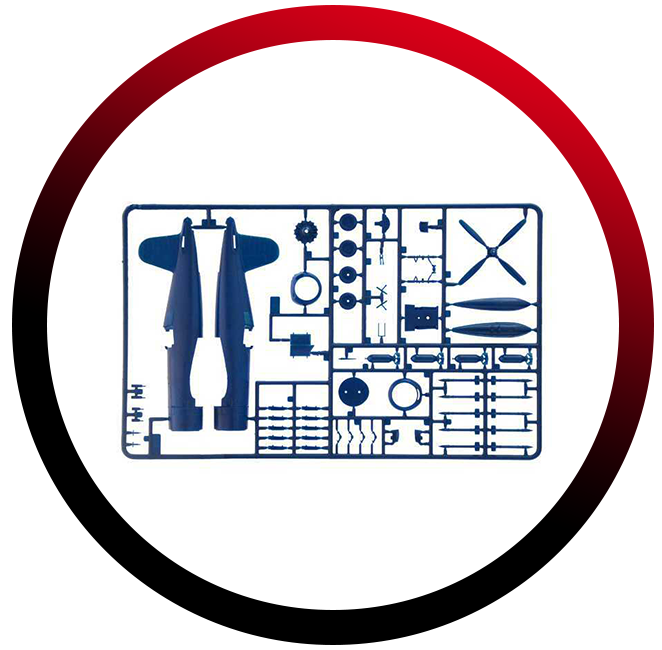
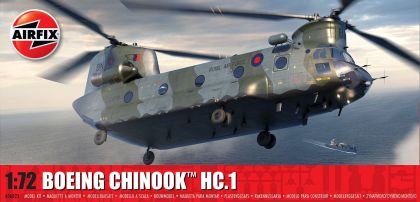
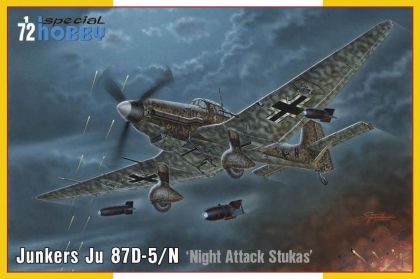
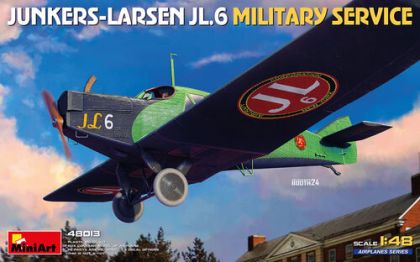
Polishable and paste alternatives are one level up in metallic model paints, and the bare metal subjects these shades were made for are in aircraft model kits.