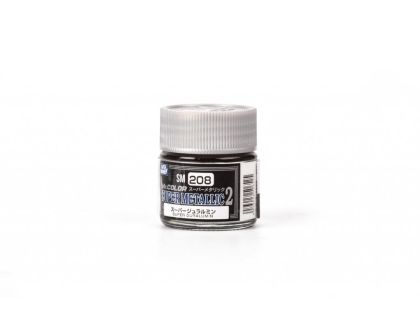
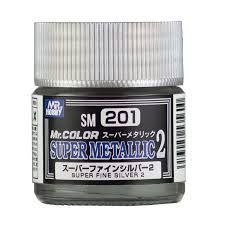
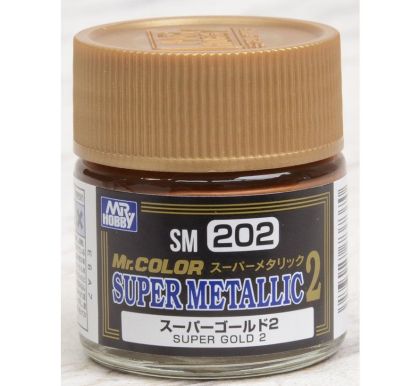
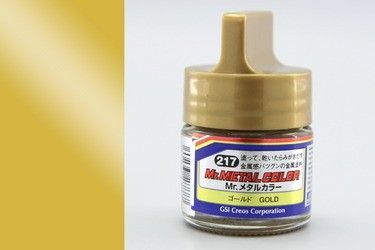
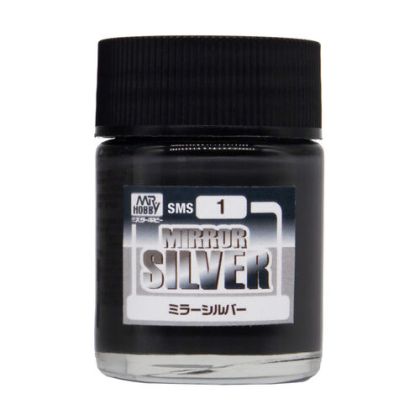
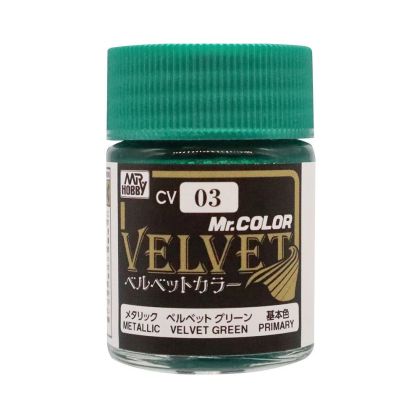
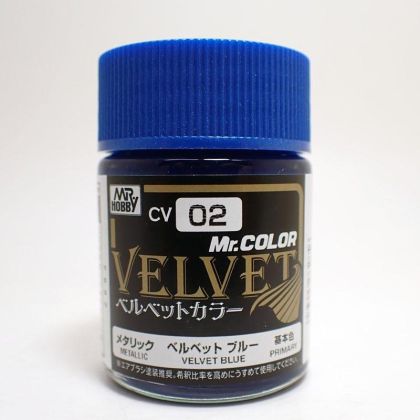
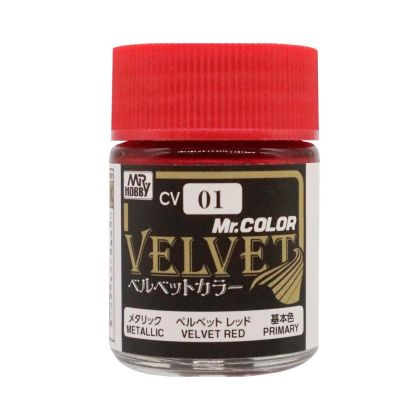
Gunze metal paints fall into several distinct families and each answers a different problem. One group is polishable: the shade dries matt and the lustre appears only after it is rubbed with a cloth. The second covers opaque metals for spraying, from near-mirror silver to duralumin tones. A third adds metallic shades with a colour undertone, which behave more like automotive paint than like bare metal. The differences are set out below the product list.
Polishable paints work mechanically: once dry, rubbing reorients the metal particles and the shine appears. Sprayed metal ranges arrive at the finish during application and need no buffing at all. The third family mixes metal pigment with a colour, giving metallic greens or reds for bodywork and fantasy machines. Which family a bottle belongs to matters more than the shade name, because the three are handled in completely different ways.
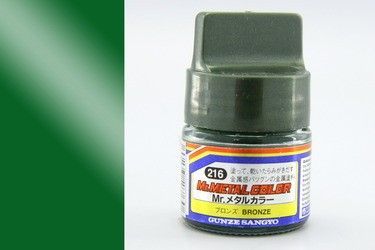
Best on smaller metal parts, engines, weapons and exhausts, where an uneven hand-worked lustre is what you are after. They are listed in MC polishable metals.
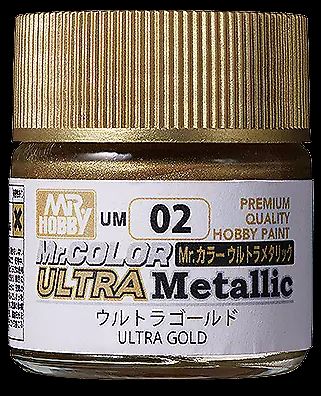
For large smooth areas, above all bare metal airframes, take the shades from SM special metals or the very fine pigment of UM Ultra Metallic, applied in thin passes with airbrush equipment.
These belong on bodywork and on parts that should be coloured and bright at once. They need a gloss ground or the undertone disappears; bases are in surfacers and primers.
Mixing families on one model is normal and causes no trouble as long as each is sprayed in its own session and each is allowed to cure. What does cause trouble is laying one type over another while the first is still soft, because the second solvent lifts the metal pigment beneath it.
Tinted metallics find most of their work on car model kits. Acrylic and paste alternatives are in the parent category metallic model paints.