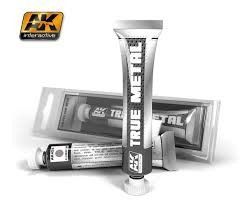
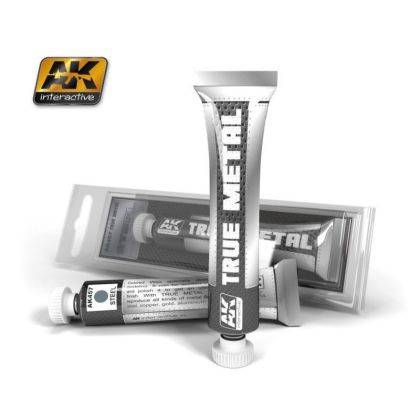
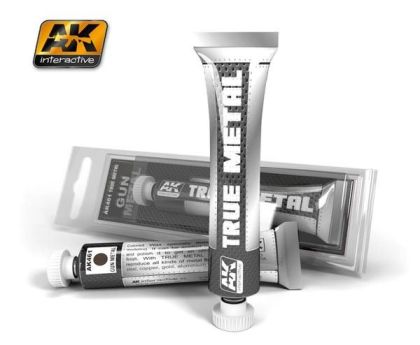
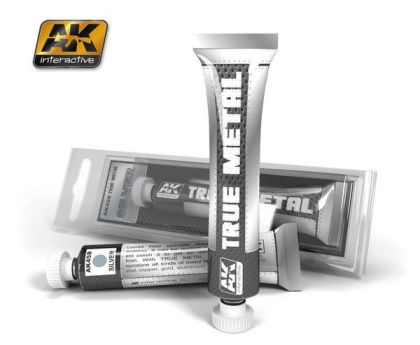
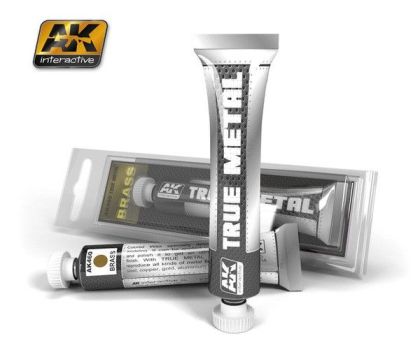
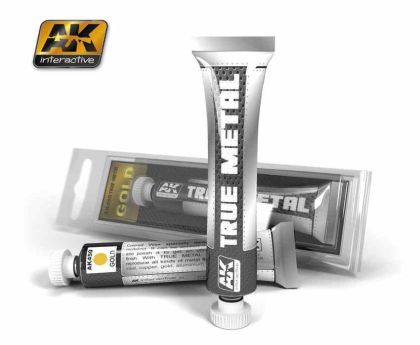
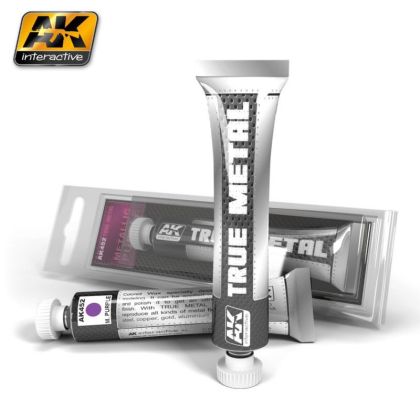
TRUE Metal is not paint in a bottle but a metal paste. It is picked up on a cloth, an old brush or a fingertip and rubbed into the surface, where it leaves a metal film that can then be buffed to a higher lustre. The range covers aluminium, silver, steel, brass, gold, gunmetal and several colour-shifted metal tones. No gun and no thinner are involved, which makes the paste equally useful for finishing touches on a model that is already assembled and glazed.
Paste answers the situations where spraying makes no sense: a blade, an ammunition belt, the worn edge of an armour plate, a bright wheel rim. You put it exactly where you want it, with no masking of the surroundings and no solvent in the room. The second advantage is the look itself, since paste gives an uneven, rubbed metal that suits worn parts better than a smooth sprayed film. The third is economy: a pinhead of material covers a part, so a pot lasts a very long time.
Take the smallest amount you can and work it into the surface with a circular motion. A cloth or a cotton bud is enough on a flat area; for engraved detail use an older brush with short, stiffer bristles. Do not put a new soft brush into paste, because it will stiffen and stay that way.
Once dry, go over the surface with a dry cloth. The longer and lighter the buffing, the brighter the result, and uneven buffing is an advantage here because worn metal is never uniform. To keep the metal subdued, leave it unbuffed and simply sweep the loose material off.
On large continuous surfaces, above all a bare metal airframe, spraying wins. XTREME Metal gives an even film with no hand rubbing involved.
Sprayed, polishable and acrylic metal types sit side by side in the parent category metallic model paints. For the smallest fittings, keep an old stiff shape from model paint brushes aside for paste alone.