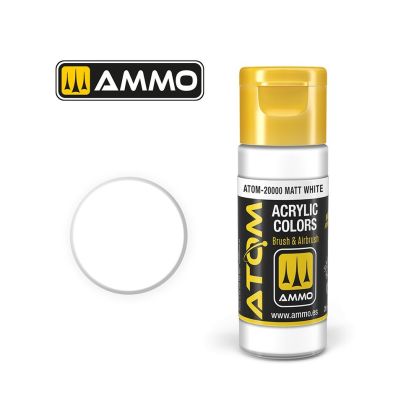
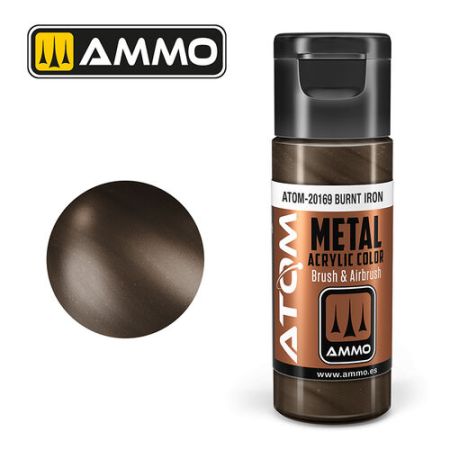
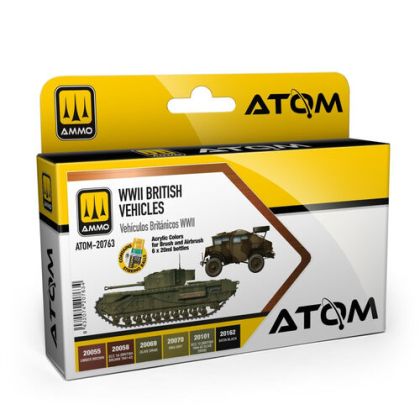
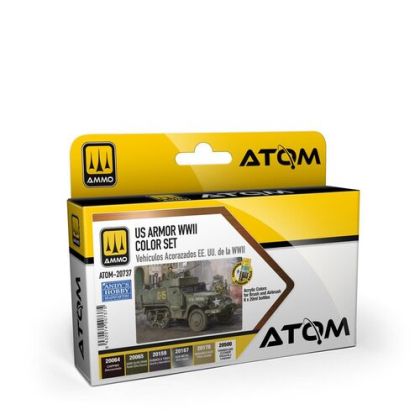
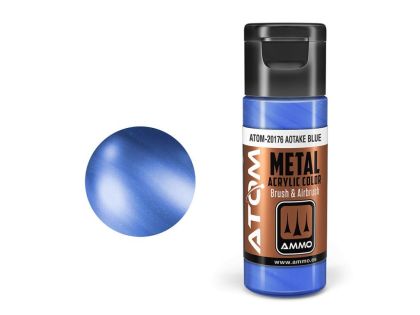
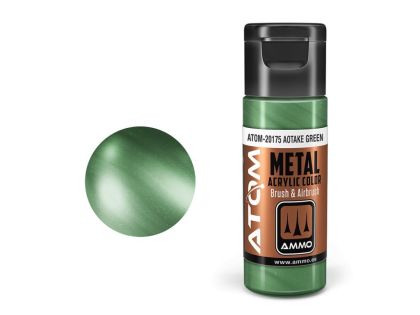
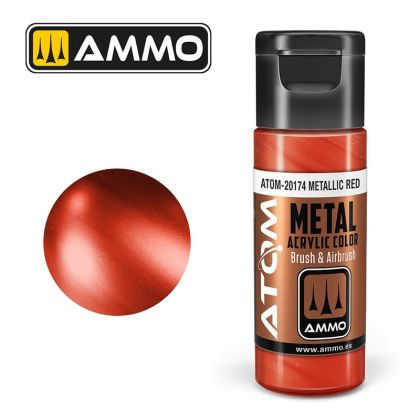
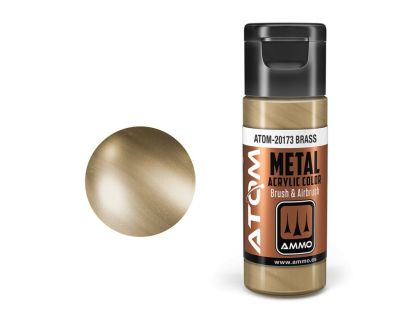
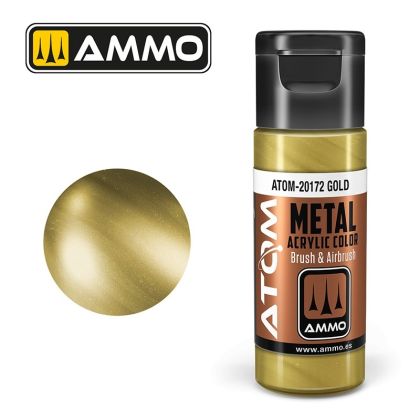
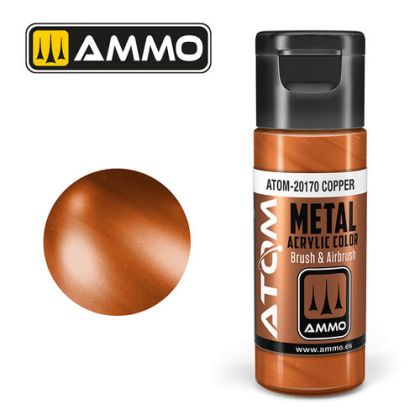
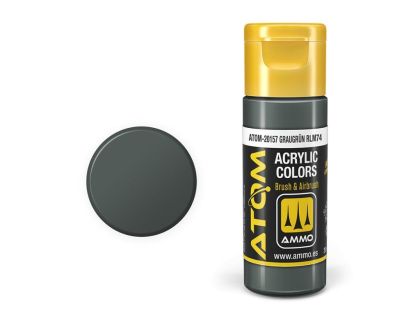
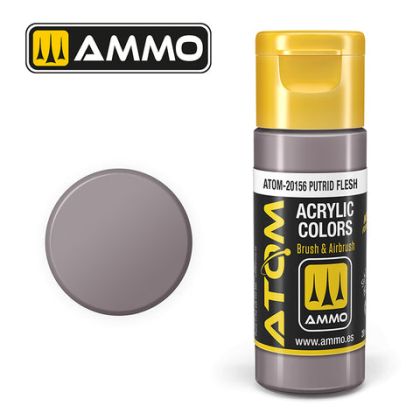
ATOM acrylics are prepared to spray with practically no thinning. The catalogue falls into two parts: opaque colour shades, and an unusually large metal group where aluminium, steel and gunmetal are joined by brass, copper, two golds, burnt iron and the blue and green casts of heat-treated metal.
That second half is what makes the range distinctive. Most acrylic lines offer two or three metals and leave the rest to you. The notes below cover how to sequence metals against colour, and what it takes for a metal shade to read as metal rather than as silver paint.
Metals form a substantial share of the offering rather than an afterthought. Beyond the usual shades there are tones imitating treated and heat-discoloured metal: the bluish and greenish cast that forms on the protective finish of internal structures, or the dark burnt iron of exhausts and gun barrels.
The second advantage is consistency. The paints are thinned to a value an ordinary nozzle handles, which removes the commonest source of trouble — estimating the thinner ratio over a cup.
Metal shades mask badly, because tape pulls their pigment away. Spray the colour areas first, let them cure, mask them, and only then do the metals. Materials for that are in masking supplies.
Pre-thinned acrylic takes lower pressure and a shorter working distance. The resulting film is smoother and there is less risk of the paint drying mid-flight into a gritty surface. Compare the equipment in airbrush equipment.
Metal pigment is heavier than the binder and settles faster than ordinary colour. Shake the bottle longer than seems necessary and stir again partway through a long session, or the last coats will be poorer in metal than the first.
The rest of the maker's catalogue, including further lines for vehicles and figures, is under AMMO of Mig Jimenez model paints.