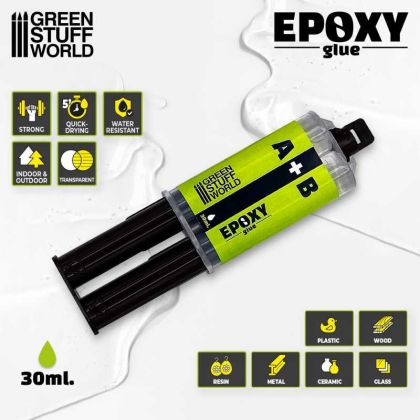
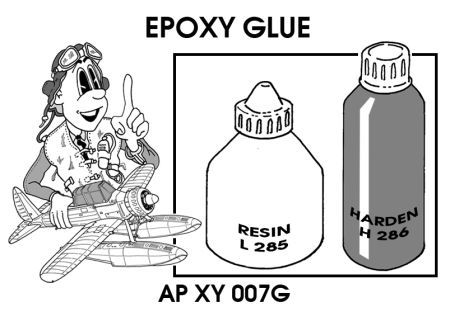
Epoxy is mixed from two components, resin and hardener, and cures by chemical reaction rather than by drying. The result is the strongest joint you will make on a model, and a slightly flexible one, so it survives handling. It earns its place wherever cyanoacrylate cracks: metal undercarriage legs, heavy resin assemblies, glued-in ballast and any bond between two different materials. The working time is a bonus in itself — a mixed batch can be adjusted for several minutes before it starts to set.
Mix epoxy in the ratio given on the pack, on a scrap palette; for most modelling joints a bead the size of a grain of rice is plenty. It belongs on structural bonds where mass has to be carried — metal tubes and profiles, the pivot of a movable part, or ballast fixed inside a fuselage. Clear grades double as a glazing medium and as a material that fills and strengthens at the same time. Once cured, epoxy files and sands cleanly. If what you need is a mass you can shape and carve into detail rather than a bond, reach for a two-part putty instead.