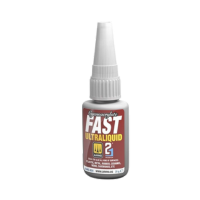
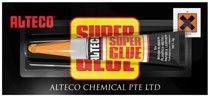
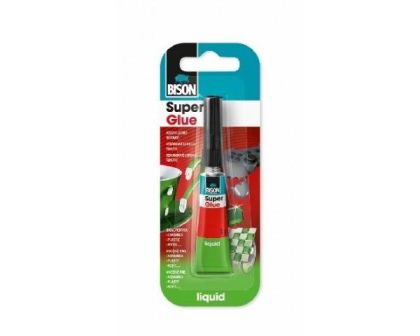
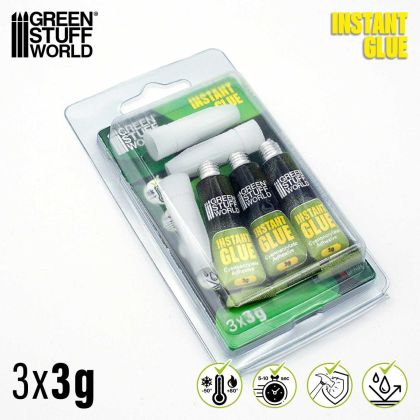
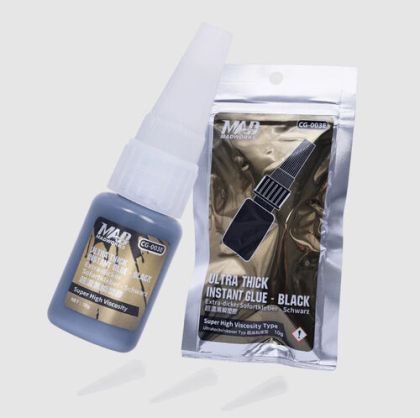
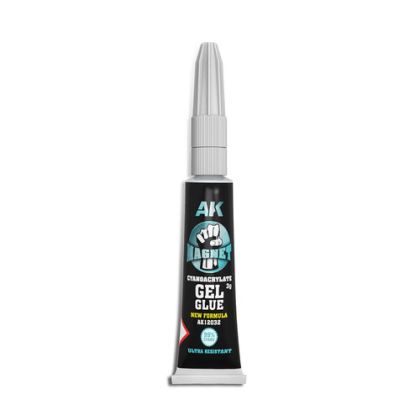
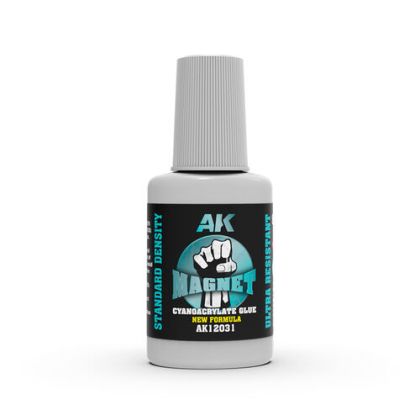
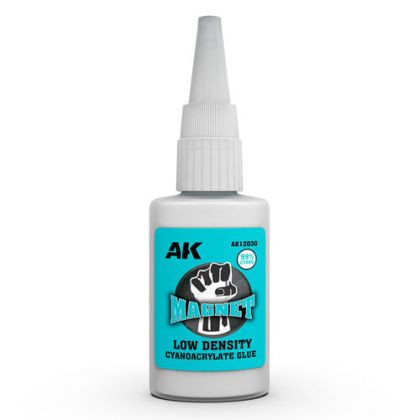
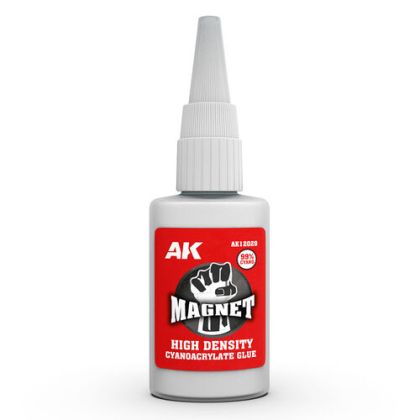
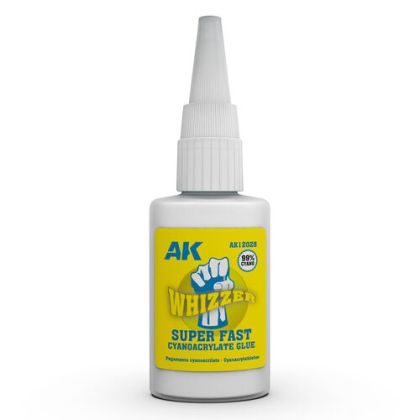
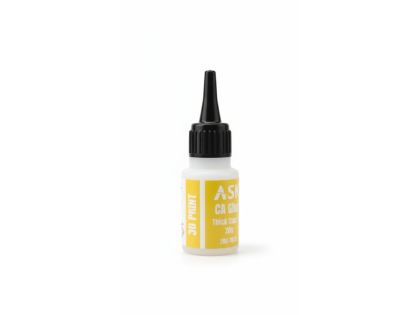
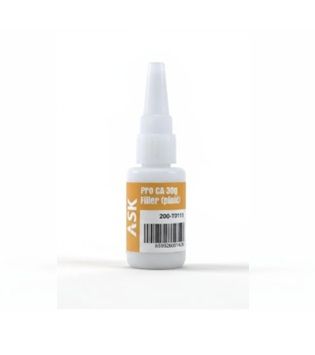
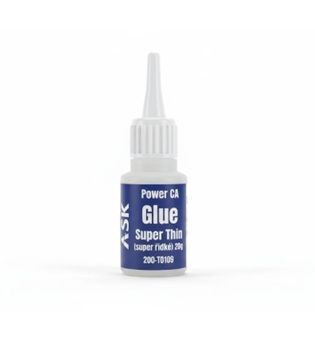
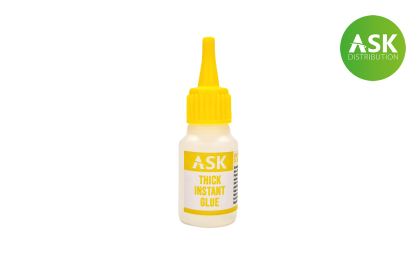
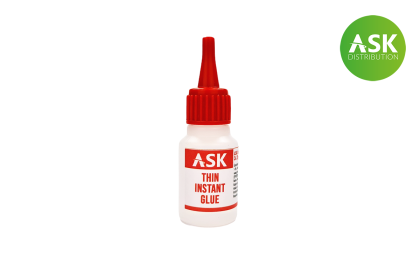
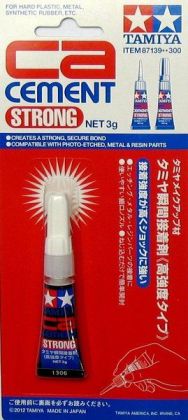
Cyanoacrylate is the second indispensable bottle on a modelling bench, right after plastic cement. It takes over everywhere the material cannot be softened: resin detail parts, brass photo-etch, turned metal barrels, nose ballast and parts from a 3D printer. The category runs the full viscosity ladder, from a watery thin grade that wicks into a hairline gap, through medium and thick, to gels and filling types that hold their shape on a vertical face and double as a very fast filler on a small void.
CA cures by reacting with moisture in the air, not by losing a solvent. Everything else follows from that: it sets fast, a thin film sets faster than a thick one, and in a very dry room it can take surprisingly long. The bond is strong and hard, but it has little give, so it is the wrong choice for a part that flexes when the model is handled.
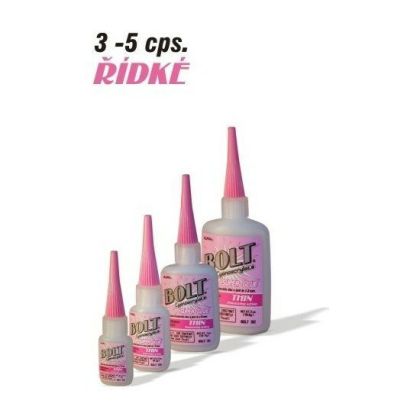
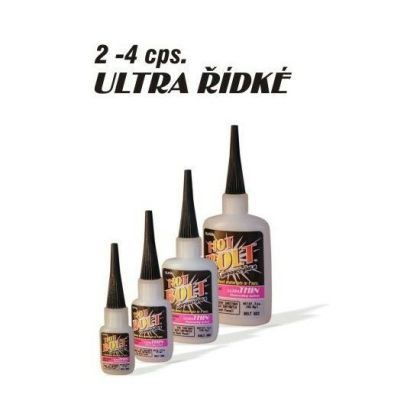
Wicks into a seam that is already closed and cures quickest of all. Used to tack photo-etch down, to secure a small joint at a single point and to stiffen a fragile edge. It will not bridge a gap — if the parts do not meet, the glue simply runs on past.
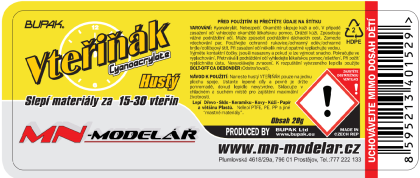
Gives a few seconds to align the part and bridges a small step. This is the grade you reach for with resin detail parts, metal undercarriage legs or when gluing ballast into a fuselage.
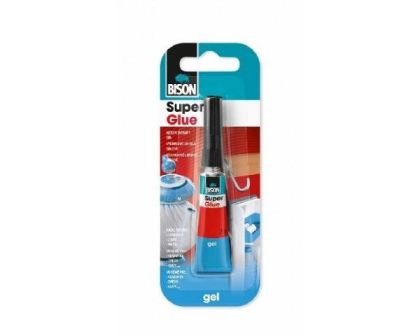
They stay put even on a vertical surface and sand once cured, so they also serve as an instant filler on a small cavity. On 3D-printed parts that combination is used constantly, because CA grips a printed surface very well.
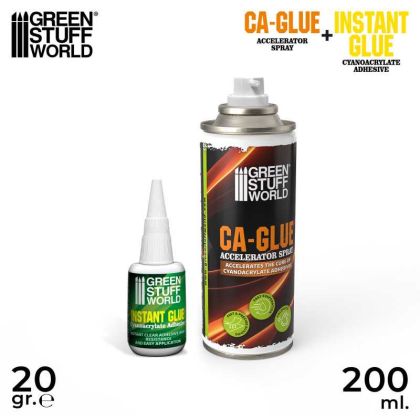
Flexible types tolerate a joint that bends slightly, which matters when a thin brass part is bonded to a curved surface. Filling versions carry solid content, so they bond and fill in one step. Others are formulated for printing resins and hold on the smooth, faintly greasy surface a part has after washing. Several are sold packaged together with an accelerator so both halves of the job arrive at once.
When you want strength and working time rather than speed, look at epoxy instead — it cures over tens of minutes and takes far more stress.