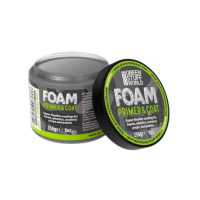
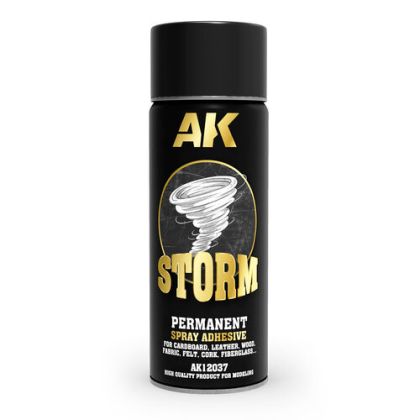
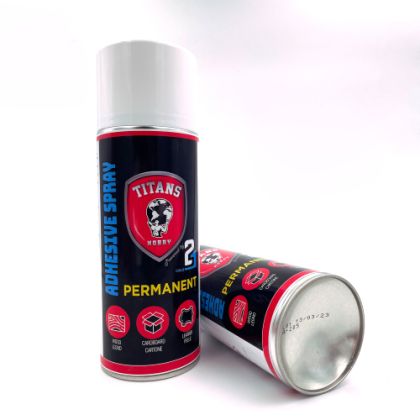
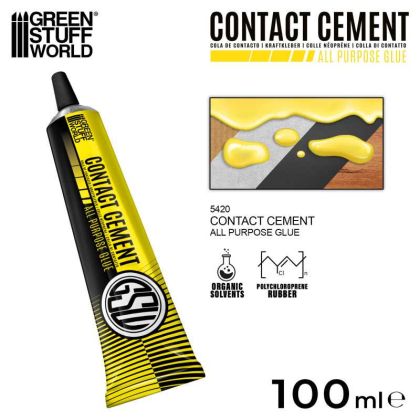
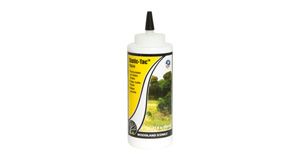
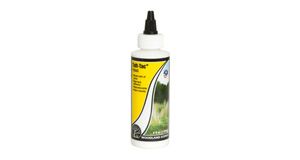
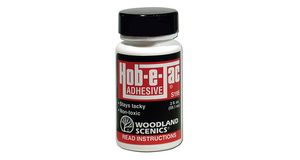
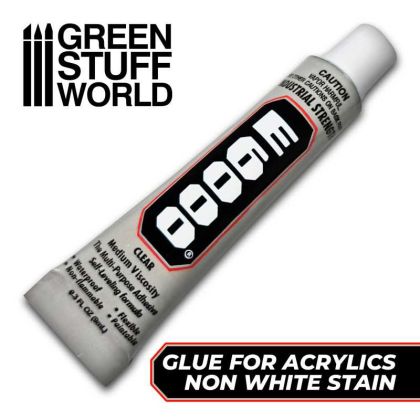
The moment a build leaves pure styrene, plastic cement stops working and something else has to take over. This category covers the adhesives a modeller meets on a diorama and around detail parts: contact glues for foam, leather and fabric, water-based PVA for porous materials and timber, hot melt sticks for rough structure, spray adhesives for large areas, and the specialist fixatives used to soak ballast and lock grass tufts and scatter in place.
Models stopped being only plastic a long time ago. A single scene can involve foam, balsa, card, fabric strip, brass sheet, acrylic glazing, natural material for trees and loose scatter for the ground. Each wants a different bonding principle — and with no styrene present, there is nothing for a solvent to soften.
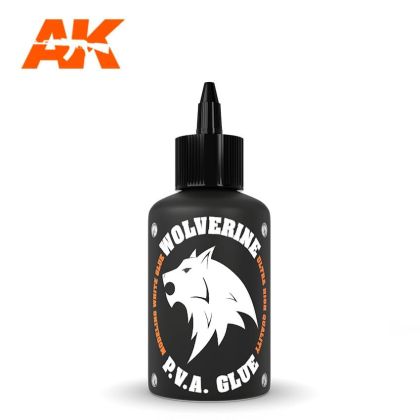
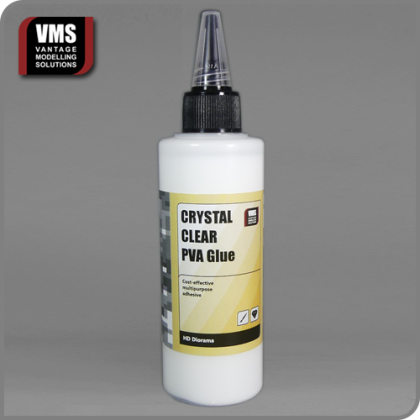
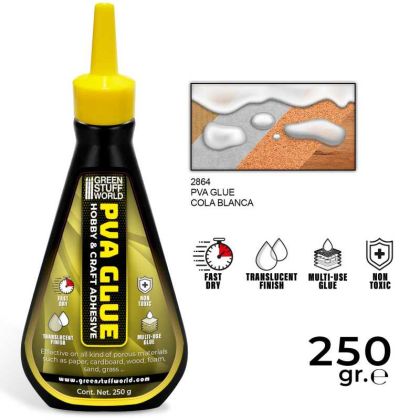
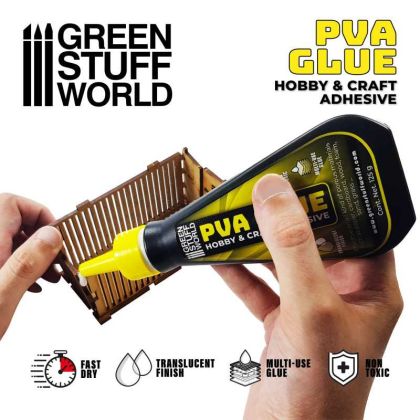
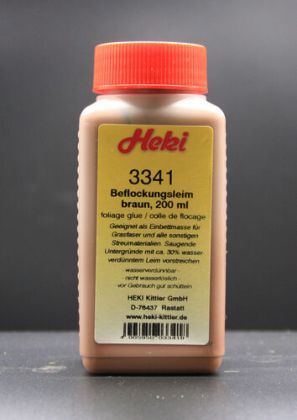
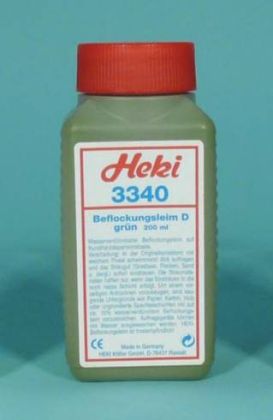
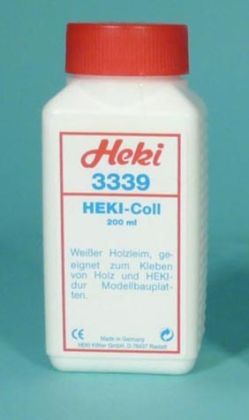
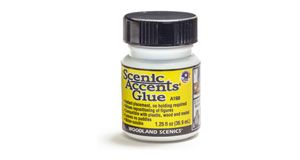
A milky dispersion drying clear is the most forgiving option for porous materials: timber, card, foam, and above all for soaking ballast and earth. It thins with water, corrects with water and holds well enough for terrain to be handled. Scenic versions behave much the same but are tuned to stay slightly flexible, or conversely to lock a tuft rock hard.
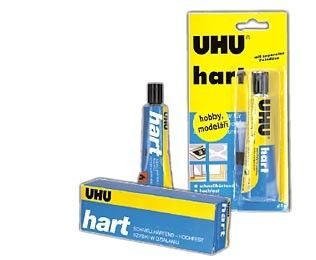
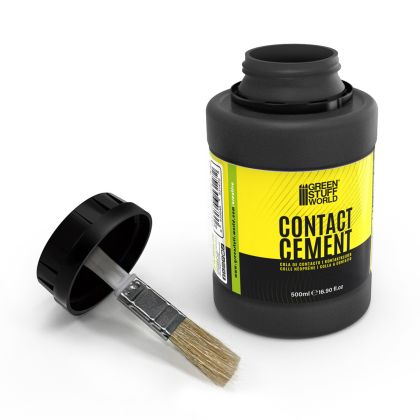
Applied to both faces, left to tack off and then brought together, they bond instantly across the whole area. That is the route for big parts, for foam and for anything that cannot be clamped. A spray does the same job on surfaces where a brush would leave ridges, typically when skinning a diorama base.
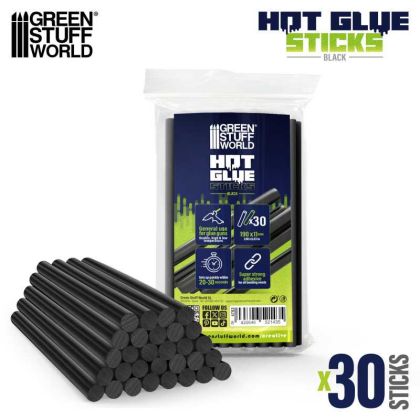
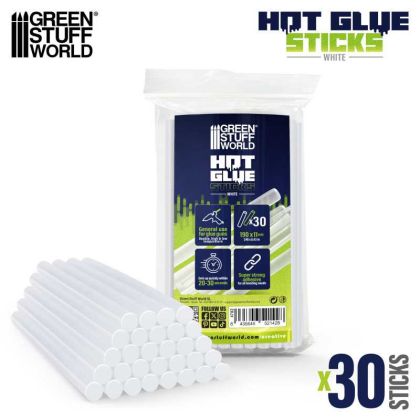
Glue sticks are for the rough structure under the surface: terrain ribs, packing, polystyrene fixed to plywood. The bond is bulky and fills as it goes, so it is used where nobody will ever see it. Guns and hot-air tools live in electric tools.
Acrylic glazing, PET and hard engineering plastics need an adhesive that neither attacks them nor clouds. General solvent glues usually fog those surfaces, so choose a product stated for clear and hard plastics.
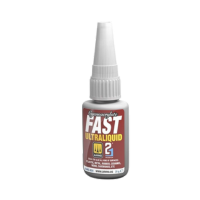
For plastic parts go back to plastic cement; on metal and resin the work belongs to cyanoacrylate.