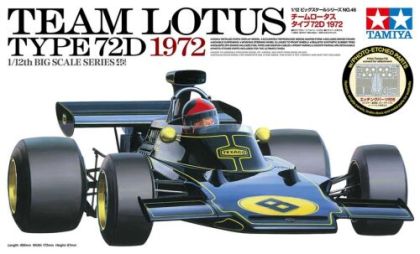
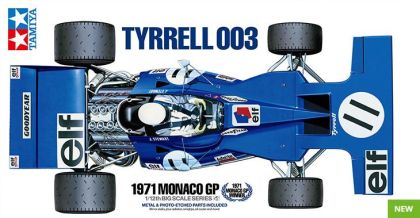
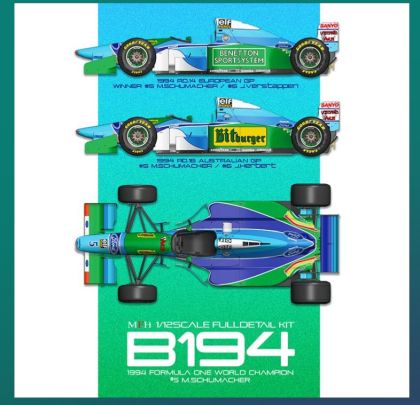
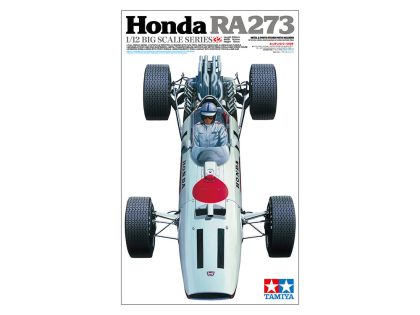
These are the summit projects of single-seater modelling. A 1:12 formula car model kit finishes past 35 cm and reproduces the complete drivetrain, the suspension links and a cockpit with every harness strap in place. The range is deliberately select and belongs to the legends: a cigar-shaped car of the 1960s, the wedge-profiled machine that changed the shape of the sport, a championship-winning car of the 1990s. Each one is a project measured in months and a future centrepiece of any cabinet.
1:12 shows a racing car the way the mechanics saw it: an exposed engine with full wiring and exhaust runs, properly articulated suspension, working-looking springs and a detailed instrument panel. Parts come in several materials, including rubber tyres with a correct profile and tubing for the various services. That technical layer is what separates the large format from smaller scales, where the mechanicals are only suggested.
Split the build into engine, chassis, suspension and body panels, and finish each one – painting included – before moving on. Dry-fitting before every joint is an iron rule in large scales.
Engine and suspension come alive through a mix of metal shades: aluminium for the block, steel for the springs, brass for the fittings. Subtle shading and gloss highlights add depth, and wiring wants a brush with one hair more than you think you need.
Large panels demand a faultless finish. Build the colour up in thin coats and only polish once it has cured properly. Lay decals onto gloss and seal them under a clear coat. Remember that the panels have to come off again: fit them dry at each stage, and resist the urge to glue anything to the chassis until the whole car has been test-assembled at least once.
Single-seaters in every size are listed under formula car model kits, and the smaller of the two formats sits in 1:20 formula car model kits. To extend the large format with road cars, 1:8 and 1:12 car model kits hold the same size.