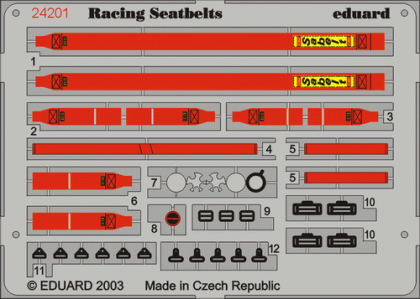
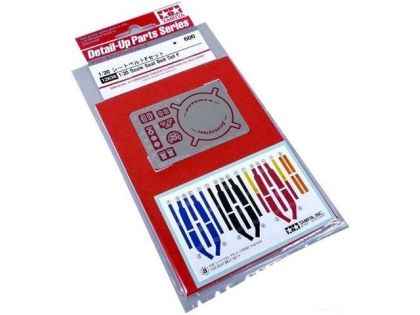
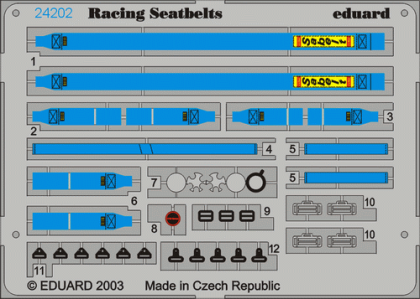
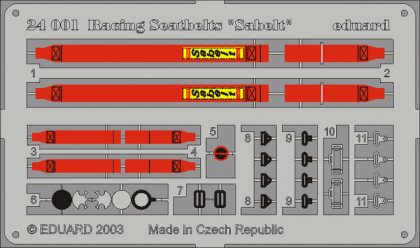
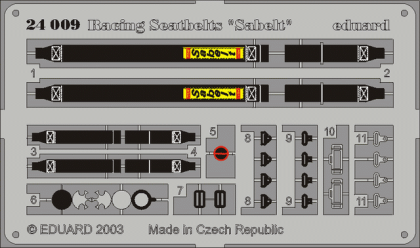
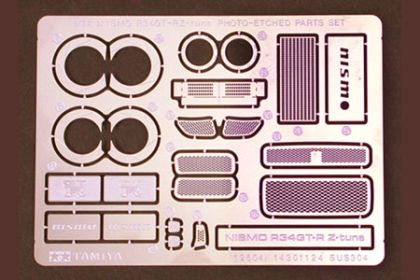
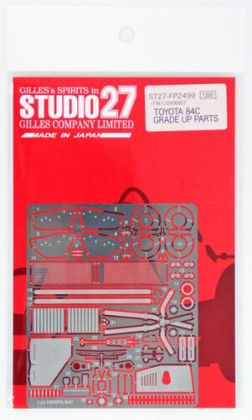
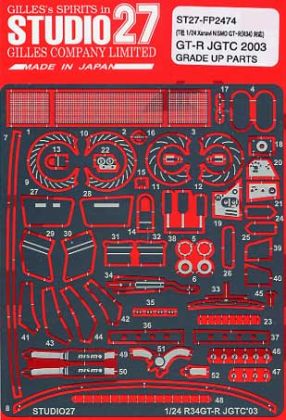
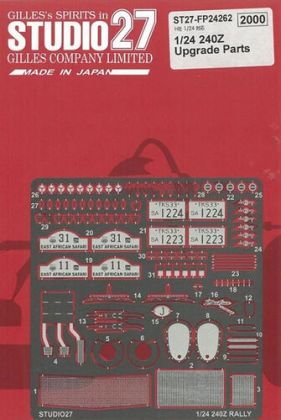
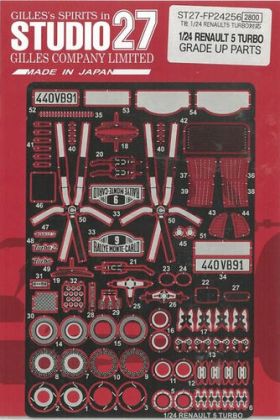
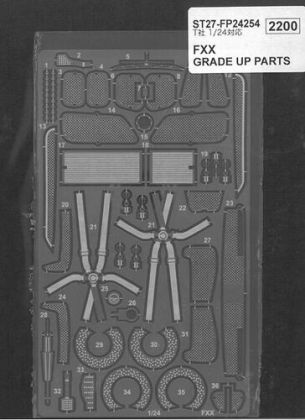
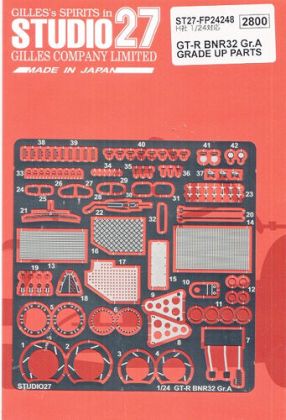
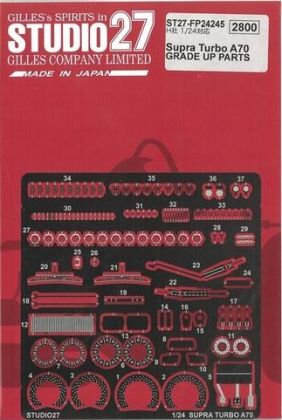
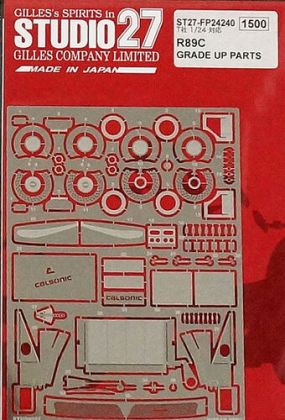
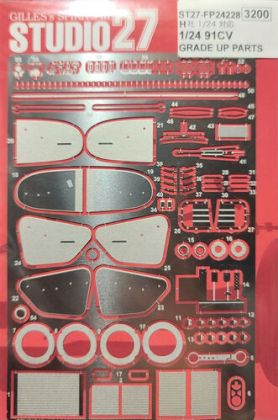
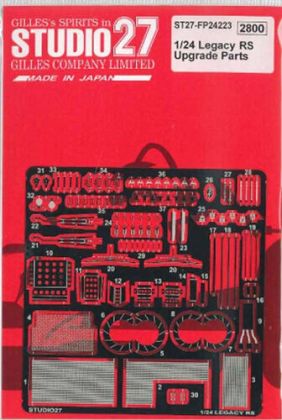
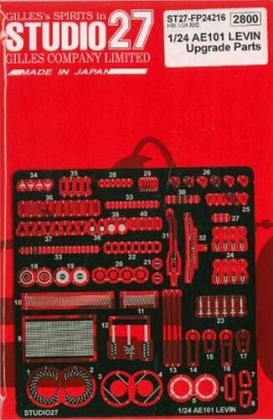
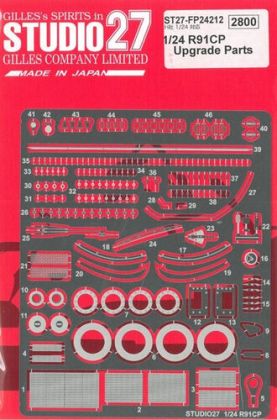
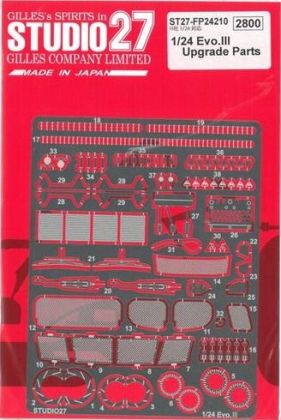
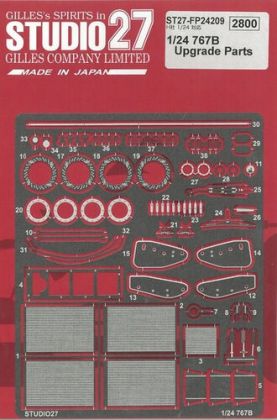
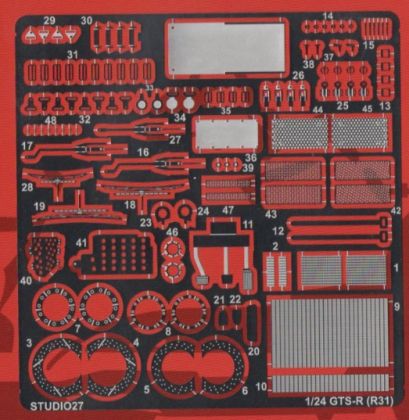
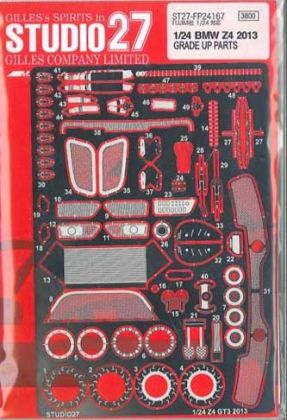
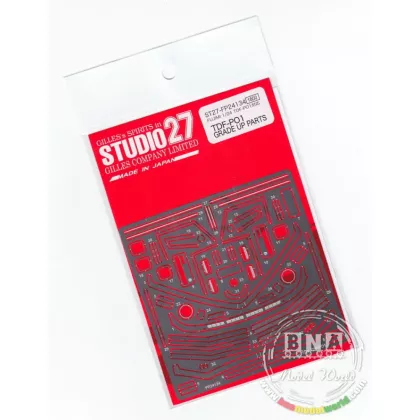
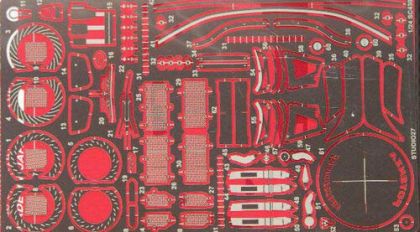
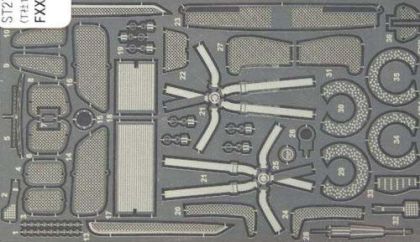
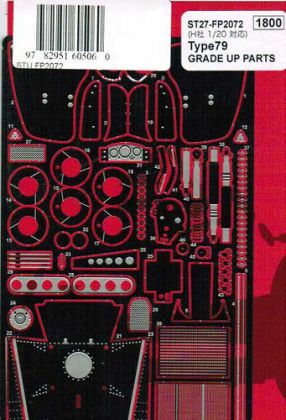
Photo-etched parts solve the one thing injection moulding cannot do: edges that are genuinely thin and genuinely sharp. A fret of etched metal gives a model razor-thin wiper blades, radiator grilles, badges, seat-harness buckles and mesh for bumper openings. This section belongs to road cars, racing cars and single-seaters; etched sets for aircraft or ships live in their own branches. Most frets are aimed at 1:24 and are designed for one specific kit, so they drop into place rather than needing to be made to fit.
Etched parts are produced by chemically etching a pattern into thin metal sheet. The result is components a few tenths of a millimetre thick, made as upgrade sets for standard car kits. Where a plastic wiper blade looks like a roof beam, an etched one looks like a wiper blade. A typical fret for a racing car carries grilles, brackets, harness buckles, handles and plates on a single sheet.
Most upgrade sets are designed around one particular kit, which is named in the title of the set. That removes any guesswork about whether the parts will match the dimensions. Generic frets, such as mesh or buckles, serve across 1:24 and 1:25 car model kits.
A small fret with a handful of eye-catching parts – wipers, badges – is plenty to start with. More advanced builders will want the full sets that, together with resin detail parts, transform a whole interior and engine bay; on formula car model kits that extends to bodywork fasteners and mirrors.
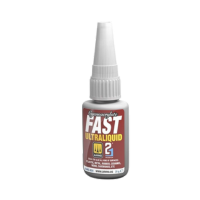
Working with etch needs a sharp blade on a hard surface, fine tweezers and cyanoacrylate. Larger parts fold along pre-etched score lines, ideally in a bending tool rather than between fingernails, which leaves the fold rounded. Cut parts from the fret on a hard board, not by twisting them free, and keep the offcuts: spare mesh and strip always come in useful.
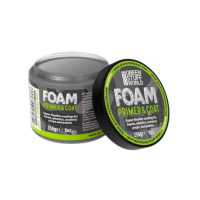
Brass is smooth and slightly greasy from handling, so wash the fret in warm water with a drop of detergent and let it dry before anything else. A primer coat is not optional here; without it, paint shears off the first time the part is touched. Parts meant to stay bare metal only need a polish and a seal under clear.
Further upgrades for bodywork and chassis are gathered in accessories for car and formula models.