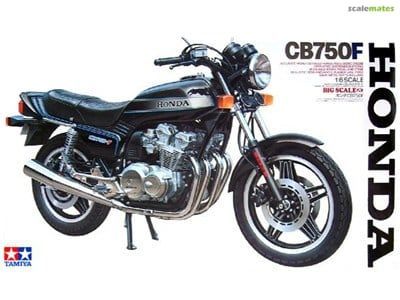
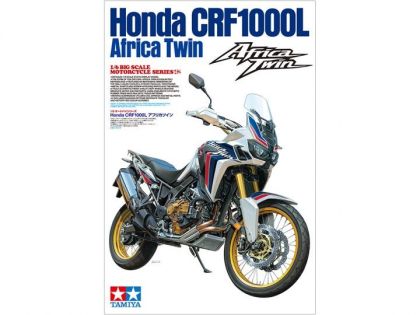
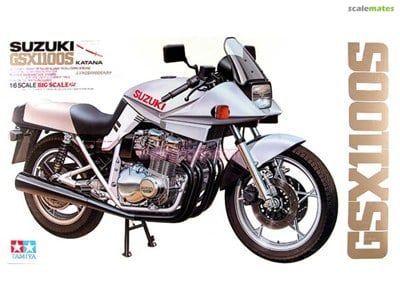
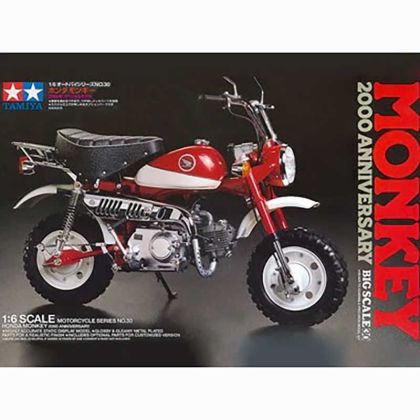
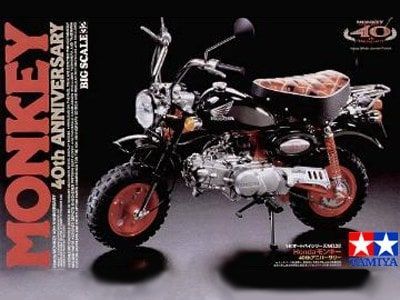
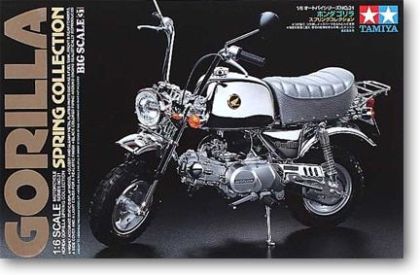
Thirty centimetres of motorcycle changes what a model is for. At 1:6 the cylinder finning, the weave of the seat cover and the casting texture of the crankcase are all plainly visible, and the engine typically breaks down into dozens of separate parts rather than two halves. Kits in this section cover display subjects: compact machines with real character, a sharply styled sports bike and a large-capacity touring enduro among them.
Big parts are easier to hold and easier to glue, so the scale is not out of reach for someone with limited practice. What it does demand is time, and a plan for the paint.
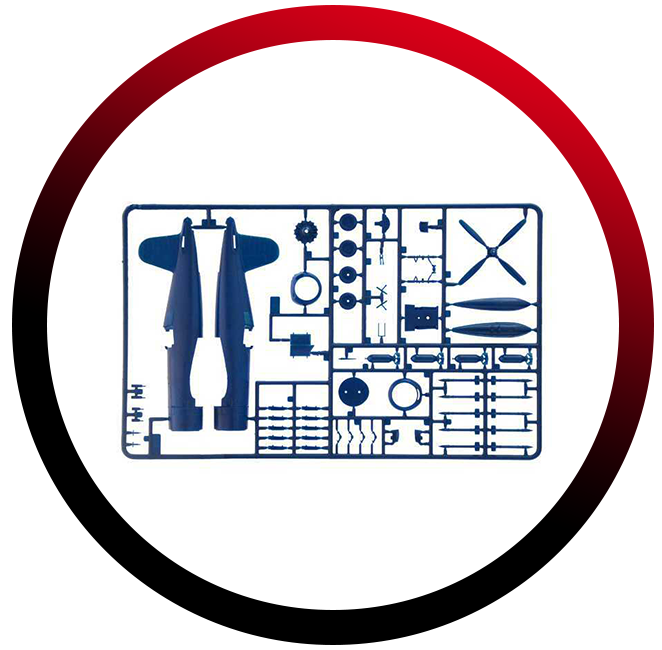
1:6 is as large as motorcycle kits go. Tyres are usually moulded in a soft material rather than hard styrene, chains are often separate, and the engine arrives as a genuine sub-assembly with crankcase halves, barrels, head and covers. Built carefully, the result reads as a museum exhibit rather than a model, and that is the reason to choose it over anything smaller.
Anyone who would rather build one serious model than ten small ones, and anyone attached to a particular machine. Large parts are forgiving of unsteady hands; the only real cost is the length of the project, so count on weeks rather than evenings.
Most of the time goes on the tank and fairing. These are big, smooth, continuous surfaces with nothing to break them up, so dust, orange peel and heavy coats all show. Spray thin layers, allow proper drying between them, and polish only once the paint has hardened. The reward is a finish that stands comparison with a real machine.
Paint the engine as sub-assemblies. Once the block is closed up, no brush will reach the rear cylinders, and at this size the inside of the engine bay is visible from both flanks.
Allow thirty centimetres of length and the depth to match. A model this size wants to be seen from all sides, so a corner shelf wastes it. If space is the problem, 1:12 motorcycle kits give a faster build in a sixth of the footprint.
Every scale and the full choice of machines is in motorcycle model kits.