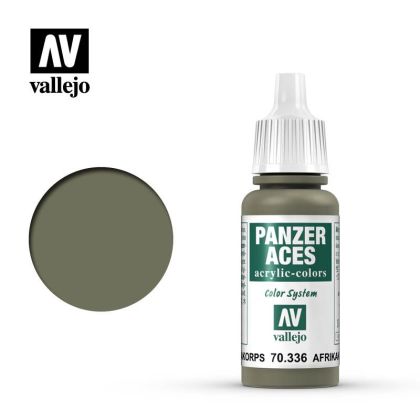
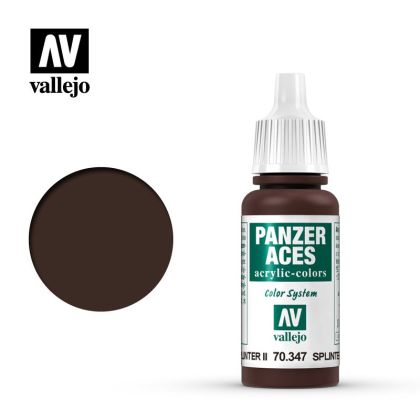
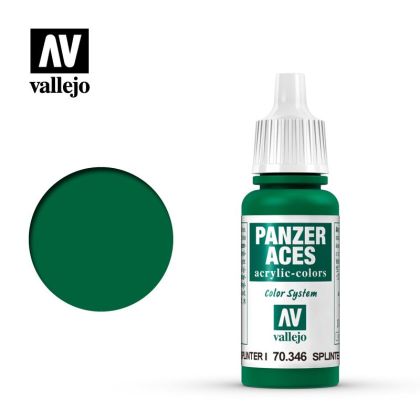
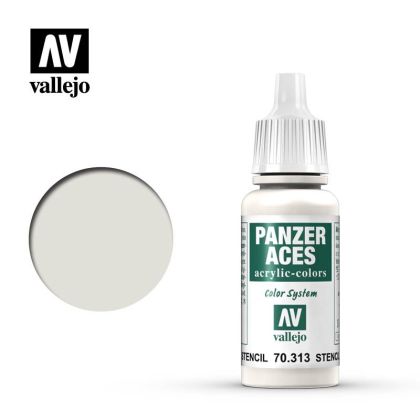
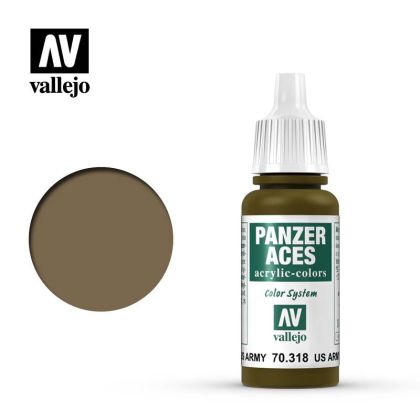
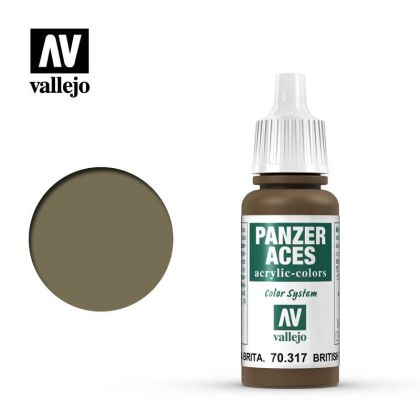
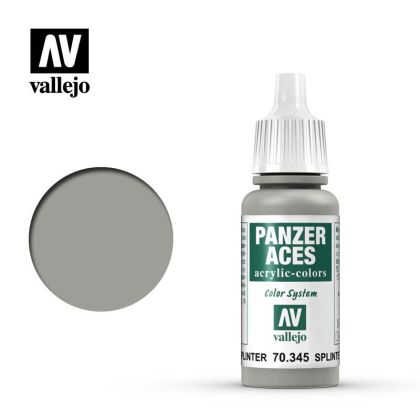
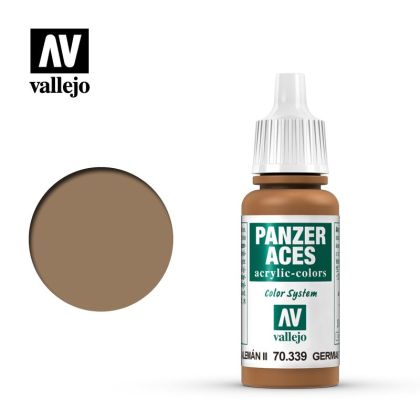
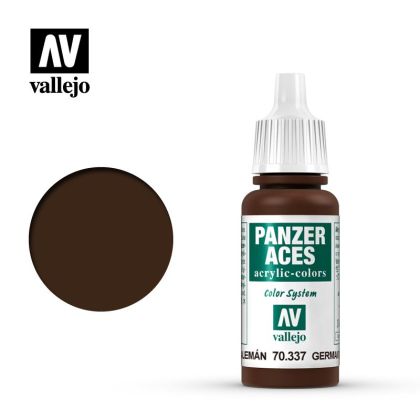
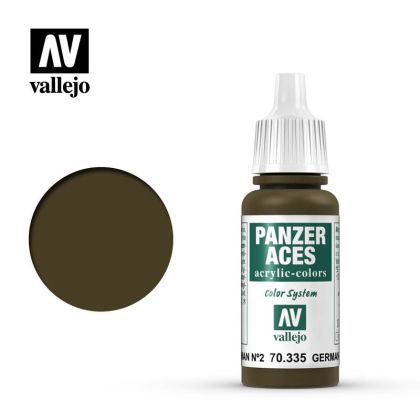
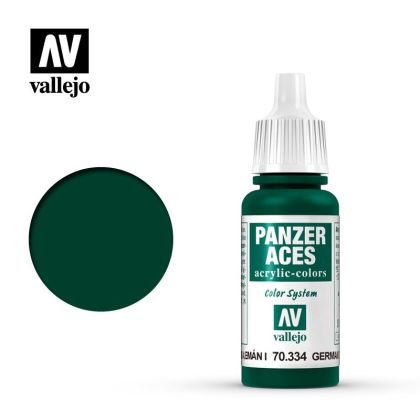
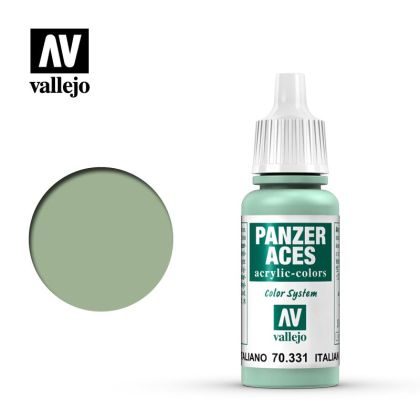
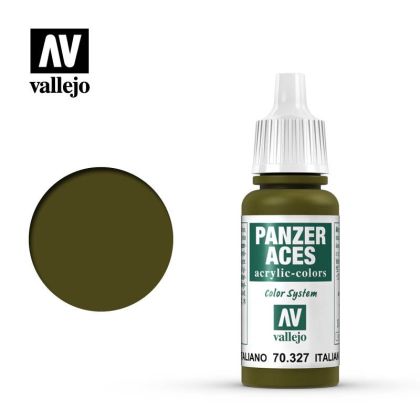
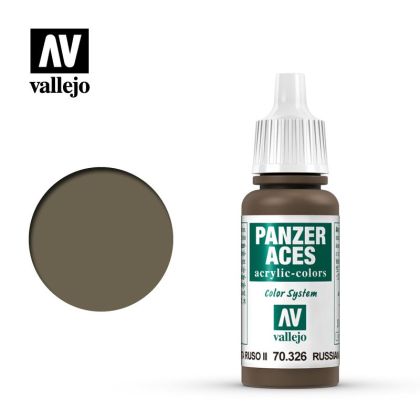
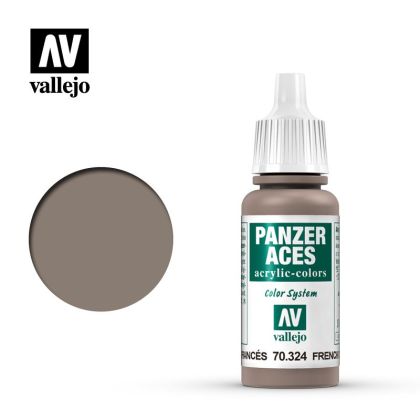
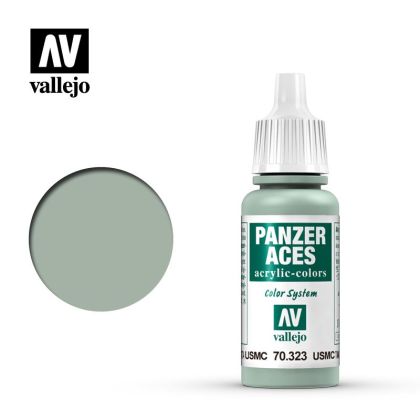
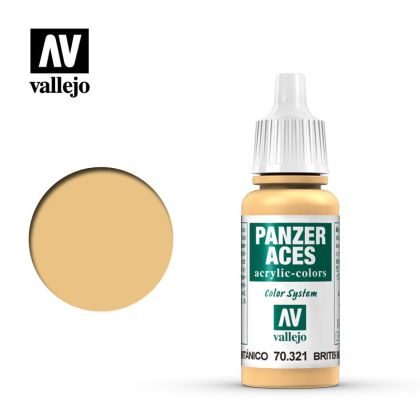
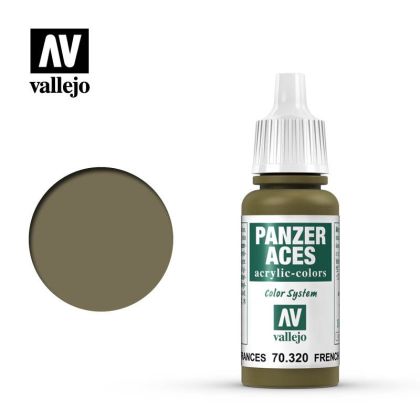
Panzer Aces is a deliberately narrow palette: tank crew uniforms army by army, the lighter variant of each for highlighting, and the tones used for camouflage patches. Where a general military range offers one uniform colour and leaves you to lighten it, this one supplies the base and the highlight as a pair.
For anyone adding a commander to a turret hatch or building a diorama with several figures, that shortcut is worth more than it sounds. Hand-mixed highlights drift between figures, and the drift shows the moment two of them stand side by side. The notes below cover the three-step method the palette is designed around.
Shades are grouped in pairs and threes by army: a base uniform tone with a lighter version intended for the raised folds, plus a separate group for camouflage patches including the ground colour they sit on. The logic follows the order you paint in rather than an alphabetical list, which is why it reads oddly as a chart and works well at the bench — the tone you need to lighten a tunic is already in the range.
Lay the base uniform tone, push a darker shade into the folds and bring the lighter variant onto the raised cloth. Blend the boundaries with slightly thinned paint. It is this three-step sequence that turns a flat silhouette into something with volume.
The paint skins over quickly, so a wet palette from bottles, pipettes and palettes pays for itself on the first figure. Keep coats thin or buttons, straps and folds disappear under them.
A tank crewman's uniform was not clean. Once the painting is done, add dust and oil marks with products from weathering; that is what ties the figure to the vehicle rather than leaving it posed beside one.
These figures most often accompany military vehicle kits, where they give the machine scale and a human reference; on their own they belong with model figures. The maker's remaining lines sit under Vallejo model paints.