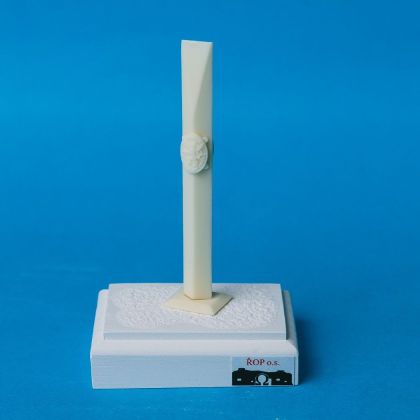
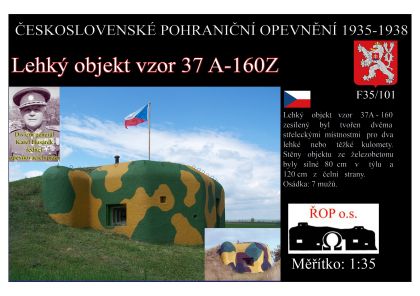
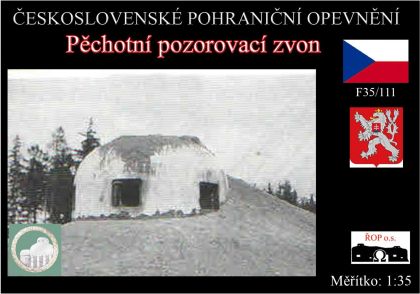
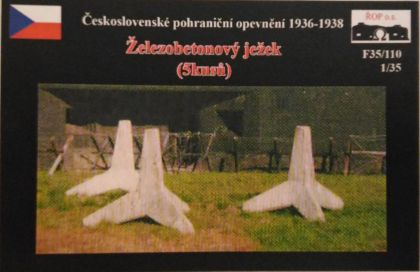
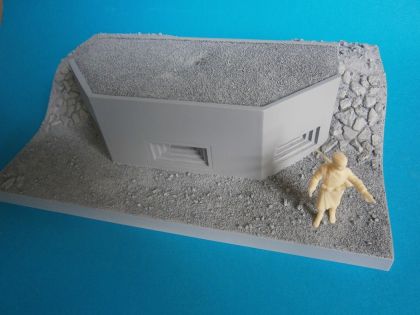
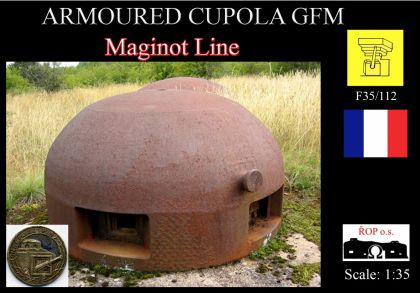
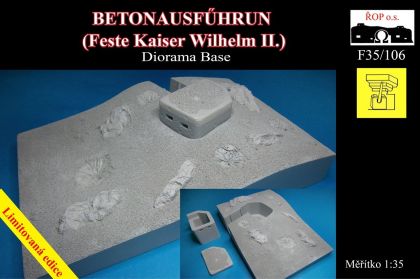
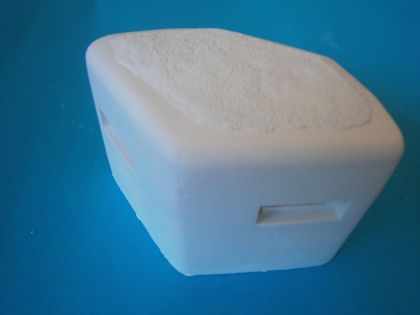
Concrete becomes a subject in its own right at 1:35, and that is the argument for the largest format in this range. Every unevenness in the surface shows, along with the edge of a loophole and the mark left by the formwork. Besides complete light objects you will find separate armoured elements, observation cupolas above all, a boundary post of 1938, reinforced-concrete anti-tank hedgehogs, and foreign fortress subjects included for comparison.
1:35 is also the home scale of infantry and armour, so a casting from this section need not stand alone. It works just as well as the backdrop to a finished scene, with figures and vehicles doing the rest of the talking.
At this size a loophole has depth, an embrasure has a lip, and the steel of a cupola reads as a different material from the concrete around it. Smaller scales suggest those things; 1:35 shows them, down to board marks and aggregate. The trade-off is footprint, so the selection concentrates on compact subjects rather than whole heavy casemates.
A light object is a model in itself and can stand alone on a plinth. Cupolas, the boundary post and the anti-tank hedgehogs are scenic elements: they do their work as part of a larger scene, and the hedgehogs in particular are meant to be used in numbers across a road or a field edge. A boundary post dates and places a scene more economically than anything else you can put on a base.
Most of the section is Czechoslovak, which keeps it coherent with 1930s subjects. The foreign fortress castings are there for comparison and work better as separate projects than mixed into the same base.
Castings arrive unassembled and unpainted. Wash off the mould release, take the pour block off with a razor saw rather than nippers, and fill any pinholes before priming; a cured resin surface hides nothing once a flat coat goes on. Use cyanoacrylate for joints and keep modelling putty to hand for casting seams.
Mix the concrete tone warmer and lighter than instinct suggests, then let weathering pigments do the shading: streaks below embrasures, soil creeping up the base, moss in the shadowed corners. Armoured cupolas want a different treatment entirely, closer to worn steel, so mask them and paint them separately.
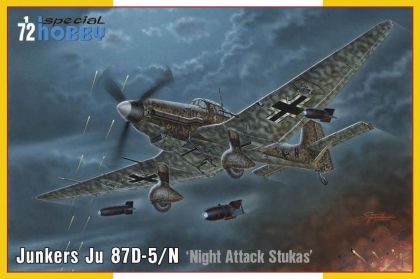
Smaller versions of the same subjects are in 1:72 and across the fortification models section.